






Why Supply Chain Automation Is Entering Its Defining Decade
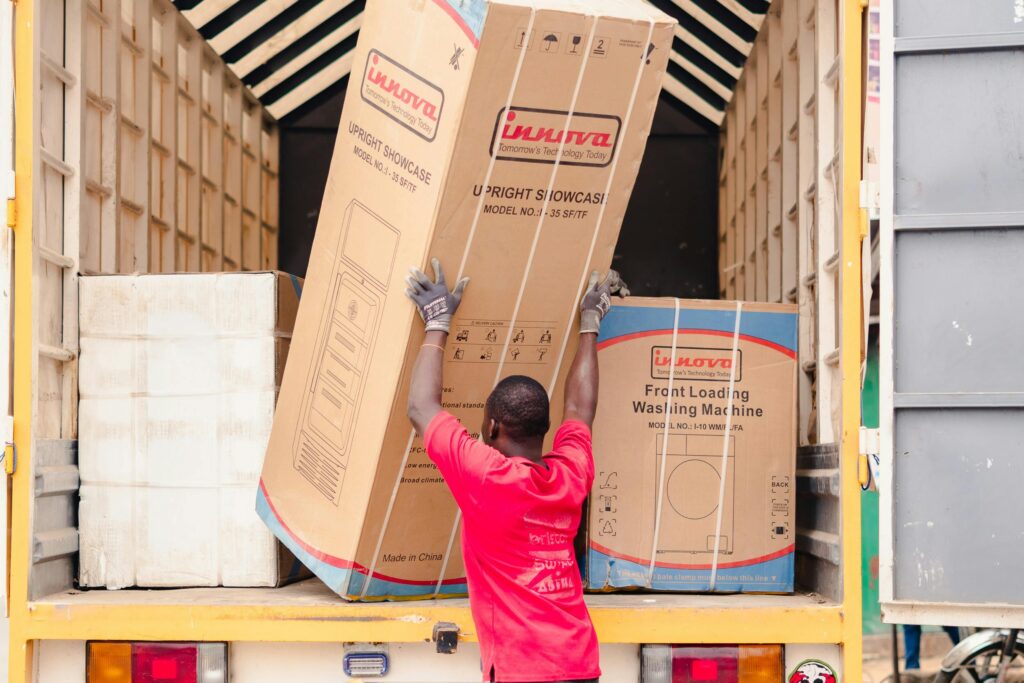
Unloading a freight trailer isn’t just exhausting; it’s dangerous. The task demands quick reflexes, relentless strength, and a tolerance for cardboard dust and heat that pushes human limits. For decades, warehouse managers have accepted the toll—sky-high turnover, chronic injuries, and night shifts that no one wants. But a new wave of robotics is rewriting that equation, and a green-painted mechanical arm from The Pickle Robot Company may be the first real sign that the industry’s future has arrived.
A Turning Point in the Warehouse Wars
Pickle’s one-armed unloading robots are already sliding into trailers at UPS, Ryobi Tools, and Yusen Logistics facilities. They don’t complain, they don’t quit, and they can move up to 1,500 boxes an hour. But the real story isn’t brute force. It’s the merging of generative AI with industrial-grade robotics — a combination poised to reshape logistics in the same way the assembly line reshaped manufacturing.
For a sector under permanent pressure from e-commerce growth, labor shortages, and surging operational costs, this moment feels less like innovation and more like inevitability.
How a Side Project Turned Into a Robotics Contender
Pickle’s founding story reads like a modern MIT parable. Three graduates—AJ Meyer, Ariana Eisenstein, and Dan Paluska—spent their early careers designing embedded systems for satellites, cars, and Google’s modular smartphone project. They were talented, well-paid, and bored.
“We didn’t get into this to do consulting,” Meyer recalls. “We got into this to do robots.”
In 2018, they walked into a UPS warehouse with stopwatches. What they saw wasn’t inefficient processes. It was human exhaustion.
Workers rarely lasted more than 90 days. Not because of attitude, but anatomy. Human bodies simply weren’t designed to spend eight-hour shifts in a metal trailer, lifting boxes that could weigh 50 pounds while temperatures soared past 120°F.
The founders didn’t need market research after that. The problem announced itself.
And yet, early investors weren’t convinced. Building a profitable robotics company is notoriously difficult. Pickle nearly died before it began.
When funds ran out, they gambled their last dollars on a prototype that worked — barely. A robot that could unload a truck for a full 20 seconds before needing a reset. But they filmed it, posted it, and waited.
Hundreds of potential customers reached out.
Sometimes, in robotics, showing beats telling.
The Secret Sauce: Generative AI Meets Industrial Strength
Pickle’s promise isn’t just automation. It’s adaptability.
The system pairs a KUKA industrial arm with a custom mobile base, depth sensors, cameras, and a suite of fine-tuned generative AI models. The robot can roll into a trailer it has never seen, scan the environment, and start unloading immediately—no hand-holding, no mapping, no lengthy integration.
This is a fundamental departure from old-school robotics, where rigid programming and pristine conditions were prerequisites for success.
Industrial robots used to be blind. Today, Pickle’s robots “see, think, and lift.”
In other words, they can do the boring work, while humans do the smart work.
Paluska puts it bluntly: “Humans are really good edge-case problem solvers, and robots are not.” So the company isn’t trying to eliminate workers. It’s trying to eliminate drudgery.
That may be the most important distinction in the automation debate.
Why Logistics, and Why Now?
The logistics sector is the perfect storm of structural weakness and digital opportunity:
- Turnover rates in some warehouses exceed 300% annually.
- Injury rates are more than twice the national average.
- E-commerce demand is climbing, not slowing.
- Labor shortages are becoming chronic, not cyclical.
Automation is no longer a futuristic add-on; it’s a lifeline.
Pickle’s robots unload anywhere from 400 to 1,500 cases per hour, depending on size and weight. They work without breaks, integrate with conveyors, and communicate with warehouse management systems. And with a two-armed model in development, the pace of innovation is likely to accelerate.
Even more transformative is Pickle’s next frontier: a universal software platform that integrates robotic arms, autonomous forklifts, humanoid robots, and inventory drones into a single, orchestrated supply chain network.
This is where the real disruption lies.
Today, robots are isolated actors. Tomorrow, they’ll be teammates.
A Green Robot, a Bigger Vision
Inside Pickle’s Charlestown headquarters, the contrast is striking. A sleek startup office opens into a gritty warehouse test zone where bright green arms hoist box after box. About 130 employees now work there, refining algorithms, stress-testing hardware, and preparing for the next production ramp-up.
If their founders are right, unloading trucks is only Chapter One.
The long game is an ecosystem of interoperable robots operating from mines to factories to delivery vans. A supply chain where machines handle the heavy lifting, humans handle exceptions, and AI handles coordination.
In a decade defined by geopolitical uncertainty, resilience challenges, and relentless digital competition, that vision feels less like sci-fi and more like necessity.
“No one knows what they’re doing, so why not us?” Eisenstein recalls a mentor telling her. It’s a line that captures both humility and ambition—the exact combination needed to disrupt a trillion-dollar industry.
The Bottom Line: Robots Aren’t Coming for Jobs. They’re Coming for Drudgery.
In the public imagination, robots often appear as threats. But in the back of a sweltering freight trailer, they look more like salvation. Pickle’s founders insist that humans won’t be replaced anytime soon—and they’re right. Human adaptability, judgment, and creativity still matter more than mechanical reach or AI pattern-matching.
Yet the nature of warehouse work is changing.
The question now isn’t whether robots will reshape logistics. It’s who will lead the transformation—and how responsibly.
For companies like Pickle, the mission is simple:
Build robots that make work safer, smarter, and more sustainable.
If they succeed, the green arm pulling boxes in the dark belly of a trailer might someday be seen as the machine that lifted an entire industry out of its grind.