






Formation of Independent International Scientific Panel on AI signals new era in international technology diplomacy
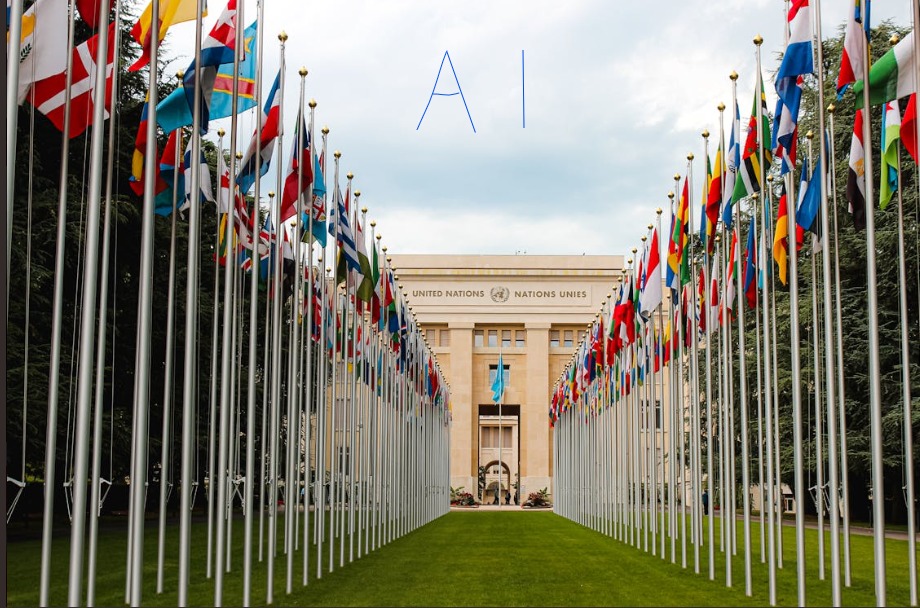
In one of the most consequential votes on technology governance in recent memory, the United Nations General Assembly has overwhelmingly approved the formation of a global scientific panel dedicated to assessing the societal, economic, and technological impacts of artificial intelligence. This landmark decision, supported by 117 out of 193 member states, reflects a collective recognition that AI has transcended national boundaries and now demands international scientific scrutiny. Yet the United States, the world’s dominant AI powerhouse, stood firmly against this initiative, embodying a broader tension between global cooperation and sovereign control in the age of digital transformation.
The panel, officially named the Independent International Scientific Panel on Artificial Intelligence, comprises 40 experts selected from more than 2,600 applicants. The selection process, overseen by the International Telecommunications Union, UNESCO, and the U.N. Office for Digital and Emerging Technologies, was designed to ensure multidisciplinary and geographic diversity. Members will serve three-year terms, tasked with generating evidence-based insights on AI’s risks and opportunities for all nations, not just for a privileged technological elite.
United Nations Secretary-General António Guterres marked the panel’s establishment as a “foundational step” in building global scientific understanding of AI and closing knowledge gaps that have, until now, prevented many countries from effectively shaping their own AI policies. This panel, he argued, would offer impartial assessments and a common analytical foundation upon which international dialogue and governance frameworks could be built.
In a world where artificial intelligence races ahead of traditional regulatory processes, the United Nations is consciously stepping into what it calls a global governance vacuum. But rather than crafting binding global law, this scientific panel is intended to underpin informed policymaking by nations, giving countries, regardless of technological development, access to rigorous data, trend analysis, and scenario forecasting.
Yet the United States, historically a leader in AI innovation and governance debates, took a markedly different stance. Washington and Paraguay were the only two countries to vote against the panel’s formation, while Tunisia and Ukraine abstained. The U.S. representative to the United Nations, Counselor Lauren Lovelace, characterized the initiative as a “significant overreach of the U.N.’s mandate and competence,” emphasizing that AI governance should not fall under the U.N.’s purview. She argued that the U.S. would instead work with “like-minded nations” to promote AI aligned with shared democratic values while protecting sovereign decision-making.
The American objection reflects deeper geopolitical currents. Over the past decade, the United States has championed innovation-led technology development, resisting binding international regulation that might restrict its competitive edge. With its private sector driving breakthroughs in foundational AI architectures and commercialization, Washington’s position underscores a desire to retain regulatory autonomy and to protect what its officials describe as core national interests.
This moment brings into sharp relief a critical question: Can global governance mechanisms keep pace with rapidly evolving technologies whose impacts extend far beyond any single nation’s borders?
The UN’s decision builds on years of multilateral discussions. In 2024, the General Assembly adopted its first resolution on safe, secure, and trustworthy AI systems, recognizing the technology’s potential to advance sustainable development while also underscoring the importance of human rights considerations. That resolution, co-sponsored by more than 120 nations, emphasized that AI systems should support progress toward the United Nations’ Sustainable Development Goals, even as they pose new policy challenges.
The establishment of the scientific panel, alongside complementary efforts such as the Global Dialogue on AI Governance, points toward a more structured and sustained approach to international cooperation. These initiatives are meant to serve as forums for dialogue, peer-reviewed data assessment, and shared strategy development among nations with widely varying levels of technological capability.
For many developing nations, this offers a long-sought opportunity to have a voice in global AI governance. Countries without robust domestic AI industries have often lagged behind in shaping global standards. Through a UN platform that brings together experts from diverse regions, these countries can better understand and adapt to AI’s disruptive impacts on labor markets, education, healthcare systems, and governance structures.
Nevertheless, the United States’ rejection underscores a key fault line in the global AI debate. Washington’s position was underscored by concerns that an international body might fail to represent free societies fairly or might be swayed by nations with differing visions of digital governance, including surveillance paradigms that conflict with democratic norms. American policymakers have voiced fears about ceding authority over a strategic domain of economic and national security significance to a multilateral entity they perceive as lacking transparency and sufficient accountability.
This resonates with broader tensions between national sovereignty and multilateral governance. The US stance illustrates a belief that AI policy is best shaped within the frameworks of national democratic institutions and allied groupings rather than through universal mandates. It reflects a confidence in domestic institutions, including its regulatory consultative processes, academic institutions, private sector innovation, and judiciary, to shape responsible AI adoption without external imposition.
Yet this perspective also exposes underlying challenges. AI technologies are not confined by borders. They shape global information landscapes, influence economic competition, and affect public health and safety across continents. Without shared understanding and cross-border frameworks for basic risk assessment, the potential for misaligned standards and regulatory fragmentation grows. Critics of Washington’s position argue that fragmentation could intensify global inequalities, widen digital divides, and slow collective responses to emergent risks like disinformation, algorithmic bias, and unchecked autonomous systems.
From an international perspective, the UN panel could serve as a scientific anchor around which cooperative policies can evolve. By bringing together experts in ethics, data governance, human rights, machine learning, cybersecurity, and public policy, the panel’s outputs might inform national regulatory strategies that are both robust and responsive to local contexts. In this way, the panel could function less as a super-regulatory body and more as a knowledge hub with global reach.
One notable aspect of the panel’s composition is its diversity: among its members are academicians, technologists, interdisciplinary researchers, and even figures from media and civic discourse, including Nobel laureate Maria Ressa. The inclusion of multiple perspectives acknowledges that AI’s future will be shaped not only by technical breakthroughs but by cultural, social, economic, and ethical considerations as well.
The fact that nations such as Russia and China also supported the panel’s creation complicates the geopolitical equation. While consensus on the panel’s establishment was broad, differences in how participating states might interpret and use the panel’s work are to be expected. US officials have repeatedly stressed that they do not oppose international cooperation on AI challenges. Rather, they argue for coalitions of democratic states and like-minded partners to lead in shaping AI standards that reflect shared values of human rights, privacy, and transparency.
Thus, the emergence of the UN’s scientific panel is both a symbolic and practical milestone. It signals a collective acknowledgment that AI is not merely a technical frontier but a global public policy priority. By anchoring international cooperation in scientific evidence and cross-border dialogue, the panel aims to provide a common foundation upon which all nations, from tech powerhouses to mid-tier innovators and developing economies, can forge policies that address both opportunities and risks.
Yet the path ahead is fraught with political and institutional complexity. Differences in national priorities, competing visions of digital sovereignty, and geopolitical rivalries will inevitably shape how this panel’s findings are received and implemented. Whether the United States will engage constructively with the panel’s outputs over time remains to be seen, and how other influential nations adapt their AI strategies in response to this initiative will bear watching.
In an era where artificial intelligence stands poised to redefine economies, political power, human rights, and global security, the UN’s move represents more than institutional ambition. It is a recognition that governance must evolve as fast as technology itself, grounded in shared knowledge and respectful of global diversity. And while differences, including those voiced by Washington, may shape the contours of this discourse, the fundamental question remains: Will nations choose collaboration rooted in evidence and equity, or will they retreat to technological nationalism in a time of transformative change?
Only time will tell, but this moment marks the beginning of an international experiment in managing one of the most consequential technologies ever invented.