





Anthropic has released a significant update to its Claude AI assistant that enables the system to control computers autonomously, marking a substantial expansion into AI agent capabilities that puts the company in direct competition with emerging autonomous AI platforms.
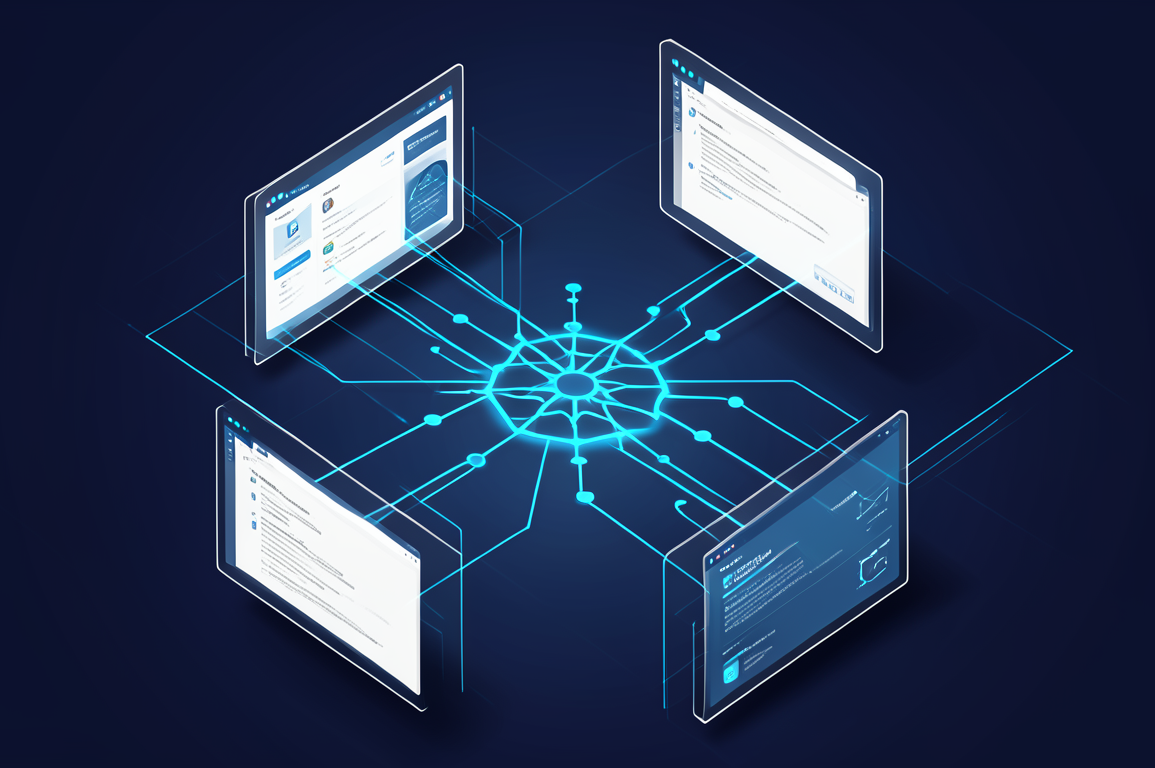
The new feature, announced this week, allows Claude to interact with standard desktop applications, move cursors, click buttons, and execute multi-step tasks across different software environments without continuous human oversight. According to technical documentation, the system can now operate web browsers, productivity software, and development tools independently.
The capability represents a fundamental shift from conversational AI to autonomous agents—systems that can complete complex workflows with minimal human intervention. Anthropic has positioned the update as particularly relevant for software development, data analysis, and administrative tasks where repetitive computer interactions consume substantial employee time.
The company has implemented the feature through an API that allows Claude to interpret screenshots, determine appropriate actions, and execute commands. Early access partners have reportedly tested the system on tasks including automated testing, data entry workflows, and research compilation across multiple applications.
Enterprise Implications and Market Positioning
The release intensifies competition in the rapidly expanding AI agent market, where companies including OpenAI, Microsoft, and Google are racing to deploy systems capable of autonomous task execution. Enterprise software providers face particular pressure, as autonomous AI capabilities threaten to automate workflows that currently require dedicated applications.
Businesses in professional services, software development, and data-intensive industries stand to gain immediate productivity improvements. Anthropic has reportedly engaged with enterprise clients in financial services and technology sectors, where automated computer control could reduce costs associated with routine digital tasks.
Conversely, the update poses challenges for robotic process automation (RPA) vendors, whose platforms specifically address the workflow automation that Claude’s new capabilities now target. The AI approach offers potentially greater flexibility than traditional RPA scripting, though questions around reliability and error handling in production environments remain.
Security implications are substantial. Granting an AI system autonomous computer control introduces risks around unintended actions, data access, and system modifications. Anthropic has indicated that the feature includes safeguards and operates within defined parameters, though specific technical controls have not been fully disclosed.
Technical Boundaries and Limitations
Despite the advancement, current implementations face meaningful constraints. The system requires visual interpretation of screen content rather than direct API access, which introduces latency and potential accuracy issues. Complex applications with dynamic interfaces may prove challenging for consistent autonomous operation.
Anthropic has not disclosed specific performance benchmarks for task completion rates or error frequencies, making independent assessment of production readiness difficult. The company’s emphasis on early access partnerships suggests a cautious rollout strategy while capabilities mature.
The update arrives as Anthropic continues to position itself as a safety-focused alternative in the AI market, having raised substantial funding—including a reported $2 billion investment commitment from Google—to compete with OpenAI’s market dominance. The computer control feature represents a strategic move to match capabilities that competitors are actively developing.
Market Trajectory
Industry observers will be monitoring several key indicators: enterprise adoption rates among Anthropic’s existing client base, comparative performance against competing autonomous systems, and any security incidents or operational failures that emerge during broader deployment.
The regulatory response also warrants attention, as autonomous AI systems operating with computer control raise questions about liability, data governance, and workplace automation that existing frameworks may not adequately address.
Anthropic’s move signals that major AI providers now view autonomous computer control as essential infrastructure rather than experimental capability, with significant implications for how businesses architect digital workflows and allocate human labour across technology-mediated tasks.