








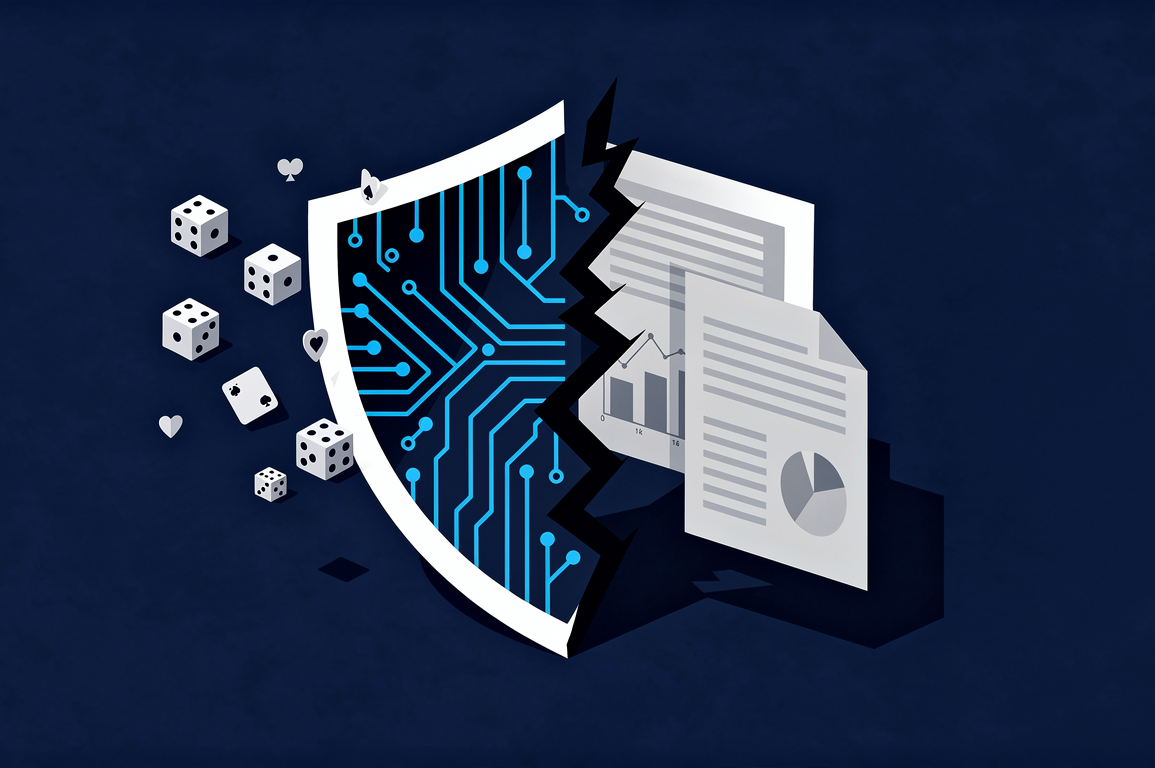

Microsoft has quietly reclassified its Copilot AI assistant as a tool intended solely for entertainment purposes, according to updated terms of service discovered this week. The dramatic policy shift effectively shields the company from liability for business decisions made using the technology, raising fundamental questions about the reliability of enterprise AI products.
The revised language, first reported by India Today, instructs users to employ Copilot ‘at your own risk’ and explicitly states the service is not designed for professional or business-critical applications. This represents a significant retreat from Microsoft’s previous positioning of Copilot as a productivity enhancement for workplace environments.
The reclassification carries immediate implications for the estimated 600 million Microsoft 365 users who have access to Copilot features embedded across Word, Excel, PowerPoint and Teams. Organisations that have integrated the AI assistant into business workflows now face uncertainty about whether continued use exposes them to unmitigated risk.
Legal experts suggest the terms-of-service change reflects growing anxiety within Microsoft about potential liability for AI-generated errors. Recent high-profile incidents of AI ‘hallucinations’—where language models confidently produce false information—have created legal exposure for technology providers. By downgrading Copilot to entertainment status, Microsoft appears to be establishing a legal firewall against claims arising from flawed AI outputs used in business contexts.
The timing proves particularly awkward for Microsoft’s enterprise AI strategy. The company has invested heavily in positioning itself as the corporate standard for generative AI, with CEO Satya Nadella repeatedly emphasising AI as central to productivity gains. Microsoft reported in January that Copilot for Microsoft 365, priced at £24 per user monthly, had been adopted by 70 per cent of Fortune 500 companies.
The policy shift creates a paradox: Microsoft continues to sell Copilot as an enterprise productivity tool whilst simultaneously disclaiming responsibility for its use in professional settings. This contradiction places IT decision-makers in an untenable position, particularly in regulated industries where documentation accuracy and decision auditability carry legal weight.
Competitors stand to benefit from Microsoft’s apparent loss of confidence in its own product. Google Workspace and Anthropic, both offering enterprise AI tools, may capitalise on the uncertainty by emphasising their commitment to business-grade reliability. Salesforce’s Einstein AI platform, which includes contractual protections for enterprise customers, presents a particularly stark contrast to Microsoft’s new entertainment-only classification.
The broader market implications extend beyond immediate competitive dynamics. If the industry’s dominant player cannot stand behind its AI products for business use, the entire premise of enterprise AI adoption faces scrutiny. Organisations have based digital transformation strategies on the assumption that AI tools would augment professional decision-making, not serve merely as experimental diversions.
Microsoft has not issued public commentary explaining the rationale behind the terms-of-service modification. The company did not respond to requests for clarification about whether the entertainment-only designation applies to all Copilot variants, including the premium enterprise tier, or only to consumer-facing versions.
Industry observers will be monitoring whether other major AI providers follow Microsoft’s lead in limiting liability through restrictive terms of service. The legal framework governing AI-generated content remains underdeveloped, creating incentives for technology companies to minimise exposure through contractual disclaimers rather than product improvements.
The incident underscores a fundamental tension in the current AI market: providers wish to capture enterprise revenue whilst avoiding accountability for the technology’s limitations. Until this contradiction resolves—either through stronger product guarantees or more honest marketing about AI capabilities—enterprise customers face the prospect of paying premium prices for tools their vendors refuse to endorse for serious work.