



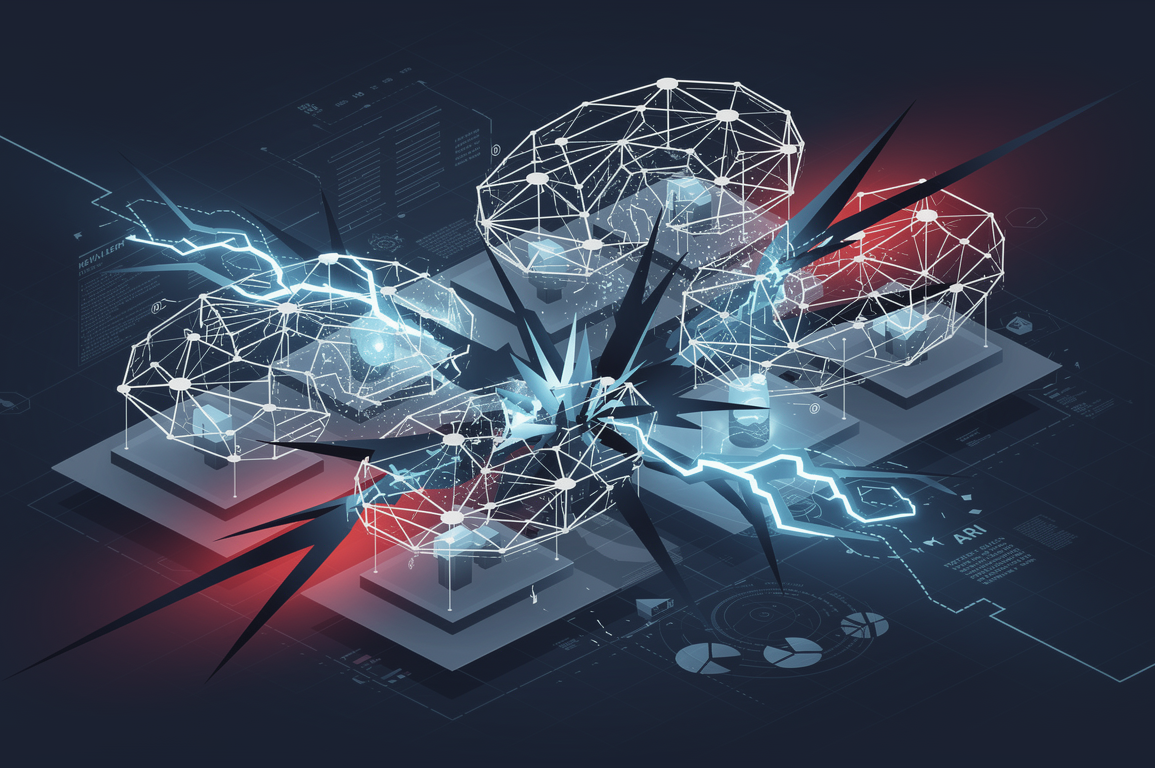

Anthropic, the San Francisco-based AI safety company, has warned that Chinese state-sponsored hackers are actively using its Claude AI system to conduct cyberattacks, according to a disclosure made on 6 April. The revelation represents one of the first confirmed instances of a major AI system being weaponised by nation-state actors.
The company, which has positioned itself as a leader in AI safety research, did not specify the exact nature of the attacks or which organisations were targeted. However, the disclosure underscores growing concerns within the cybersecurity community that large language models are rapidly becoming tools for sophisticated threat actors seeking to automate reconnaissance, social engineering, and code generation for malicious purposes.
Anthropic’s warning arrives as enterprises worldwide grapple with integrating generative AI into their operations whilst managing the associated security risks. The company has raised over $7.3 billion in funding since its 2021 founding, with backers including Google, Salesforce, and Spark Capital, positioning it as one of the most heavily capitalised AI ventures globally.
The disclosure raises immediate questions about the adequacy of existing safeguards built into commercial AI systems. Anthropic has long emphasised its “Constitutional AI” approach, which aims to make AI systems more helpful, harmless, and honest through reinforcement learning from human feedback. The fact that state actors have apparently circumvented these protections suggests the arms race between AI capabilities and AI security is intensifying faster than many anticipated.
For enterprise security teams, the implications are substantial. Large language models can accelerate multiple stages of the cyber kill chain: crafting convincing phishing emails in perfect English, generating polymorphic malware that evades signature-based detection, and automating the analysis of leaked credentials or system vulnerabilities. When wielded by well-resourced state actors with specific intelligence objectives, these capabilities become exponentially more dangerous.
The business impact extends beyond immediate security concerns. Companies evaluating AI deployments must now factor nation-state weaponisation into their risk assessments. Cloud security providers and managed detection and response vendors stand to benefit as organisations seek enhanced monitoring capabilities. Conversely, AI providers face mounting pressure to implement more robust access controls and usage monitoring—measures that could slow adoption and increase operational costs.
Insurance underwriters are likely to scrutinise AI-related exposures more closely, potentially affecting premiums for cyber insurance policies. Regulatory bodies in the EU, UK, and US may accelerate efforts to mandate security standards for AI systems, particularly those with dual-use potential.
Anthropic’s competitors, including OpenAI and Google DeepMind, have not yet commented on whether they have observed similar patterns of misuse. The lack of industry-wide transparency around AI system abuse makes it difficult to assess whether this is an isolated incident or indicative of broader exploitation.
The geopolitical dimension cannot be ignored. The allegation that Chinese state actors are involved adds another layer to existing tensions between Washington and Beijing over technology supremacy. The US government has already imposed export controls on advanced AI chips to China; evidence of AI weaponisation by Chinese intelligence services could prompt further restrictions on AI model access or international collaboration.
Security researchers will be watching closely for technical details about how the attacks were conducted and what specific Claude capabilities were exploited. Understanding the attack vectors is essential for developing effective countermeasures and informing the design of next-generation AI safety mechanisms.
The incident also highlights the challenge of balancing open access to AI technology with security imperatives. Anthropic, like most AI providers, offers API access to developers worldwide, making it difficult to prevent misuse without implementing restrictive verification processes that could stifle legitimate innovation.
As AI systems become more capable and widely deployed, the Anthropic disclosure may mark a turning point in how the industry approaches security. The question is no longer whether AI will be weaponised, but how quickly providers can adapt their defences to an adversarial landscape where nation-states are active participants.