

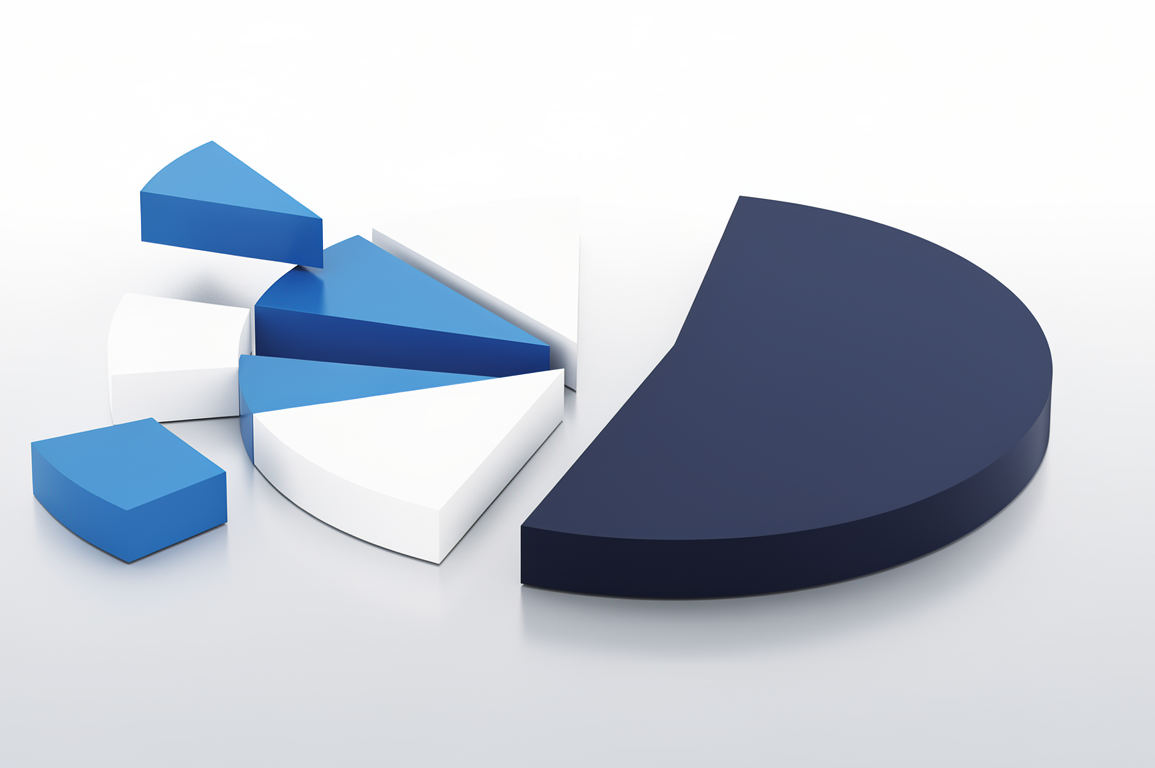

ChatGPT’s market share has fallen below 50% for the first time since its November 2022 launch, according to data reported by TechCrunch AI, marking a significant shift in the competitive landscape for conversational AI assistants.
The decline represents the end of OpenAI’s majority market position in the consumer AI assistant space, with Google’s Gemini and Anthropic’s Claude capturing an increasing proportion of users seeking alternatives to the pioneering chatbot that sparked the current AI boom.
The market share erosion comes as enterprise and consumer users diversify their AI tool portfolios, no longer relying exclusively on a single provider. Industry observers have anticipated this shift as competitors launched comparable products with differentiated features, pricing models, and integration capabilities.
Competitive dynamics reshape market
Google’s Gemini has benefited from deep integration across the company’s product ecosystem, including Gmail, Google Docs, and Android devices, providing distribution advantages that standalone applications cannot match. The search giant’s ability to bundle AI capabilities into existing workflows has proven particularly effective with enterprise customers already embedded in Google Workspace.
Anthropic’s Claude has gained traction among users prioritising safety features and longer context windows, with the company’s Constitutional AI approach resonating with enterprises concerned about responsible deployment. The assistant’s reputation for nuanced responses and reduced hallucination rates has attracted users in legal, medical, and financial sectors where accuracy carries heightened importance.
The fragmentation also reflects maturation in buyer behaviour. Early adopters who initially flocked to ChatGPT as the only viable option now evaluate multiple providers based on specific use cases, cost structures, and technical capabilities rather than brand recognition alone.
Business implications
For OpenAI, the market share decline arrives as the company pursues aggressive monetisation strategies and reportedly seeks additional funding at elevated valuations. Losing majority market position complicates the growth narrative presented to investors, though the company retains substantial revenue and user engagement advantages built during its 18-month head start.
Google stands to gain most immediately, leveraging its distribution muscle to convert existing users across its billion-user products. The company’s ability to offer AI capabilities at minimal marginal cost—subsidised by its advertising business—creates pricing pressure that pure-play AI companies must address.
Anthropic’s growing share validates its differentiated positioning and provides momentum for enterprise sales cycles, though the company faces ongoing questions about long-term financial sustainability without comparable distribution channels or diversified revenue streams.
The competitive shift also affects Microsoft, whose substantial investment in OpenAI and integration of ChatGPT into its products ties the company’s AI strategy to a provider no longer commanding majority market share. The technology giant may need to reassess its exclusive partnership approach as customers demand multi-model flexibility.
Enterprise software vendors including Salesforce, ServiceNow, and SAP—which have embedded ChatGPT capabilities into their platforms—now face customer requests for model optionality, adding complexity to product roadmaps and partnership agreements structured around single-provider relationships.
Market trajectory
The trajectory suggests continued fragmentation rather than reconsolidation, with users increasingly adopting a multi-model approach that selects different assistants for distinct tasks. This mirrors enterprise software buying patterns in other categories, where best-of-breed strategies have supplanted single-vendor dominance.
Pricing will likely emerge as the next competitive battleground, with providers under pressure to demonstrate return on investment as the novelty factor diminishes and procurement departments apply standard vendor evaluation criteria.
The market share data also raises questions about OpenAI’s forthcoming GPT-5 release and whether a significant capability leap could reverse the trend or whether competitive dynamics have shifted permanently toward a multi-provider landscape. The answer will shape investment flows, partnership strategies, and product development priorities across the AI sector for the remainder of the decade.