



Google has launched a universal AI agent powered by Gemini that operates across its entire enterprise application suite, according to The Verge AI, marking the company’s most aggressive move yet into workplace automation and setting up direct competition with Microsoft’s Copilot and Anthropic’s enterprise offerings.
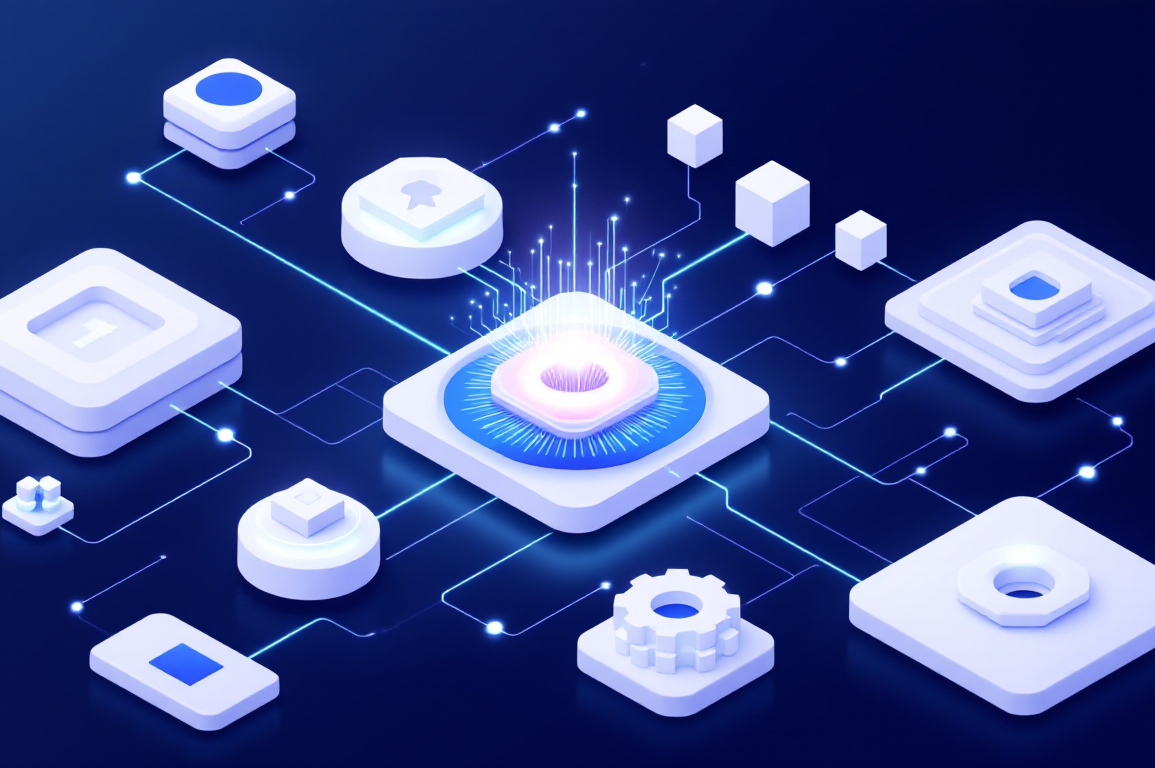
The new agent, distinct from Google’s existing Workspace AI features, can autonomously execute tasks spanning Gmail, Drive, Calendar, Meet, and other Google Workspace applications without requiring users to switch between individual app-specific assistants. This unified approach represents a significant architectural shift from the fragmented AI tools currently available in enterprise software.
Unlike previous iterations of Workspace AI that functioned as suggestion engines or co-pilots within individual applications, the universal Gemini agent can initiate and complete multi-step workflows independently. The distinction matters for enterprises seeking genuine automation rather than augmentation—a capability that has remained largely theoretical in most commercial AI deployments to date.
Market positioning and competitive dynamics
The launch intensifies the enterprise AI arms race between the three dominant players. Microsoft currently leads in enterprise AI adoption with Copilot deployed across its Office suite, whilst Anthropic has gained traction with Claude for Enterprise amongst companies prioritising AI safety and interpretability. Google’s unified agent strategy attempts to leverage its existing Workspace customer base, which exceeds 10 million paying organisations.
For Google, the stakes extend beyond product features. The company faces pressure to demonstrate that its substantial AI infrastructure investments—including custom TPU chips and the Gemini model family—can translate into enterprise revenue growth. Workspace represents Google Cloud’s most mature enterprise product, making it the logical beachhead for monetising advanced AI capabilities.
Microsoft stands to lose the most if Google’s execution matches its ambition. Copilot’s £24 per user monthly pricing has already faced enterprise resistance, and a more capable Google alternative could stall Microsoft’s AI revenue ramp. For Anthropic, the competitive threat is less immediate but strategically significant: Google’s distribution advantage through Workspace could commoditise enterprise AI agents before Anthropic establishes sustainable market share.
Implementation and adoption barriers
Despite the technical achievement, several obstacles complicate enterprise deployment. Data governance remains paramount—allowing an AI agent to operate across email, documents, and calendars raises questions about access controls, audit trails, and compliance with regulations including GDPR. Google has not yet detailed how the universal agent handles data sovereignty requirements or provides the granular permission controls that enterprise security teams demand.
Integration with non-Google systems presents another challenge. Most enterprises operate hybrid environments mixing Microsoft, Google, Salesforce, and specialised vertical applications. An agent confined to Google’s ecosystem delivers limited value compared to truly universal automation platforms that some startups are pursuing.
Pricing structure will prove critical. If Google bundles the universal agent into existing Workspace subscriptions, it gains rapid distribution but forgoes premium AI revenue. A separate premium tier risks replicating Microsoft’s Copilot adoption challenges whilst potentially cannibalising Workspace upgrade revenue.
Technical architecture and differentiation
The universal agent’s architecture likely builds on Google’s Gemini 1.5 Pro model, which supports the extended context windows necessary for maintaining state across multiple applications and lengthy workflows. This technical foundation differentiates Google’s approach from Microsoft’s, which relies on OpenAI’s models, and from Anthropic’s Claude, which emphasises constitutional AI principles over context length.
Whether Google’s vertical integration—controlling the model, infrastructure, and application layer—produces superior performance compared to Microsoft’s partnership model or Anthropic’s focused approach will determine competitive outcomes over the next 12 to 18 months.
What to watch
Enterprise adoption metrics will provide the first meaningful signal. Google’s willingness to disclose deployment numbers, usage patterns, and customer retention rates will indicate whether the universal agent delivers measurable productivity gains or remains a technical demonstration. Equally important: how quickly Microsoft and Anthropic respond with architectural changes to their own enterprise offerings.
Google’s universal Gemini agent transforms enterprise AI from a collection of point solutions into integrated automation infrastructure, but commercial success depends on execution details that remain undisclosed—pricing, governance, and cross-platform integration—rather than the underlying technical capabilities.