


Mercedes and Microsoft’s partnership reveals how elite sport is becoming a laboratory for enterprise AI
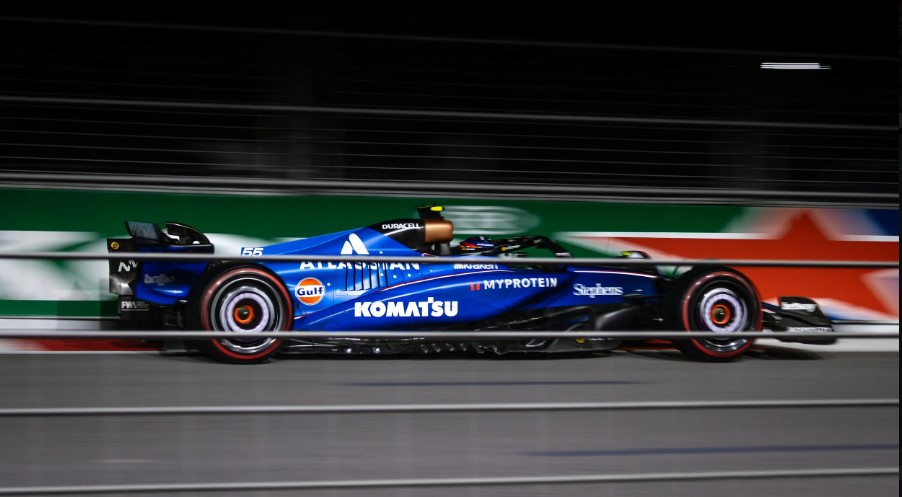
Formula 1 Is No Longer Just Racing Cars
Formula 1 has always been a proving ground for the future, carbon fibre, hybrid engines, telemetry, and aerodynamics. But as the sport approaches its most disruptive regulatory overhaul in decades, something fundamental is changing.
With the announcement of a multiyear AI and cloud partnership between Microsoft and the Mercedes-AMG PETRONAS Formula One Team, the world’s most technologically advanced racing series is signalling that artificial intelligence is no longer a performance enhancer; it is becoming the operating system of elite competition.
This partnership, aimed squarely at navigating the sweeping 2026 Formula 1 regulations, which place unprecedented emphasis on electrification, sustainability, and data efficiency, is not merely about winning races. It is about mastering complexity at machine speed.
And the implications extend far beyond motorsport.
Formula 1 Is Being Reinvented
The 2026 Formula 1 regulations represent the most radical reset since the hybrid era began in 2014.
Key changes include:
- Power units drawing roughly 50% of their energy from electric systems
- Elimination of the complex MGU-H component
- Greater reliance on sustainable fuels
- Tighter cost controls
- A renewed emphasis on energy efficiency rather than raw horsepower
These rules are designed to make F1:
- More environmentally credible
- More attractive to manufacturers
- More aligned with the global automotive transition
But they also make racing exponentially more complex.
Managing the interaction between combustion engines, battery systems, energy recovery, tire degradation, aerodynamics, and strategy now requires real-time optimisation across millions of variables.
Human intuition alone is no longer enough.
Microsoft’s role
Microsoft’s role in this partnership is not about branding. It is about enterprise-scale AI deployment in extreme conditions.
Formula 1 generates terabytes of data per race weekend, including:
- Sensor telemetry from hundreds of car components
- Weather and track condition data
- Simulation outputs from thousands of race scenarios
- Historical performance datasets spanning decades
By integrating cloud computing, machine learning models, and AI-driven analytics, Mercedes aims to:
- Accelerate race strategy simulations
- Improve predictive maintenance
- Optimize energy deployment lap by lap
- Enhance decision-making during live races
In effect, the team is treating each Grand Prix as a high-frequency decision environment, similar to financial markets or large-scale logistics networks.
This is enterprise AI under maximum pressure.
AI as New Competitive Boundary in Sport
Formula 1 has always been data-driven. What is different now is scale and autonomy.
In previous eras, data-informed engineers. In the AI era, models increasingly propose actions, narrowing the window for human override.
The Microsoft–Mercedes partnership reflects a broader trend:
- AI systems pre-simulate thousands of race outcomes before cars even reach the grid
- Strategy teams rely on probabilistic models rather than instinct
- Performance gains come from marginal optimisations discovered by machines, not humans
This mirrors what is happening in finance, manufacturing, defense, and healthcare.
Elite performance is becoming inseparable from algorithmic intelligence.
Sustainability Is No Longer Side Narrative
The 2026 regulations place sustainability at the center of Formula 1’s identity.
For Mercedes, AI is critical to meeting this mandate without sacrificing competitiveness:
- Optimizing energy recovery systems
- Reducing fuel waste
- Improving lifecycle efficiency of components
- Lowering the carbon footprint of logistics and operations
Microsoft’s cloud infrastructure allows simulations that would be prohibitively energy-intensive on local hardware, shifting computation to more efficient data centers.
This matters because Formula 1’s credibility increasingly depends on proving that high performance and environmental responsibility are not mutually exclusive.
Hidden Stakes
Formula 1’s cost cap, currently set at approximately $135 million per season, has changed how teams innovate.
Unlimited spending is no longer possible. Efficiency is everything.
AI offers a crucial advantage:
- Faster design iteration without physical prototypes
- Reduced wind tunnel dependency
- Smarter allocation of development budgets
In this context, AI is not a luxury. It is a financial necessity.
Teams that fail to extract value from AI risk falling behind, not because they lack talent, but because they cannot process complexity fast enough.
Mercedes Risks
Mercedes-AMG PETRONAS is one of the most successful teams in Formula 1 history, but recent seasons have exposed how quickly dominance can erode.
By embedding AI deeper into operations, Mercedes gains:
- Strategic resilience under new regulations
- Faster adaptation to rule interpretations
- A platform that improves continuously over time
But there are risks:
- Overreliance on model outputs
- Reduced room for creative, human-led strategy
- Potential convergence if rival teams adopt similar systems
When everyone has AI, differentiation shifts again to data quality, governance, and human judgment.
This Partnership Matters Outside Motorsport
Formula 1 has long served as a technology transfer ecosystem. Innovations pioneered on the track often find their way into:
- Consumer vehicles
- Energy management systems
- Advanced manufacturing
- Enterprise analytics
The Microsoft–Mercedes collaboration offers a real-world case study in:
- AI-assisted decision-making under uncertainty
- Sustainable high-performance systems
- Human–machine collaboration in critical environments
Executives watching this partnership are not interested in lap times. They are watching how AI reshapes organisational intelligence.
Human Question
As AI becomes more embedded in race operations, a critical question emerges: where does human authority end?
Formula 1 regulations still require:
- Human drivers
- Human team principals
- Human accountability
But when an AI system recommends a pit strategy with a statistically higher success rate, overriding it becomes harder, especially under time pressure.
This tension mirrors debates in aviation, medicine, and defense.
Formula 1, once again, becomes a testing ground for how societies balance automation with responsibility.
Formula 1 as a Preview of AI Economy
The Microsoft–Mercedes-AMG PETRONAS partnership is not about marketing synergy. It is about preparing for a world where complex systems must be managed at speeds beyond human cognition.
Formula 1’s 2026 season will showcase more than new cars and engines. It will showcase a new model of competition, one where cloud computing, AI, and sustainability are inseparable from performance.
Those who dismiss this as niche sport miss the point.
The future of enterprise AI may be racing at 300 kilometers per hour.
