

Generative AI can now outperform most people in generating original ideas on standardized tests: Yet the most imaginative human minds remain unmatched: 100,000 humans and the world’s leading language models face off in a creativity
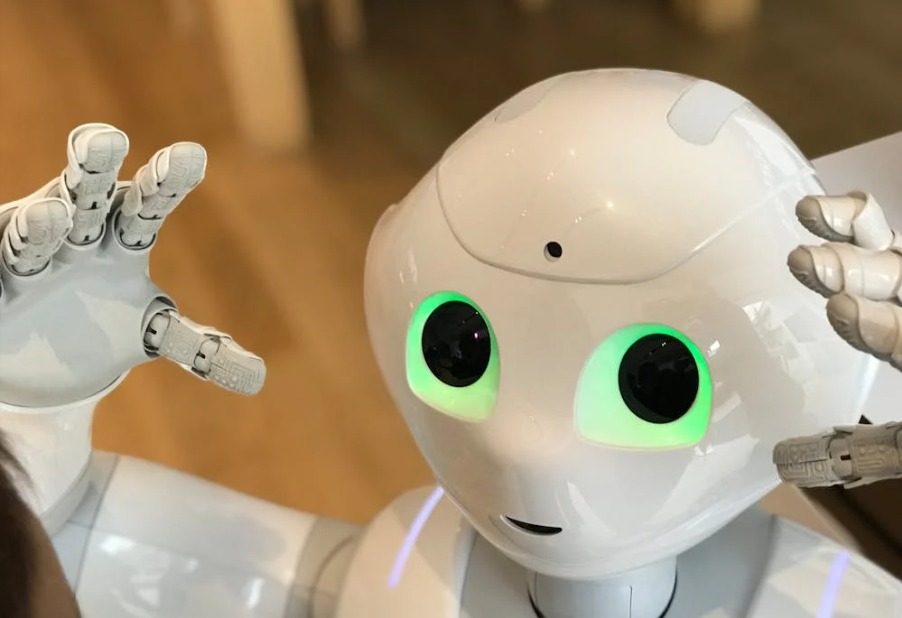
For centuries, creative imagination, the spark of original thought, the birth of new ideas, has been considered one of the most distinctively human faculties. Yet today, the line between biological imagination and mechanical generation is blurring. In a sweeping, data-rich study involving more than 100,000 human participants and the world’s leading generative AI models, scientists have found something both humbling and provocative: generative AI can now outperform the average human on established measures of creativity.
The findings mark a new milestone in artificial intelligence, one that invites not just technical curiosity, but philosophical, ethical, and economic reflection about how we assess creativity, value human insight, and partner with machines in shaping tomorrow’s ideas.
Study That Changed Narrative
In January 2026, a research team led by Professor Karim Jerbi of the Université de Montréal, in collaboration with AI pioneer Yoshua Bengio and colleagues from the University of Toronto, published the largest comparative assessment ever conducted on human vs. AI creativity. The work, appearing in Scientific Reports, leveraged standardized creativity metrics across an unprecedented dataset of over 100,000 humans and several of today’s most advanced generative AI models, including GPT-4, Gemini Pro, and Claude.
The core task was a form of divergent thinking test, essentially a measure of how many distinct, original ideas a participant can generate given open-ended prompts. For humans, such tasks have long regarded as benchmarks of creative potential. In AI, they provide a window into how language models simulate ideation processes.
Remarkably, the best generative AI systems now exceed the average human participant’s score, demonstrating that these models can generate idea sets that are, by standard criteria, more semantically varied than those of most people.
When Machines “Outperform” Us
To say that generative AI outperforms the average human in a creativity test requires careful unpacking. These systems were not simply judged by human emotive standards, but against quantitative metrics, such as the breadth of semantic distance between words or the novelty of idea combinations, derived from psychology research.
In the key Divergent Association Task, both humans and AI were asked to generate lists of words with the greatest semantic diversity possible. Here, generative models like GPT-4 and others registered scores that were, on average, higher than the typical human participant, meaning they produced collections of terms that were more distinct from one another according to algorithmic measures.
Yet the nuance is critical: exceeding average performance is not the same as replacing the deeply imaginative human mind. When researchers separated the data to examine the top half, top 25%, and top 10% of human creatives, they found that the most imaginative humans still outperformed every model tested, often by a wide margin.
This suggests that generative AI now operates within human creativity’s “middle range”, exceptionally quick and broad in idea generation, but not yet rivalling the depth, emotional resonance, or contextual nuance of exceptional individual thinkers.
Creativity as Measure and Mismeasure
The success of AI in this study also invites unavoidable questions about how creativity is being defined and measured. Traditional divergent thinking tasks emphasize novelty and semantic distance, traits that align closely with the way LLMs generate text. These models excel at detecting and recombining patterns across massive corpora, allowing them to produce outputs that appear semantically broad and surprising relative to typical human responses.
But actual creativity, in art, literature, music, and deep problem solving, is multilayered. It is not only about novelty, but about meaning, emotional connectivity, contextual relevance, and value across time, qualities notoriously hard to quantify. While AI may generate strikingly original word lists, whether that translates into work that resonates, inspires, or embodies authentic consciousness remains an open domain. This tension is at the heart of current scientific and philosophical debate.
Even multi-model meta-analyses suggest caution; some research finds no statistically significant difference between human and AI generated ideas across varied tasks, underscoring that context matters in assessing creativity.
Beyond Test Scores
When the Montreal team expanded their comparisons to more complex creative tasks, such as composing haiku, movie plots, and short narratives, the pattern held: AI can occasionally exceed average human performance, but the most imaginative human creators consistently generate richer, more resonant, and more contextually meaningful outputs.
This highlights an essential truth: creativity has layers that are not fully captured by standardized tests. While language models have become remarkable tools for idea exploration and divergent thinking, genuine creative mastery, the kind that innovates, surprises, and moves audiences deeply, remains a distinctly human domain in many complex fields.
Strategic Implications for Business and Culture
The implications of these findings ripple outward across industries:
- Advertising & content generation: AI systems are already proving effective in generating diverse concept ideas, headlines, and brainstorming seeds that rival or exceed average human output. This can enhance productivity and reduce creative workload.
- Product design & ideation: AI can rapidly expand the space of potential solutions, acting as a “creative accelerant” allowing human teams to explore more variations in less time.
- Education & skill development: Understanding AI’s strengths and limitations can help educators adapt curricula, focusing less on routine idea generation and more on critical evaluation, emotional nuance, and integrative thinking, areas where humans still lead.
- Legal and ethical frameworks: As AI approaches human-level performance in some creative tasks, questions of authorship, ownership, and moral agency become more urgent.
In business strategy terms, ligature-like creativity tests are just one axis, but they signal a broader trend: AI as collaborator, not replacement.
Where Creativity and Cognition Diverge
The philosophical implications of AI “creativity” go beyond metrics. Creativity has traditionally been tied to consciousness, self-reflection, cultural grounding, and emotional depth, faculties that machines do not possess. AI’s patterns are derived from training data; its “novelty” arises from recombination, not lived experience or subjective intuition.
This doesn’t make AI’s creativity invalid, but it does reshape what creativity means in a hybrid future. Instead of asking whether AI will replace human creators, a more productive question is how humans and AI can co-create together, leveraging the strengths of both.
Toward a New Creative Ecology
Rather than displacing human creativity, generative AI may expand it. Studies show that when humans use AI as part of their creative process, not as a substitute, overall creative output often improves. Teams combining human insight with AI ideation frequently produce work that neither alone could easily achieve.
This emerging paradigm suggests a future where creative workflows are symbiotic, and human originality isn’t eclipsed, but amplified.
New Chapter in Human-Machine Imagination
The 2026 creativity study is more than a data point; it’s a turning point in how we understand intelligence and imagination. Generative AI has, for the first time, exceeded the creativity of average humans on standardized tests, a milestone in cognitive simulation. But the most evocative, emotionally resonant, and complex forms of creativity remain deeply human.
The real future of creativity lies not in a contest between humans and machines, but in their collaboration. As AI tools grow more capable, the creative question shifts: How will we use these tools to expand our own imaginative horizons?