


Alibaba’s RynnBrain promises robots that can reason about time and space, a leap beyond digital AI
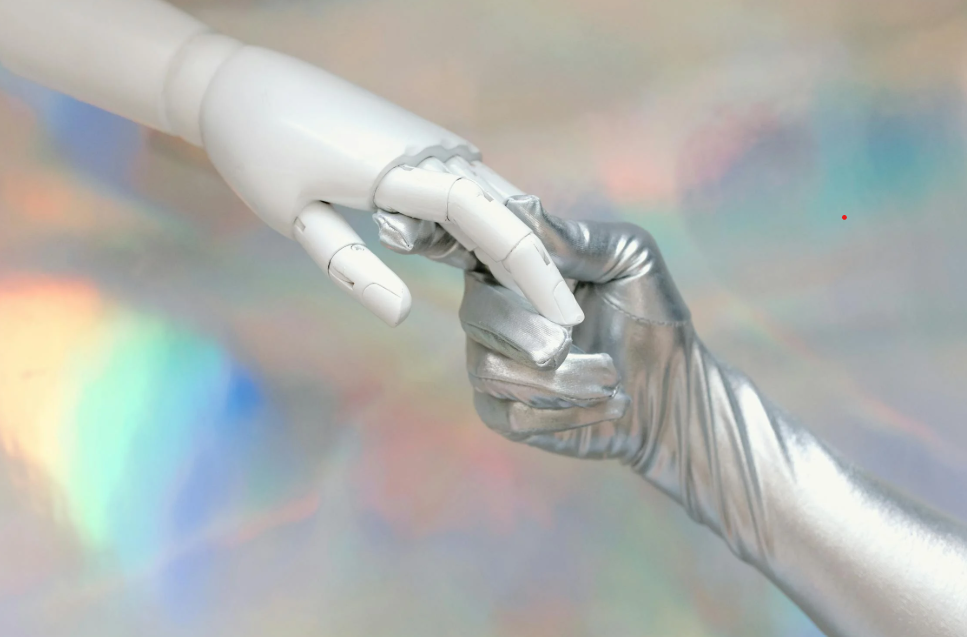
China’s e-commerce powerhouse Alibaba hardly needs an introduction. Its sprawling empire, from online retail to cloud computing and logistics, has become one of the most influential technology ecosystems in the world. But on February 2026, at the annual technology showcase of Alibaba’s DAMO Academy, the company made a bold declaration: the next frontiers of artificial intelligence are not just linguistic or visual but physical.
Enter RynnBrain, an open-source AI model explicitly designed to give machines a kind of bodily intelligence: time and space awareness. In practical terms, this means robots that can understand where they are, perceive change over time, manage multi-step tasks, organize objects, and navigate complex environments, all without human micromanagement.
If RynnBrain delivers on its promise, it signifies nothing less than a seismic shift in how AI interacts with the physical world, a shift as profound as when voice assistants first moved off keyboards and onto our lips.
Limits of Virtual Intelligence
Today’s generative AI models, from chatbots to image generators, excel at processing information: language, code, pixels, transcripts. But physical interaction, the messy, spatial, dynamic world of moving parts, has remained elusive.
Robots may recognize objects in a warehouse shelf, but can they:
- Track objects through time?
- Understand sequence and context in movement?
- Navigate an evolving physical environment?
- Organize multi-step task goals with changing constraints?
Not reliably. Not until now.
While models like GPT-style transformers excel in abstraction, they lack the embodied reasoning needed for real-world robotics. This is why autonomous driving, warehouse automation, and household robots have been notoriously hard problems, not because computation was lacking, but because embodied context and sequential reasoning were.
Alibaba’s RynnBrain claims to change that.
Time and Space Awareness
At its core, RynnBrain is built to give machines an internal model of the physical world, a computational sense of:
- Spatial relationships (where things are relative to one another)
- Temporal sequences (what happened before and after)
- Goal-directed motion (how actions lead to outcomes)
- Multi-step task execution (planning beyond a single command)
This shifts cognition from reactive to proactive.
Most AI today responds to a snapshot. RynnBrain reasons about sequences: “first move this object here, then that object there, then navigate to the next station.”
This kind of understanding is essential for robots that do more than follow straight lines or repeat a programmed sequence. It enables them to plan, adapt, and recover, traits critical to real-world usefulness.
Physical AI
Consider these scenarios:
Modern Warehouses
Workers in massive fulfillment centers must coordinate thousands of items across shifting paths and priorities. A robot with spatial intelligence could:
- Track object flows through time
- Anticipate bottlenecks
- Adjust plans in real time
- Work alongside humans safely
Instead of being automation exhaust, robots idle without orders, they become knowledge workers of motion.
Healthcare Support
Imagine eldercare robots that can:
- Recognize hazardous floor conditions
- Fetch medication at the right time
- Respond to human gestures and urgency
- Learn individual routines
Here, time and space awareness isn’t a luxury ,it’s a safety feature.
Urban Robotics
Delivery drones, sidewalk assistants, and autonomous service robots must integrate physical context with dynamic environments. RynnBrain-like models could help them:
- Predict pedestrian behavior
- Navigate crowded streets
- Avoid obstacles with continuous reasoning
Human-AI coordination in public spaces is one step closer when machines can “see” and “think” through space and time.
Open-Source Advantage
Alibaba’s choice to make RynnBrain open source is strategically significant.
In AI development, openness accelerates adoption, innovation, and scrutiny. It creates ecosystem effects:
🔹 Universities can experiment without licensing barriers
🔹 Startups can build new robot capabilities faster
🔹 Industry groups can contribute benchmarks and safety practices
🔹 Hardware makers can co-design optimized chips and sensors
This is reminiscent of how open models in language, from early GPTs to open alternatives — democratized AI research and deployment.
By open-sourcing RynnBrain, Alibaba is signaling an intent to shape physical AI standards, not just capture market share.
Global Robotics Arms Race
RynnBrain’s debut comes at a time of intense strategic competition around AI and robotics.
Across the United States, China, and Europe, governments and corporations alike are investing heavily in:
- Robotics R&D
- AI infrastructure
- Autonomous systems
- AI safety and governance
The U.S. Department of Defense funds physical AI research. The EU mandates AI transparency. China prizes industrial robotics as a key growth pillar.
In this global contest, software that can reason in time and space is a critical capability. Smoothly navigating a warehouse is one thing. Coordinating multi-robot fleets in shared environments, that’s a breakthrough.
RynnBrain positions Alibaba and DAMO Academy at the center of that emerging ecosystem.
Technical Leap or Marketing Moment?
Skeptics will ask a reasonable question: Does RynnBrain deliver in real environments, or is it still largely conceptual?
This question matters.
AI research is notorious for elegant demos that struggle outside controlled settings. The history of robotics is littered with systems that worked in labs but floundered in the wild.
However, Alibaba’s framing suggests the company has learned from those lessons. Key design choices point to practical readiness:
- Integration with multiple sensory inputs (vision, depth, motion)
- Multi-step reasoning frameworks (not single-task classification)
- Embodied simulation environments for training
- Compatibility with physical robot platforms
This does not guarantee performance, but it signals an architectural awareness of real-world constraints.
Ethical and Safety Dimension
As robots move from scripted environments into dynamic human spaces, safety becomes a strategic imperative.
Time and space awareness is not just about efficiency, it’s about risk mitigation:
- Avoiding collisions with people and objects
- Recognizing contextual cues (e.g., a child on a tricycle)
- Adapting to unpredictable environments
- Understanding human social norms in movement
Alibaba’s promotion of explainability, ensuring that RynnBrain’s decision logic can be interpreted, may be one of the clearest acknowledgments yet that physical AI must be accountable.
This is especially critical in life-critical environments like healthcare, logistics, and public spaces.
Enterprise and Society
For enterprises, RynnBrain represents a potential bridge between rules-based automation and intelligent autonomy. Rules work well when variables are fixed. But real environments are not fixed.
For societies, this shift raises deeper questions:
- How do we certify mobile AI systems in public spaces?
- What standards ensure safety and fairness?
- Who regulates machines that must “reason” about physical contexts?
- How do we protect jobs while embracing robotic collaboration?
Answers to these questions will shape policy, employment, and public trust in intelligent machines.
Broader Trend
The launch of RynnBrain reflects a broader arc in AI evolution:
- AI That Reads (text intelligence)
- AI That Sees (computer vision)
- AI That Acts (robotic control)
- AI That Understands Context (time + space)
The final step is the most challenging because it requires temporal memory, spatial reasoning, and goal-oriented planning, capabilities that have historically fallen outside the strengths of traditional language or perception models.
RynnBrain attempts to stitch these capabilities together.
New Industrial Operating System?
If language models became the operating systems of digital information, physical AI — models like RynnBrain, could become the operating systems of the spatial world.
This opens possibilities:
- Intelligent factories where robots plan and adapt
- Autonomous logistics hubs with self-organizing fleets
- Service robots that understand human contexts
- Safety systems that anticipate and react before harm
Such systems demand more than prediction, they demand situational intelligence.
Final Thought: From Simulated to Shared Reality
For decades, the boundaries of AI were mostly digital: information retrieval, pattern recognition, generation.
But human experience unfolds in time and space.
RynnBrain’s ambition is to bring AI into that world, not as a detached computational engine but as an embodied reasoner.
Whether or not the model delivers on all its promises, its release marks a strategic shift from virtual intelligence to embodied intelligence.
And that may be the most important shift in AI since the rise of generative models.