


From Sam Altman to heads of state, the India AI Impact Summit 2026 redefines global AI cooperation and inclusive innovation
On a crisp February morning in New Delhi, under the expansive glass canopies of Bharat Mandapam, the world’s attention has pivoted toward India, not as a passive market for artificial intelligence (AI) technologies, but as a strategic field where the rules governing AI’s future will be debated, and potentially rewritten. From February 16 to 20, 2026, the India AI Impact Summit 2026 stands as perhaps the most consequential global convening on AI this year, and arguably in the decade ahead.
India’s summit isn’t merely about showcasing innovation; it embodies a new phase in global AI diplomacy, one that challenges the concentration of AI power in the United States and China while positioning the Global South at the center of an equitable, inclusive and practical AI agenda.
From Paris to Seoul to New Delhi: Why This Summit Matters
This India gathering is not an isolated event. It is the third major milestone in a global series of AI summits that began with safety-centric discussions at Bletchley Park in 2023, continued with ethical and inclusive frameworks at Seoul in 2024, and later mapped cooperative implementation strategies in Paris in 2025.
What sets the India summit apart is its focus on real-world impact rather than abstract principles. By bringing together policymakers, lab founders, CEOs, heads of state, researchers and civil society leaders under one roof, it signals a shift toward global co-creation frameworks, interoperability of AI applications, and alignment of AI policy with development goals, from health and education to agriculture and climate resilience.
Who Is There and What They’re Bringing
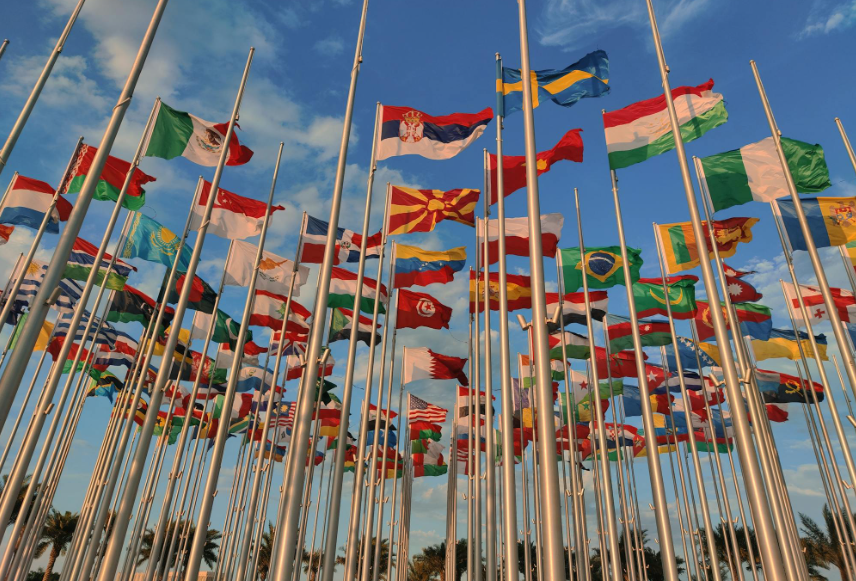
The guest list is unprecedented. Over 100 countries have sent delegations, including 15–20 heads of state and more than 50 ministers from diverse regions. Leading CEOs from the world’s largest technology companies, including Google’s Sundar Pichai and OpenAI’s Sam Altman, are present to engage in forums spanning policy, ethics, infrastructure, and governance.
Originally anticipated, Nvidia CEO Jensen Huang, a figure synonymous with AI compute advancements, unexpectedly cancelled his appearance on short notice but global interest remains undiminished.
Leaders are not merely window-dressing. They are driving substantive dialogue about investment, infrastructure, skills and local applications. India’s government estimates that the AI ecosystem has already attracted around US$70 billion in infrastructure investments, likely to expand further as commitments are announced during the summit.
India’s Strategic Vision: AI for All, Not Just the Elite
Prime Minister Narendra Modi’s government has framed AI as a tool for inclusive development and democratic empowerment. Initiatives like “AI for All,” “AI by HER,” and “YUVAi” reflect a deliberate attempt to broaden participation beyond elite tech circles and to engage youth, women innovators and grassroots leaders.
At the summit, discussions emphasize capacity building and skill development. India’s ambition is to create a generation of AI-literate youth, an ecosystem where universities, vocational programs, startups and industry collaborate on accessible AI technologies that solve local problems, from farmer advisory systems to healthcare access tools.
This focus on impact over hype represents a conscious departure from grandiose promises of general intelligence to grounded applications that improve lives. This is why experts and delegates alike regularly point to the idea of a Global AI Commons, a shared repository of AI tools, datasets and governance standards that can be accessed and adapted by nations, especially those in the Global South.
Security, Urban Logistics, and the Synthesis of Governance and Technology
Hosting an event of this magnitude is no small civic endeavor. New Delhi has implemented G20-level security measures, anti-drone systems, bomb-detection squads, thousands of CCTV cameras and coordinated police deployment, to protect attendees.
The summit also coincides with critical national events, including the commencement of the Central Board of Secondary Education (CBSE) exams, prompting careful logistical planning to ensure minimal disruption.
These complexities, merging high-stakes technology forums with everyday city life, exemplify the kinds of challenges AI governance must navigate: optimizing advanced systems without alienating or endangering civil populations. This is exactly the space where policy meets practical implementation.
AI Governance and Global Power Dynamics
India’s summit arrives at a moment when Western and Eastern powers are grappling with the dual imperatives of competition and cooperation in AI. Unlike previous gatherings that were rooted firmly in Western agendas, New Delhi’s forum is explicitly global and pluralistic. By advocating for AI commons and interoperable governance frameworks, India highlights a vision of technological leadership that is shared and multipolar, not dominated by a few corporations or governments.
This stance reflects broader geopolitical shifts. The rapid territorial expansion of AI deployment from Silicon Valley to Bengaluru, Beijing, Tel Aviv, Paris and beyond means that no single region can adequately set global norms alone. New Delhi’s leadership recognizes this, and is leveraging the summit to articulate a bottom-up model of global cooperation.
From Policy to Practice: Expo, Challenges, and Real-World Impact
The summit is not just meetings and speeches. Alongside discussions is the India AI Impact Expo, an experiential showcase spanning over 70,000 square meters of exhibition space with hundreds of exhibitors from 30+ countries, featuring over 500 startups, research institutions and country pavilions.
This expo is critical in translating policy talk into visible, hands-on demonstrations of AI solutions: tools for sustainable agriculture, AI-powered diagnostics in healthcare, climate modeling platforms and more. Forums include panel discussions, roundtables, workshops, masterclasses and hackathons, bridging theory with practical deployment.
Across these platforms, the summit foresees over 500 sessions, touching on everything from AI safety and ethical frameworks to data protection and sovereign AI strategy, topics that will shape not just Indian policy but global standards.
The Stakes for India and the World
For India, the summit is a culmination of years of prioritizing digital infrastructure, from the India Stack digital identity framework to expansive public digital services. This summit is a chance to convert that groundwork into global leadership in AI governance, innovation and industrial transformation.
For the rest of the world, the event is an inflection point. It is where emerging economies articulate their priorities, where concerns about inequality, bias and technological colonialism are given voice, and where global cooperation frameworks might finally bridge the divide between innovation and equitable access.
India’s model, an AI ecosystem rooted in inclusive growth, practical solutions and democratic participation, offers a compelling counter to a narrative that has framed AI as the exclusive domain of tech giants and major powers.
Looking Ahead: Challenges and the Road Beyond
India’s summit is not without challenges. Aligning the priorities of dozens of nations, corporations and civil society actors is a complex governance task. Persistent issues, such as the ethical use of AI, algorithmic bias, data sovereignty, and AI’s impact on labor markets, will need sustained, global engagement beyond a single summit week.
Yet, the critical takeaway from New Delhi’s gathering is the proof of intent: that a global dialogue on AI can be inclusive, action-oriented and aligned with broader developmental goals. It suggests a path forward where AI governance is not a byproduct of technological dominance but a shared project of the global community.
From February 16 through the 20th, India has brought the world’s attention to a crucial junction in the evolution of AI, a junction where policy, technology and human impact intersect. The discussions, agreements and challenges navigated in New Delhi may well shape how societies harness AI for generations to come.