


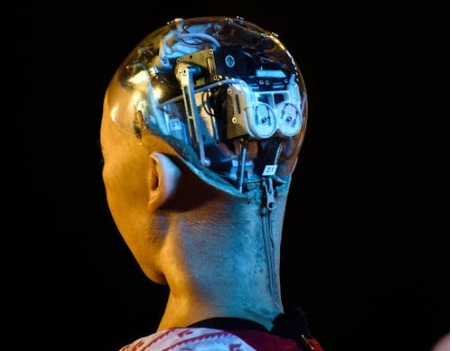
Billion-Dollar Pivot Toward Spatial Intelligence
When Fei-Fei Li raises $1 billion for a new venture, it is not merely another funding milestone in Silicon Valley. It is a directional signal. The creation of World Labs and its unprecedented early capital infusion reflect something larger than startup enthusiasm. It signals a strategic shift in artificial intelligence itself.
For more than a decade, AI has been defined by data scale, language modeling, and cloud-based inference. Large language models have reshaped industries, altered productivity patterns, and redefined human-machine interaction. Yet even the most advanced systems remain, fundamentally, two-dimensional. They interpret text, images, and structured inputs, but they do not fully understand the world as humans inhabit it.
Spatial intelligence changes that equation.
World Labs is dedicated to building systems that can model and reason about three-dimensional environments. In simple terms, this means AI that understands space, depth, movement, geometry, and physical constraints. In strategic terms, it represents the transition from conversational intelligence to embodied intelligence.
Spatial Intelligence Matters Now
The AI boom of the past three years has centered on generative systems. Companies have poured billions into building ever-larger transformer models trained on internet-scale data. But as these models saturate productivity tools and digital services, attention is turning toward a harder frontier: physical reality.
Machines that can navigate warehouses autonomously, robots that can assist in elder care, drones that can coordinate in dynamic environments, and vehicles that interpret chaotic cityscapes all require something language models lack. They require persistent world models.
Spatial intelligence systems attempt to construct internal representations of 3D space that remain consistent over time. They interpret camera inputs, sensor data, and environmental cues to simulate the geometry of surroundings. In doing so, they approach how humans understand the world through perception and interaction.
Fei-Fei Li’s academic career provides context. As a former Stanford professor and pioneer in computer vision, she helped lay the foundations for image recognition systems that transformed AI research. Her work on large-scale visual datasets accelerated the deep learning revolution. Now, with World Labs, she is extending that legacy into volumetric world modeling.
Financial Signal
A $1 billion funding round at this stage is extraordinary by any measure. Early-stage AI companies typically raise in the tens or hundreds of millions. This capital level places World Labs among the most heavily backed frontier AI ventures globally.
Such funding reflects more than investor confidence in an individual founder. It reflects conviction that spatial intelligence may become foundational infrastructure, similar to how large language models underpin today’s digital ecosystem.
Global venture capital investment in AI has surged dramatically in recent years, with generative AI alone drawing tens of billions of dollars annually. But much of that capital targets incremental improvements to existing models. Spatial intelligence, by contrast, is a platform bet. If successful, it will influence robotics, logistics, autonomous mobility, industrial automation, defense systems, augmented reality, and smart manufacturing.
This is not software as a service. This is intelligence embedded into physical systems.
Robotics Renaissance
Robotics has long promised transformation, yet widespread deployment has remained limited outside structured industrial settings. The core limitation has been perception and adaptability. Robots excel in controlled environments but struggle with unstructured variability.
Spatial intelligence addresses this bottleneck. By enabling machines to construct dynamic 3D maps and anticipate physical consequences, it reduces brittleness in real-world operations.
Warehouse automation offers a clear example. Current systems rely heavily on predefined pathways and rigid workflows. A spatially intelligent system could adapt to shifting layouts, unexpected obstacles, and evolving task demands without exhaustive reprogramming.
Healthcare robotics presents another frontier. Surgical assistants, rehabilitation systems, and hospital logistics robots require precise environmental awareness. Spatial reasoning dramatically enhances safety and effectiveness.
The same applies to autonomous vehicles. While progress has been made, edge-case failures continue to expose limitations in contextual awareness. Persistent 3D world modeling may reduce such failures by integrating geometry and motion prediction more robustly.
Economic Implications
If language AI boosted cognitive productivity, spatial intelligence could amplify physical productivity. Manufacturing, construction, agriculture, and transportation represent enormous shares of global GDP. Introducing adaptive machine intelligence into these sectors has compounding effects.
The global robotics market is already valued in the hundreds of billions of dollars, and autonomous systems are projected to expand rapidly over the coming decade. A foundational spatial intelligence layer could accelerate this growth, creating a new category of AI-enabled physical infrastructure.
There are labor implications as well. Automation has historically displaced certain roles while creating others. Spatial intelligence may increase efficiency in repetitive physical tasks, but it will also require engineers, operators, safety specialists, and system integrators at scale.
Geopolitical Dimension
AI competition increasingly carries geopolitical weight. Nations recognize that leadership in artificial intelligence translates into economic resilience and strategic leverage.
Spatial intelligence intersects directly with defense, aerospace, and infrastructure resilience. Autonomous drones, battlefield robotics, disaster-response systems, and surveillance platforms all rely on environmental modeling.
The United States, China, and Europe are all investing heavily in embodied AI research. A well-capitalized venture like World Labs strengthens the U.S. position in this domain, particularly if its research transitions from academic breakthrough to scalable deployment.
This is not merely a startup story. It is a technological sovereignty story.
Challenges Ahead
The path is not simple. Spatial intelligence demands enormous computational resources. Modeling 3D environments at scale requires advances in simulation, sensor fusion, and real-time inference.
Data acquisition presents another hurdle. While language models train on vast public text corpora, 3D world data is more fragmented and expensive to collect. High-quality annotated spatial datasets remain limited.
There are also safety concerns. Systems operating in physical space introduce direct human risk. Regulatory frameworks for embodied AI are less mature than those governing digital systems. Robust testing, explainability, and fail-safe design will be critical.
Fei-Fei Li’s credibility in ethical AI research may help navigate these complexities. Throughout her career, she has advocated for human-centered AI development. That philosophy will likely shape World Labs’ trajectory.
Beyond Hype
It is tempting to treat billion-dollar raises as symbols of speculative exuberance. But occasionally they represent inflection points. When capital aligns with technological readiness and strategic necessity, a new industry layer emerges.
Language models redefined digital interaction. Spatial intelligence may redefine physical interaction.
If machines learn to understand space as fluidly as they now process language, entire sectors will transform. Warehouses will operate autonomously. Infrastructure will self-monitor. Disaster zones will be navigated by adaptive robotic fleets. Construction sites will evolve in real time.
The stakes are enormous.
For investors, this is a bet on the next platform layer of AI. For policymakers, it is a reminder that AI competition extends beyond chat interfaces. For industry leaders, it is a call to prepare for embodied automation at scale.
And for technologists, it is a return to a foundational question: can machines truly understand the world we inhabit?
With World Labs’ $1 billion commitment, the race to answer that question has entered a new phase.