


When mental shortcuts risk making brains lazy: Why relying on AI might weaken your reasoning skills over time: How outsourcing thinking to chatbots could change human cognition
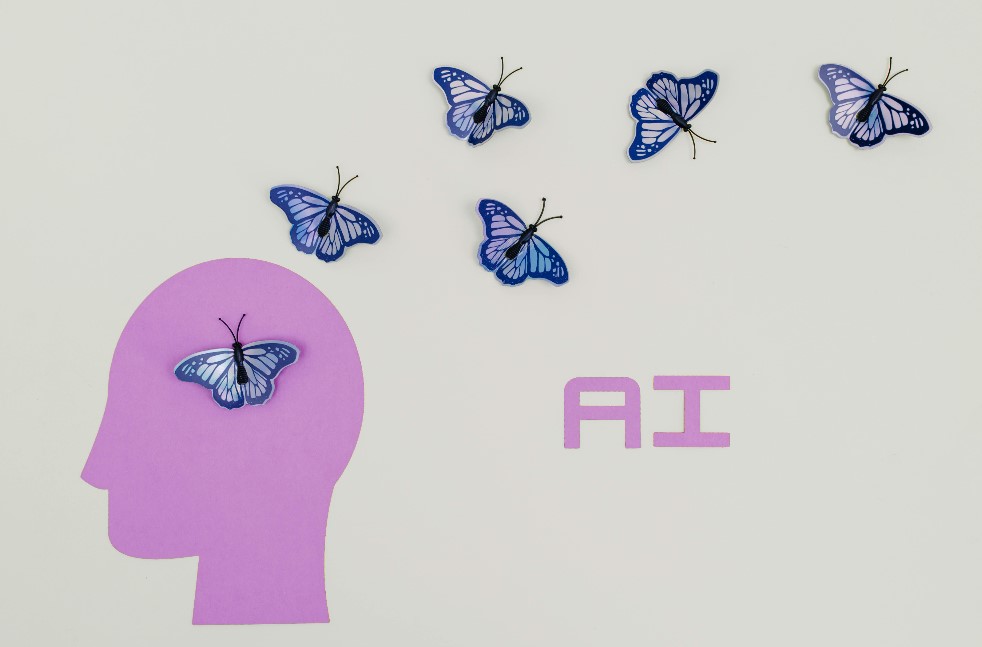
Outsourcing Thought: The New Normal
Ask yourself: What was the last thing you prompted an AI chatbot to do? Perhaps it was outlining an essay, analyzing a dataset, or evaluating a cover letter. These actions feel practical, efficient, even responsible. But cognitive scientists and neuroscientists are now asking: What happens when thinking itself becomes something we routinely outsource?
This is no longer a philosophical question, it is increasingly empirical.
Thinking Is Multi-Layered
Human thinking is not a single skill. It involves attention, working memory, long-term memory, abstraction, evaluation, and synthesis. Struggle is not a bug, it is a feature. Cognitive effort strengthens neural connections through neuroplasticity. Wrestling with ideas reorganizes the brain, making learning durable and adaptable.
When AI takes over these cognitive challenges, what happens to the underlying mental machinery?
Cognitive Offloading vs. AI Delegation
Psychologists have long studied cognitive offloading, writing notes, using calculators, setting reminders. These tools free mental resources and improve performance.
AI represents a qualitative leap. Unlike previous tools, it interprets, evaluates, and generates reasoning. When we ask AI to structure an argument or draw conclusions, we are offloading cognition itself. Repeatedly doing so could change how the brain allocates effort over time.
What Neuroscience Reveals
Recent MIT research used neuroimaging to study essay-writing with and without AI. Participants using AI showed reduced activation in brain networks tied to executive control, sustained attention, and semantic integration.
The essays were often more fluent, but fluency is not the same as cognition. Reduced mental engagement may undermine the brain’s capacity for independent reasoning, even when outputs appear polished.
The Illusion of Understanding
AI amplifies a subtle danger: the illusion of explanatory depth. Confident AI explanations can make users feel they understand material deeply, when the reasoning is externalized. Knowledge remains outside the brain, limiting transfer, adaptation, and critique.
Confidence rises, competence stagnates, a perilous asymmetry.
Writing and Problem-Solving as Workouts
Writing clarifies ideas, confronts contradictions, and strengthens neural networks. AI-assisted writing shifts the task from creation to evaluation, activating different pathways and weakening generative networks over time.
Similarly, problem-solving with AI removes cognitive friction, the discomfort that triggers hypothesis testing, error correction, and insight. Without friction, thinking becomes shallow. Professionals may interpret AI outputs fluently but lack the reasoning skills needed when systems fail.
The Educational Fault Line
Students increasingly rely on AI not just as a tool, but as a cognitive crutch. Learning becomes superficial when AI removes effortful retrieval and synthesis. Durable knowledge depends on cognitive struggle, not effortless fluency.
Deliberate use of AI can still enhance metacognition: critiquing arguments, generating counterexamples, or exploring failure modes. The key is intentionality, not avoidance.
Habits Shape Brains
Repeated reliance on AI can lower tolerance for ambiguity and effort, making independent thinking feel unnecessary. Similar patterns occur with GPS use, which reduces spatial memory and hippocampal activation. AI does not make thinking impossible, it makes it feel optional.
Preserving Cognitive Agency
Society must preserve mental agency in an age of cognitive automation. Strategies include:
- Deliberate AI-free thinking periods
- Educational designs rewarding process, not just output
- Professional standards emphasizing explanation over results
Thinking is not inefficiency, it is capacity. Protecting it is a choice.
AI as a Tool, Not a Crutch
AI prompts are powerful but not inherently harmful. The brain adapts to practice: delegation strengthens delegation skills; struggle strengthens resilience.
Every time we decide not to think, we shape our cognitive future. How we use AI today will determine the contours of human thought tomorrow.