


Bill Gates, President Marcos and the Emerging Debate Over Opportunity and Risk: How Leaders Are Grappling With AI’s Promise in Education and Its Riskiest Threats
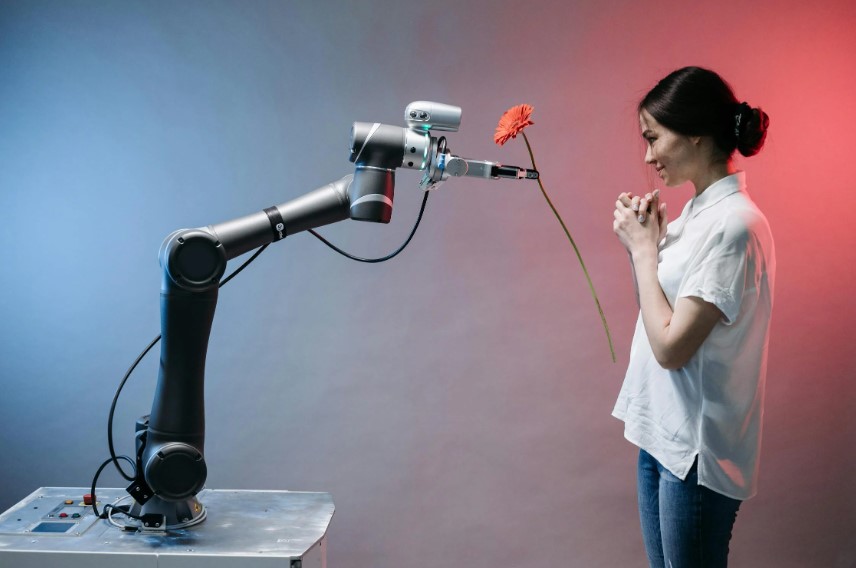
In 2026, artificial intelligence is no longer a futuristic buzzword, it’s at the core of national strategies, economic blueprints, and existential debates about humanity’s future. Philanthropists like Bill Gates are warning that AI could usher in unprecedented benefits for healthcare and education, and yet pose risks “greater than a naturally caused pandemic” if misused by bad actors. Meanwhile, nations such as the Philippines are pivoting educational systems to embed AI literacy at the earliest levels. What unites these seemingly disparate developments is a stark realization: we now stand at a global inflection point where the choices we make about AI will shape societies for decades to come.
AI Without Limits and Risks That Follow
When Microsoft co-founder Bill Gates said there is “no upper limit” to how intelligent AIs and robots can get, he wasn’t speaking in hyperbole, he was acknowledging the accelerating trajectory of machine intelligence. In his 2026 annual letter, Gates underscored AI’s enormous potential to improve sectors such as healthcare, education, and even agriculture. Better AI could deliver personalized medical guidance to underserved populations or give farmers richer data about weather, prices, and soil than the wealthiest agribusinesses currently receive.
But Gates paired that optimism with one of the starkest warnings yet from a thought leader about where the technology could go wrong. “Today, an even greater risk than a naturally caused pandemic,” he wrote, “is that a non-government group will use open source AI tools to design a bioterrorism weapon.”
This is not abstract speculation. Unlike the centralized laboratory environments of the past, powerful AI capabilities are increasingly accessible through open-source tools and cloud platforms. Sophisticated generative models that once required millions of dollars and specialized infrastructure can now be run, and potentially misused, with relatively modest computing resources. That democratization fuels innovation, but it also raises the alarming possibility that biological threats could be designed or amplified using AI in ways that bypass nation-state oversight.
For Gates, who has spent decades on public health issues and famously warned about pandemic preparedness before COVID-19, this risk hits a personal and global nerve. His call is clear: innovation must be paired with governance, foresight, and ethical guardrails if society is to reap AI’s benefits without surrendering control to its dangers.
A Global Educational Pivot: The Philippines’ AI Initiative
While some world leaders warn of existential threats, others are focusing on how AI can enhance human skills and empowerment. In the Philippines, President Ferdinand “Bongbong” Marcos Jr. launched an ambitious national AI program in education called Project AGAP.AI, designed to integrate AI literacy and responsible use into basic schooling.
Unveiled at Quezon City Science High School in January 2026, AGAP.AI, where “agapay” means to support or accompany, aims to equip students, teachers, and parents with foundational AI knowledge. Its goals include:
- Helping students understand how AI works
- Training teachers to integrate AI into everyday lessons
- Empowering parents to guide children in safe and ethical AI use
- Rolling out a curriculum that stresses responsible use, misinformation detection, privacy, and security
With support from institutions like the ASEAN Foundation and Google.org, the program is designed to reach up to 1.5 million learners, teachers, and parents across the country.
President Marcos has framed this as the start of a “new era” for the nation’s education system, positioning AI not as a threat but as an engine for national development. As he put it, AI should enhance students’ thinking and learning, but never replace their creativity, discipline, or hard work.
This initiative reflects a growing recognition among emerging economies that AI literacy must begin early, not just to prepare students for tomorrow’s jobs, but to shape ethical, informed citizens capable of interacting with powerful technologies.
The Job Market Conundrum: Disruption and Opportunity
Across the globe, policymakers and economists are grappling with the question of how AI will transform labor markets. Gates acknowledges that AI’s prowess will inevitably disrupt employment patterns. Because AI can make goods and services with far less human labor, work that once required teams of people could be performed by machines or hybrid human-AI systems.
This mirrors findings from labor studies showing that millions of jobs worldwide are exposed to AI automation, even as complementary roles emerge that emphasize creativity, judgment, and collaboration with AI. In the ASEAN region, including the Philippines, research has suggested that certain sectors such as business process outsourcing and routine clerical work are especially vulnerable unless the workforce adapts with higher-order skills.
Yet disruption is not deterministic. Historical examples such as the advent of mechanization in agriculture or digital transformation in manufacturing show that job transformation, rather than elimination, often follows technological breakthroughs, provided societies enact policies that prioritize training, safety nets, and inclusive growth.
For leaders like Gates, the key policy challenge in 2026 and beyond is not simply managing disruption after it occurs, but designing economic frameworks that spread AI’s benefits broadly while mitigating risks to workers and communities.
The Governance Imperative: Regulating AI Before It Governs Us
If 2025 underscored the pace of AI innovation, 2026 may be remembered as the year its governance caught up with its capabilities, or failed to do so.
Many countries are actively crafting AI strategies, ethical guidelines, and regulatory frameworks. The Philippines, for instance, launched not just an educational initiative but a broader national AI program framework to future-proof its economy, emphasizing infrastructure, workforce development, and ethical deployment.
At the ASEAN level, momentum toward a harmonized, human-centered AI ecosystem reflects a regional desire to both harness opportunities and preserve shared cultural and ethical norms.
But global consensus remains elusive. Unlike climate accords or international trade agreements, there is no unified global treaty governing AI development, deployment, and misuse. This leaves gaps that can be exploited, whether for misinformation, economic coercion, or, in the worst case imagined by Gates, bioterrorism.
As AI scales across sectors, governance mechanisms must be as robust as the technologies themselves. This includes:
- International accords on ethical AI development
- Shared crisis response mechanisms for AI-enabled biological threats
- Mechanisms to ensure AI literacy and equitable access
- Standards for fairness, transparency, and accountability in AI systems
Without intelligent governance, innovation can outpace humanity’s capacity to manage it, with consequences that could ripple across decades.
AI in Education: A Model for Responsible Adoption
The Philippines’ AGAP.AI project offers a compelling model for how nations might integrate AI responsibly, starting with education.
By combining curriculum innovation, teacher training, and ethical guidelines, the initiative acknowledges that AI’s impact reaches far beyond technical proficiency. It touches on digital citizenship, values, and societal purpose.
By equipping young learners with the tools to understand AI’s capabilities and limitations, countries can foster a generation that doesn’t just use AI, but questions it, shapes it, and governs it wisely.
The Path Forward: Agency, Ethics, and Shared Prosperity
At its heart, the global conversation about AI in 2026 is not just about machines, it is about people. Bill Gates’s warnings, President Marcos’s educational reforms, and expert debates about job disruption all converge on one idea:
AI will amplify human destiny, for better and for worse, but the direction it takes depends more on our collective agency than on any algorithm.
The choices nations make today, investing in AI literacy, crafting ethical guidelines, building governance mechanisms, and embracing inclusive economic policies, will shape not only the technology itself but the future of work, education, security, and human dignity.
In this moment of rapid change, leadership matters. Ideas matter. Ethical foresight matters. Humanity may have no upper limit in its capacity to innovate, but we do have a limit in how thoughtfully we steward that power.