


How America’s export policy on AI accelerators is redrawing the global technology map.
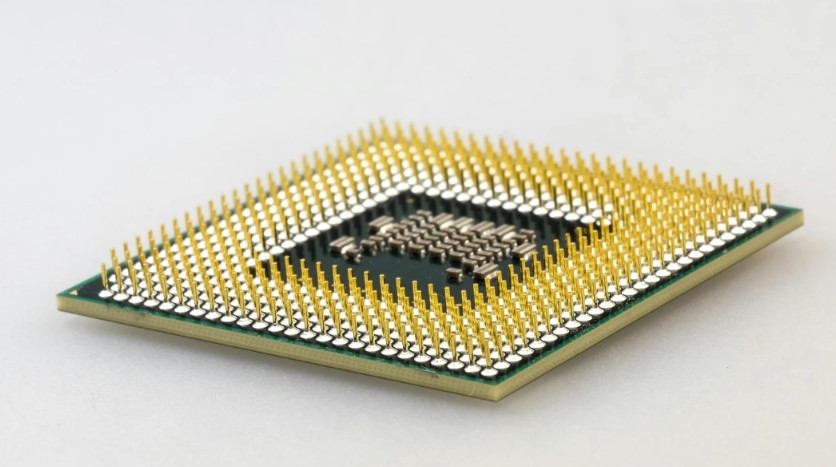
In a rare pivot on one of the most consequential technology issues of the decade, the U.S. government has rewritten the rules governing advanced semiconductor exports, signaling a dramatic shift in the global AI hardware landscape. Once barred outright from shipping powerful AI processors to China amid national security fears, Nvidia, the world’s dominant maker of artificial intelligence chips, now has conditional approval to export its H200 GPUs to Chinese customers. The move, driven by Washington’s evolving trade and security calculus, has ignited debates about national security, commercial interests, and the very future of AI supremacy. Viewing this through the lens of global competition and economic interdependence reveals a policy at the crossroads of strategy and commerce.
The Policy Shift: From Ban to Conditional Access
For years, the United States pursued a strict export control regime designed to restrict the flow of advanced semiconductor technology to China. These controls were rooted in concerns that Beijing’s access to cutting-edge AI chips could empower military modernization, bolster surveillance capabilities, and erode US technological preeminence in a critical strategic domain. The H200, Nvidia’s second-most powerful AI processor, was among the chips considered too sensitive for unrestricted sale, following similar curbs on H100 and other high-end devices.
That stance changed in late 2025 and early 2026, when the U.S. Department of Commerce’s Bureau of Industry and Security (BIS) published a revised licensing framework that effectively replaces a presumed denial with a case-by-case review for exports of H200 and equivalent AI chips to China. Under the new rule:
- Exports are permitted only after independent third-party testing in the U.S. to verify the chips’ performance characteristics.
- Nvidia must certify that adequate supplies remain for U.S. customers and that shipments will not divert production capacity away from domestic needs.
- China may receive no more than 50% of the total H200 units supplied to U.S. customers under comparable programs.
- Chinese entities must demonstrate “sufficient security procedures,” and exported chips cannot be used for military applications.
This shift marks a departure from a blanket prohibition toward a tightly regulated commercial corridor that seeks to balance economic opportunity with strategic prudence.
A Calculated Reversal
The decision was telegraphed publicly by President Donald Trump in December 2025, who announced via social media that Nvidia would be permitted to export H200 products to “approved customers” in China and other jurisdictions under conditions designed to uphold U.S. security interests. The administration also stated that the United States would receive a 25% surcharge on the revenue from these exports, a mechanism critics described as more transactional than protective.
Nvidia’s CEO, Jensen Huang, has publicly welcomed the shift, arguing that constructive engagement and economic interdependence are essential to sustainable U.S.–China relations. Huang has criticized blanket export controls as unsustainable and has called extreme decoupling “naive,” emphasizing that Chinese firms remain key consumers of AI hardware.
From a business perspective, the conditional export pathway restores access to a market that was once among Nvidia’s largest before export restrictions erased advanced AI chip sales to China and triggered an abrupt drop in market share there. Bloomberg and Reuters reporting indicates Chinese firms had placed orders for hundreds of thousands, and by some accounts millions — of H200 units, signaling strong latent demand that Nvidia has been unable to fulfill due to regulatory constraints.
Why US Changed Course
Economic Realities Meet Strategic Calculus
The U.S.’s partial reversal reflects a broader recalibration of export policy shaped by competing imperatives.
On one hand, American policymakers remain wary of empowering Beijing’s AI capabilities. Advanced GPUs are the fuel that powers large language models and other compute-intensive AI systems. If China’s AI infrastructure could access unlimited high-end chips, it might close the gap with American labs sooner than anticipated, with implications for economic competition and defense. National security advocates argue that export controls are the only real tool the US possesses to slow China’s rise in AI, given the acute gap in domestic chip production inside China compared with US design and manufacturing prowess.
Yet, policymakers and industry leaders also acknowledge the limits of isolation. Supply chains are global, and commercial incentives are powerful. Some experts argue that providing controlled access to advanced chips might encourage Chinese firms to purchase US technology under transparent conditions rather than seek unauthorized channels or accelerate autonomous domestic alternatives. Allowing commercial exports may also augment US tax revenues, a stated goal when Trump’s approach included revenue sharing tied to export fees.
This tension underscores a core strategic mystery of the current AI era: how to maintain competitive advantage without forfeiting economic engagement that benefits US firms and global innovation ecosystems.
China’s Response: Caution and Calculus
American policy is only one side of the ledger. Beijing’s reception to the export policy has been cautious.
Reports indicate that Chinese customs authorities have informed agents that H200 chips are not currently permitted to enter the country, and domestic companies have been instructed to refrain from purchases except under narrow, explicitly authorized circumstances, such as university research or specific R&D projects. This suggests China, too, is navigating its own priorities: ensuring domestic AI chip development is not overshadowed while selectively leveraging foreign technology where beneficial.
China’s leadership may view the controlled export pathway as both an opportunity and a lever. Permitting select commercial access to H200 chips could stimulate domestic innovation and help local firms close the compute capability gap. Yet Beijing appears committed to limiting dependency on foreign semiconductors as part of its broader strategy to accelerate self-sufficiency in advanced AI hardware, a priority underscored by state investments and policies supporting indigenous chip design.
Thus, the new policy may produce a slow, calibrated reentry of Nvidia into China’s AI market, one that benefits both commercial interests and geopolitical posturing.
Debate Over National Security
The policy change has touched off debates in Washington and beyond.
Proponents of the shift argue that tightly regulated exports with robust security conditions will allow the U.S. to manage risk while recapturing economic opportunities. They point to the possibility of Chinese firms buying chips for enterprise applications rather than military or surveillance applications, and note that China’s access to Western AI hardware was already partly constrained by global supply chains and indigenous development challenges.
Critics, however, warn that even restricted export could accelerate China’s capacity to train advanced AI models. A senior fellow at the Institute for Progress, for example, noted that H200 chips are dramatically more powerful than previously permitted alternatives and that reintroducing them to Beijing’s AI ecosystem could narrow the performance gap between U.S. and Chinese compute infrastructure. The Council on Foreign Relations has warned that lifting controls could enable Chinese AI firms to build data centers capable of challenging U.S. providers and even pursue global AI initiatives reminiscent of China’s Belt and Road strategy, but focused on technology infrastructure.
Senators and national security advocates, including voices from both parties, have voiced concern that exporting H200 chips risks diluting US leverage in technological competition with China. Some have described the move as undermining previous strategic export control efforts efforts designed not merely to restrict access but to shape global AI computing power distributions.
Industry and Market Responses
The semiconductor industry’s reaction has been mixed.
Wall Street and investors have generally welcomed the narrow export pathway, viewing it as a means to unlock demand that had been sidelined for nearly two years. Nvidia’s share price responded modestly to news of the policy shift, reflecting neither exuberance nor panic but a cautious recognition that renewed access to China, even under restrictive conditions, helps stabilize long-term revenue forecasts. Analyst estimates suggest the Chinese commercial market could represent tens of billions in annual revenue if orders translate into shipments.
Nvidia itself has taken a conservative approach in negotiations, reportedly requiring upfront payments for H200 chips from Chinese customers due to uncertainty surrounding regulatory approval and enforcement. That risk-mitigation strategy underscores how businesses are adjusting to geopolitical unpredictability while trying to fulfill demand.
At the same time, domestic efforts in China to produce advanced AI chips, such as Huawei’s Ascend line, continue. These competing initiatives benefit indirectly from restricted access, as lack of foreign supply pressures domestic firms to innovate faster. Yet the technological moat that Nvidia’s products possess, particularly in advanced AI training, remains substantial for now.
The Bigger Picture: AI, Power, and Interdependence
The unfolding story of Nvidia’s H200 export policy is not simply about a specific chip or a trade document. It is about how global powers reconcile national security, economic competition, and technological interdependence in an era defined by artificial intelligence.
Export restrictions, and their partial reversal, illustrate the paradox at the heart of 21st-century tech geopolitics: markets and innovation are global, but strategic rivalry is local. States want to control the flow of technology without closing themselves off from the economic benefits that technology trade brings. Companies, meanwhile, straddle the line between corporate growth and geopolitical risk.
AI compute power, embodied in chips like Nvidia’s H200, has become a proxy for national capacity in everything from scientific research to economic competitiveness to military applications. As governments rewrite the rules of engagement, they are writing new chapters in how strategic advantage is built and contested.
Conclusion: A Conditional Compromise
The decision to allow conditional exports of Nvidia’s H200 AI chips to China marks a seminal moment in the global AI era. It reflects a nuanced shift from outright prohibition to regulated engagement, shaped by competing pressures of economic interest, technological competition, and national security.
Whether this policy will ultimately strengthen U.S. influence, accelerate China’s AI capabilities, or reshape global semiconductor dynamics remains to be seen. But one thing is clear: in the technology race that defines geopolitics today, decisions about who gets access to advanced compute hardware matter as much as the algorithms that run on them.