







Anthropic, Microsoft, and Nvidia have announced a strategic partnership valued at up to $45 billion that establishes a circular compute infrastructure model, according to reports from National Today. The agreement, disclosed on 29 March 2026, creates an interdependent framework where Anthropic gains access to Nvidia’s GPU capacity through Microsoft’s Azure infrastructure whilst providing Microsoft with preferential access to Claude AI capabilities.
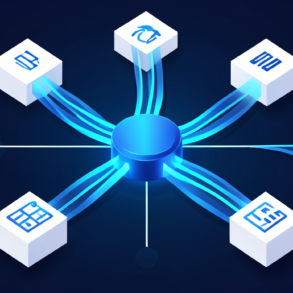
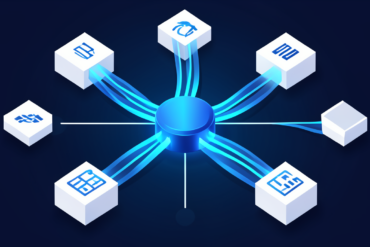
The arrangement represents a departure from traditional vendor-customer relationships in the AI sector. Rather than simple procurement agreements, the partnership establishes what the companies describe as a “circularity” model—Nvidia supplies cutting-edge GPUs, Microsoft provides cloud infrastructure and enterprise distribution, and Anthropic contributes AI models and research expertise. Each party receives equity considerations and revenue-sharing arrangements tied to the partnership’s commercial success.
The $45 billion valuation encompasses committed compute resources, equity investments, and projected revenue sharing over a multi-year period, though specific timeframes have not been disclosed. The structure allows Anthropic to scale its AI training and inference capabilities without the capital expenditure typically required for building proprietary data centres, whilst Microsoft secures differentiated AI offerings for Azure customers competing against Amazon Web Services and Google Cloud.
For Microsoft, the partnership strengthens its position in the enterprise AI market where it has invested heavily in OpenAI but faces intensifying competition. Azure customers will receive preferential pricing and early access to Claude models, potentially influencing enterprise platform decisions. The arrangement also provides Microsoft with insights into Anthropic’s safety research, an increasingly important consideration as regulatory scrutiny of AI systems intensifies.
Nvidia benefits by securing long-term demand for its H100 and next-generation GPU architectures at a time when questions about sustainable AI infrastructure spending have emerged. The partnership provides revenue visibility and strengthens relationships with both a leading AI developer and the world’s second-largest cloud provider.
The competitive implications are substantial. Amazon, which previously invested $4 billion in Anthropic, now faces a partner with deeper ties to a rival cloud provider. Google, which competes with both Microsoft in cloud services and Anthropic in AI models, confronts a formidable alliance. Smaller AI companies without similar partnerships may struggle to access the compute resources necessary to train frontier models, potentially consolidating the industry around a handful of integrated ecosystems.
The partnership also signals a maturation of AI business models. Rather than pursuing vertical integration—where companies build entire stacks from chips to applications—the industry appears to be settling into specialised roles with strategic interdependencies. This approach may prove more capital-efficient but creates new dependencies that could influence everything from model development priorities to safety research agendas.
Questions remain about governance and exclusivity. Whether Anthropic retains the ability to deploy Claude on competing cloud platforms, and how Microsoft will balance its OpenAI and Anthropic relationships, will significantly impact the partnership’s long-term dynamics. The arrangement’s structure may also attract regulatory attention, particularly in jurisdictions scrutinising vertical agreements in the AI sector.
Market observers will watch whether this model becomes a template for other AI companies seeking to balance independence with access to essential infrastructure. The partnership’s success or failure in delivering both technical capabilities and commercial returns will likely influence capital allocation decisions across the industry for years to come.
The announcement establishes a new benchmark for AI industry partnerships, demonstrating that even well-capitalised AI developers increasingly require strategic alliances to compete at the frontier of capability development.