









Atlassian has integrated third-party AI agents into its Confluence collaboration platform, adding development tools from Lovable and Replit alongside presentation software from Gamma, according to TechCrunch AI. The move marks a strategic pivot for the enterprise software company, which previously focused on proprietary AI capabilities.
The integration allows Confluence’s 75,000 enterprise customers to access external AI agents directly within their existing workflows, eliminating the need to switch between platforms. Users can now generate code through Lovable and Replit’s development environments or create presentations via Gamma without leaving Confluence’s interface.
This represents Atlassian’s first significant opening of its collaboration platform to competing AI services. The company had previously developed Rovo, its own AI assistant, but appears to be acknowledging that no single vendor can address all enterprise AI requirements.
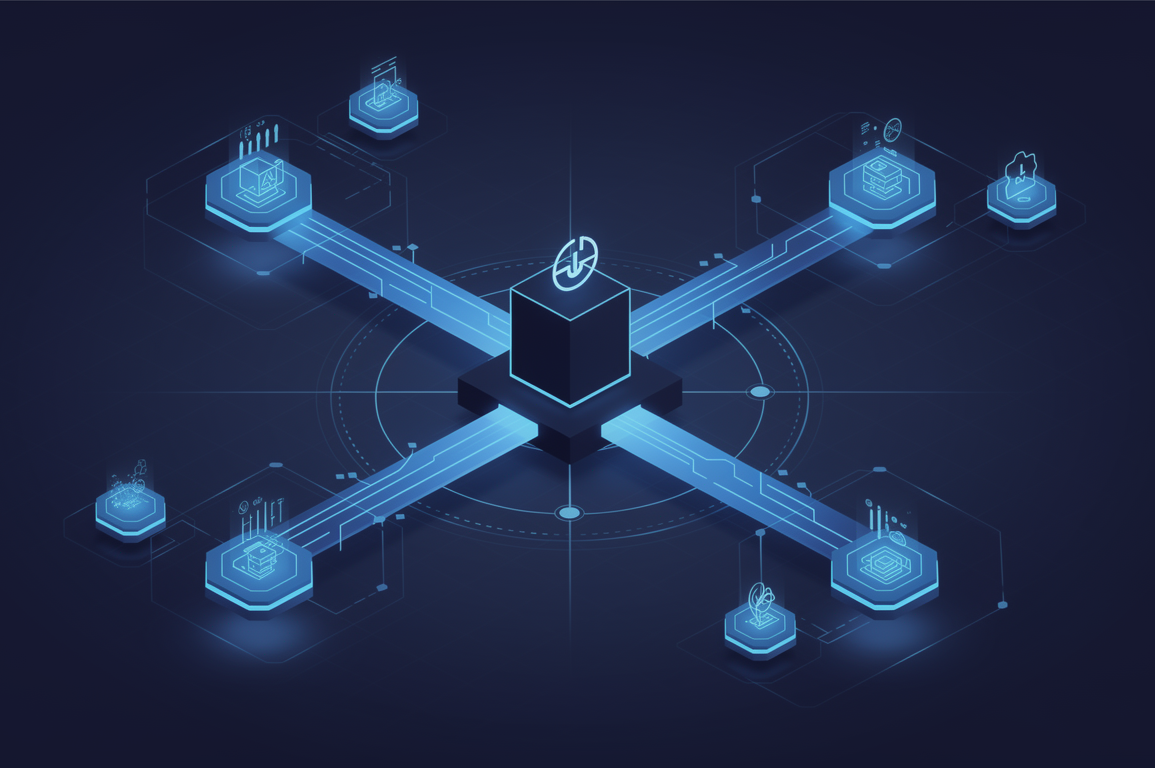
“The integration strategy suggests Atlassian is positioning Confluence as an AI orchestration layer rather than competing directly in every AI capability vertical,” notes the TechCrunch AI report. This approach mirrors Microsoft’s strategy with Copilot extensibility and Salesforce’s Einstein platform.
The business implications are substantial. For Atlassian, the move could increase platform stickiness by making Confluence indispensable as a central hub for diverse AI tools. The company’s subscription revenue model benefits from higher engagement rather than per-feature pricing, making third-party integrations strategically aligned with its business structure.
For the integrated vendors—Lovable, Replit, and Gamma—access to Atlassian’s enterprise customer base provides immediate distribution at scale. Replit, which has raised over $100 million in venture funding according to Business Wire, gains a direct channel to large organisations that might otherwise hesitate to adopt standalone development tools.
However, the strategy carries risks for smaller AI vendors. By integrating into platforms like Confluence, they become dependent on Atlassian’s roadmap decisions and potentially vulnerable to feature replication. Atlassian could observe which third-party agents gain traction and subsequently build competing native features.
The integration also signals broader market consolidation around AI agent ecosystems. Rather than enterprises purchasing dozens of standalone AI tools, platform providers are creating marketplaces where vetted agents can operate within secure, governed environments. This mirrors the evolution of mobile app stores and cloud marketplaces.
From a technical perspective, the integrations reportedly utilise Confluence’s existing API infrastructure, suggesting Atlassian has created standardised connection protocols for AI agents. This could accelerate further third-party additions if the company opens the integration framework more widely.
The timing coincides with increasing enterprise demand for AI governance and centralised management. IT departments prefer consolidating AI tools within existing platforms where they can enforce security policies, monitor usage, and control data access—capabilities that standalone AI applications often lack.
Competitors face pressure to respond. Notion, Monday.com, and other collaboration platforms must now decide whether to pursue similar multi-vendor strategies or double down on proprietary AI development. The decision will likely depend on their respective strengths in platform network effects versus AI research capabilities.
Market observers should monitor whether Atlassian announces formal partnership terms or revenue-sharing arrangements with the integrated vendors. The economic model—whether Atlassian charges platform fees, takes transaction percentages, or simply uses integrations to drive core subscription growth—will influence how aggressively other platforms pursue similar strategies.
Additionally, enterprise adoption rates will indicate whether customers actually prefer multi-vendor AI ecosystems or find them unnecessarily complex compared to unified solutions from single providers.
Atlassian’s integration of external AI agents into Confluence represents a pragmatic acknowledgment that enterprise AI infrastructure will likely remain heterogeneous, with platforms serving as orchestration layers rather than monolithic solutions. The approach prioritises customer workflow continuity over vendor control, a calculation that could redefine competitive dynamics across enterprise software.