


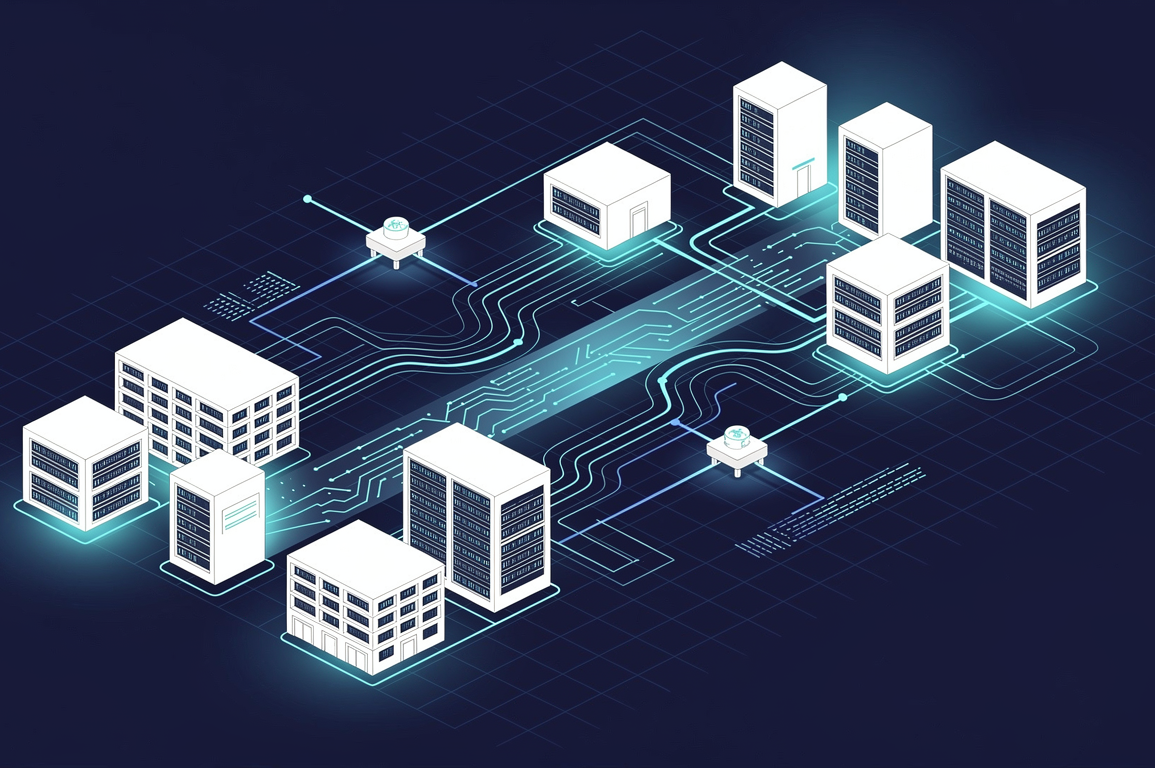

Firmus AI, the Singapore-based data centre developer backed by Nvidia, has reached a $5.5 billion valuation after raising $1.35 billion in fresh capital over the past six months, according to TechCrunch AI. The funding round underscores the escalating competition amongst hyperscalers and sovereign nations to secure compute capacity across the Asia-Pacific region.
The company, founded by former Equinix executives, is building what it terms “Southgate” facilities—purpose-built AI data centres designed to meet the specific power and cooling requirements of GPU-intensive workloads. Nvidia’s involvement extends beyond capital investment; the chip giant is providing architectural guidance and priority access to its H100 and forthcoming Blackwell GPU systems, positioning Firmus as a preferred infrastructure partner in markets where Western cloud providers face regulatory constraints.
The valuation surge reflects a broader recalibration in enterprise infrastructure investment. Whilst hyperscalers including Microsoft, Google, and Amazon have dominated AI compute capacity in North America and Europe, Asia-Pacific governments are increasingly mandating localised data residency and sovereign AI capabilities. This regulatory environment creates opportunities for regional specialists like Firmus that can navigate complex compliance requirements whilst delivering enterprise-grade infrastructure.
Firmus currently operates facilities in Singapore, Malaysia, and Indonesia, with expansion planned for Thailand, Vietnam, and India by Q2 2027. The company claims its facilities can deliver 50-100 megawatts of AI-optimised compute capacity per site—roughly equivalent to training infrastructure for 10-20 frontier language models simultaneously. These specifications position Firmus to serve both multinational enterprises requiring regional presence and domestic AI developers building localised models.
The business impact extends across multiple constituencies. For Nvidia, Firmus represents a strategic distribution channel in markets where direct sales face geopolitical headwinds. The partnership allows Nvidia to maintain market share in Asia-Pacific AI infrastructure without navigating export controls or joint venture requirements directly. Regional cloud providers and telecommunications operators, conversely, face intensified competition as Firmus offers turnkey AI infrastructure that previously required years of internal development.
Enterprise buyers gain leverage in negotiations with incumbent cloud providers. The availability of sovereign AI infrastructure alternatives reduces dependency on hyperscaler ecosystems, potentially compressing margins on GPU compute instances. Financial analysts note that AWS, Google Cloud, and Azure have already begun adjusting Asia-Pacific pricing in response to regional competition, with GPU instance costs declining 15-20% year-on-year in Singapore and Tokyo availability zones.
The $5.5 billion valuation—achieved without public market scrutiny—raises questions about sustainable unit economics. Data centre operators typically require 7-10 years to achieve positive returns on capital-intensive infrastructure investments. Firmus is compressing this timeline by pre-selling capacity to anchor tenants, but this strategy concentrates risk if AI compute demand moderates or if customers default on long-term commitments.
Nvidia’s backing provides both validation and potential vulnerability. The partnership ensures priority GPU allocation during ongoing supply constraints, but also creates strategic dependence. Should Nvidia’s competitive position erode—whether through AMD’s MI300 series gaining traction or through geopolitical export restrictions tightening—Firmus’s value proposition could deteriorate rapidly.
Market observers should monitor several indicators: capacity utilisation rates across Firmus facilities, which will signal whether AI compute demand justifies current infrastructure investment levels; regulatory developments in key markets, particularly India and Vietnam, where data localisation requirements remain in flux; and competitive responses from established operators including Equinix, Digital Realty, and regional telecommunications incumbents.
The Firmus valuation reflects capital markets’ conviction that AI infrastructure represents a multi-decade investment opportunity, particularly in regions where sovereign requirements create structural advantages for local operators. Whether that conviction translates into sustainable returns depends on execution and sustained enterprise AI adoption—neither of which is guaranteed at current investment velocity.