







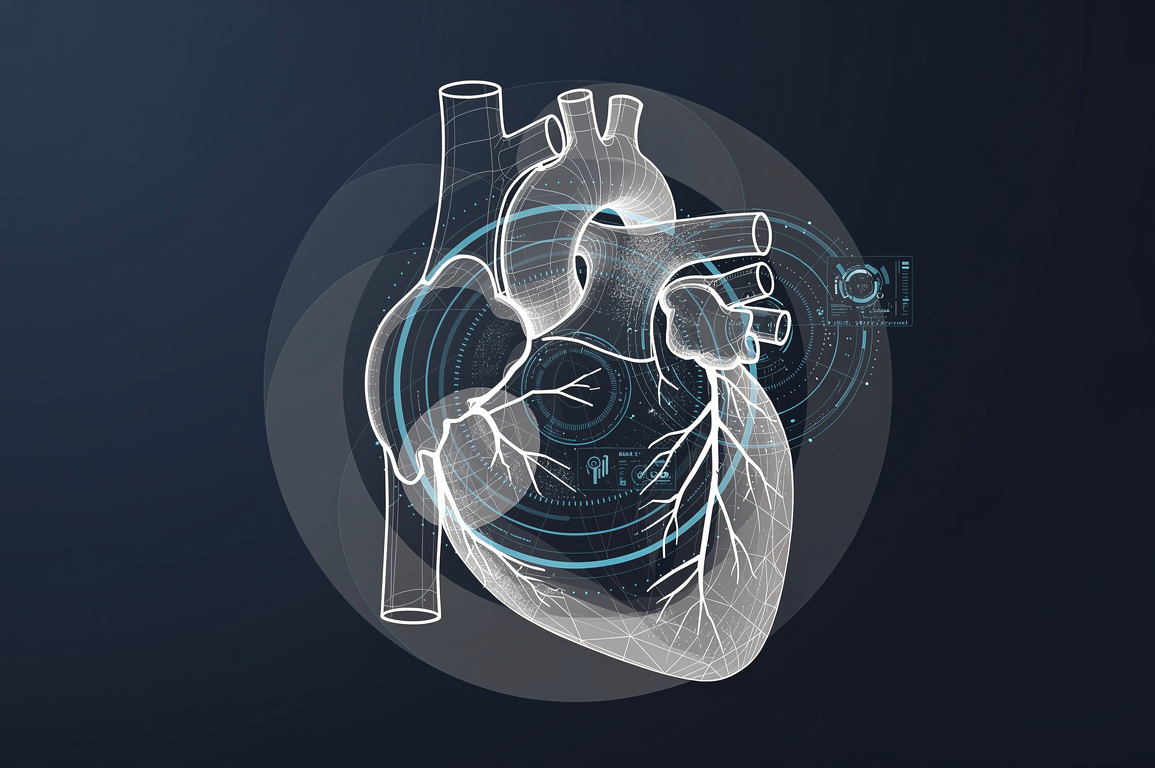

Artificial intelligence systems analysing cardiac fat deposits have demonstrated superior cardiovascular risk prediction compared to traditional assessment methods, according to recent research, even as prominent medical researchers warn against overstating AI’s cognitive capabilities in clinical settings.
The cardiac imaging advancement uses AI to measure epicardial adipose tissue—fat surrounding the heart—from standard CT scans, providing risk stratification that outperforms conventional models relying on age, cholesterol levels, and blood pressure. Medical News Today reports the technology identifies patients at elevated risk for heart attacks and strokes with greater accuracy than existing clinical protocols.
This development arrives amid growing tension within healthcare AI deployment. Whilst diagnostic imaging applications show measurable clinical utility, researchers at Mayo Clinic have publicly challenged broader claims about artificial intelligence possessing genuine understanding or reasoning capabilities in medical contexts.
The cardiac imaging system addresses a persistent gap in preventive cardiology. Traditional risk calculators, including the widely-used Framingham Risk Score, rely on indirect markers of cardiovascular disease. Direct visualisation and quantification of cardiac fat deposits offers a more immediate physiological indicator, potentially identifying high-risk patients who appear low-risk under conventional assessment.
Healthcare systems stand to benefit from earlier intervention capabilities, potentially reducing costly emergency cardiac events. The global cardiovascular devices market, valued at approximately £38 billion annually, increasingly incorporates AI-enhanced diagnostic tools. Radiology departments adopting such systems may process cardiac CT scans more efficiently whilst extracting additional prognostic value from existing imaging protocols.
However, implementation costs remain substantial. Healthcare providers must weigh AI system licensing fees, radiologist training requirements, and workflow integration expenses against potential savings from prevented cardiac events. Smaller regional hospitals may struggle to justify investment compared to large academic medical centres with higher patient volumes.
The Mayo Clinic researchers’ skepticism centres on distinguishing between pattern recognition—which AI demonstrably performs—and genuine medical reasoning. Their position suggests that whilst AI excels at identifying correlations in imaging data, clinicians should not attribute human-like diagnostic thinking to these systems. This distinction carries practical implications for liability, clinical decision-making authority, and appropriate human oversight levels.
Insurance providers represent another stakeholder group. More accurate risk prediction could enable refined premium pricing and targeted preventive care programmes, though regulatory frameworks governing AI use in underwriting remain underdeveloped across most markets.
The cardiac imaging technology has not yet received widespread regulatory approval for clinical deployment, and peer-reviewed publication of validation studies remains pending. Commercial vendors developing similar systems include established medical imaging firms and specialised AI healthcare startups, though specific market share data is not publicly available.
The juxtaposition of practical AI advancement in cardiac imaging against expert warnings on intelligence claims reflects a broader enterprise challenge: extracting value from narrow AI applications whilst maintaining realistic expectations about system capabilities. Healthcare organisations appear increasingly comfortable deploying AI for specific pattern recognition tasks—reading scans, flagging anomalies, quantifying measurements—whilst remaining cautious about replacing clinical judgment.
Regulatory pathways for AI diagnostic tools continue evolving. The FDA has approved over 500 AI-enabled medical devices, predominantly in radiology, though post-market surveillance requirements and liability frameworks remain subjects of ongoing policy development.
Observers should monitor several developments: publication of peer-reviewed validation studies for cardiac fat measurement AI, regulatory approval decisions in major markets, and real-world implementation data from early-adopting healthcare systems. Equally significant will be how medical professional societies incorporate AI tools into clinical guidelines whilst addressing the capability limitations Mayo researchers emphasise.
The cardiac imaging advancement demonstrates AI’s tangible value in healthcare pattern recognition whilst the accompanying skepticism provides necessary guardrails against misapplied expectations—a balance essential for responsible clinical AI deployment.