


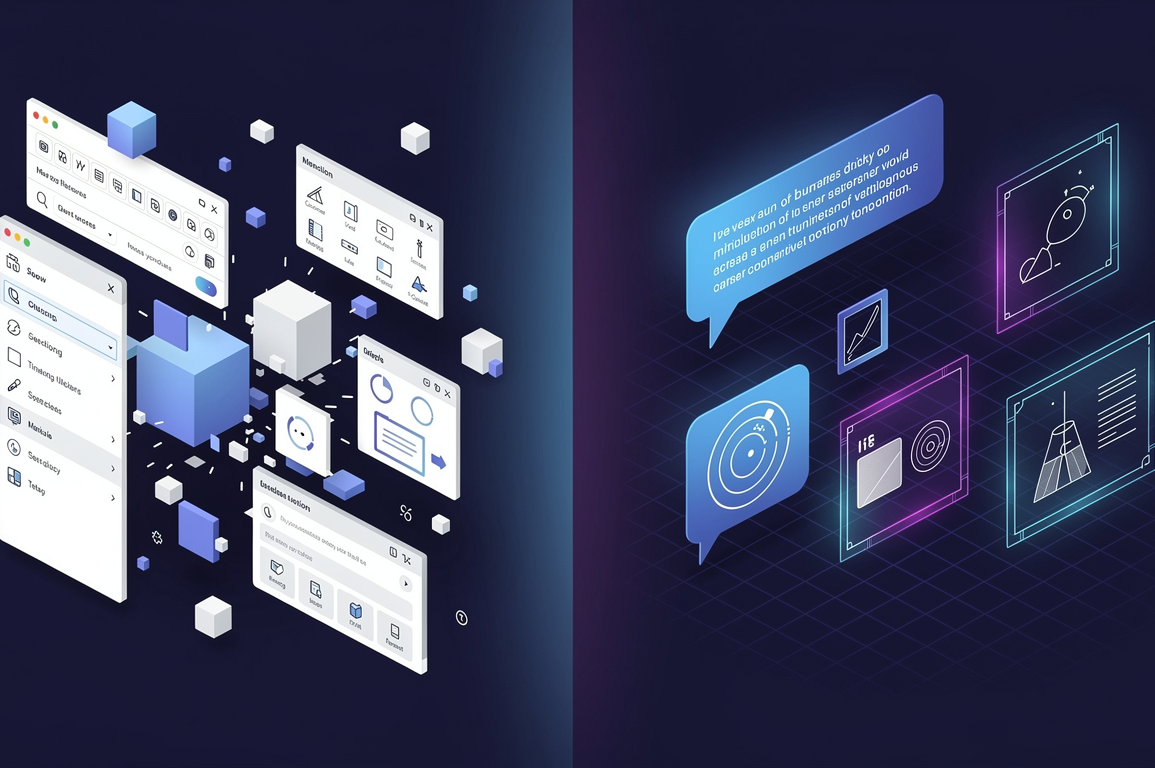

Adobe has introduced Firefly AI Assistant, a conversational interface integrated across its Creative Cloud applications that allows users to execute complex editing tasks through natural language commands rather than traditional menu navigation, according to The Verge AI.
The assistant, announced this week, represents Adobe’s most significant interface redesign since the introduction of its Creative Suite two decades ago. Users can now request edits such as “remove the background and add a sunset gradient” or “adjust the colour temperature to match golden hour” directly within Photoshop, Illustrator, and other Creative Cloud applications, with the AI interpreting intent and executing the necessary tool sequences.
The move positions Adobe at the forefront of enterprise software’s transition from graphical user interfaces to large language model-powered interactions. Where previous AI features focused on generative content creation, Firefly Assistant targets the editing workflow itself—the daily tasks that constitute the bulk of professional creative work.
Adobe’s implementation differs from standalone AI image generators by maintaining integration with existing project files, layer structures, and professional colour spaces. The assistant can access a user’s asset libraries, understand project context, and apply edits non-destructively—critical requirements for commercial creative work that generative AI tools typically cannot address.
The business implications extend beyond Adobe’s customer base. Creative professionals who have built careers on mastering complex software interfaces now face a competency shift towards effective prompt engineering. Junior designers, who traditionally spent years learning tool locations and keyboard shortcuts, may find the learning curve compressed—though senior practitioners argue that understanding underlying design principles remains unchanged.
For Adobe, the strategic calculus is clear. The company’s Creative Cloud subscription model, which generated $11.5 billion in revenue for fiscal year 2023, depends on maintaining its position as the industry standard. Conversational interfaces lower the barrier to entry for new users whilst potentially reducing the time required for existing customers to complete projects—a double-edged commercial proposition.
Competitors including Canva, which has aggressively pursued the accessible design market, and Figma, which Adobe failed to acquire for $20 billion after regulatory pushback, are watching closely. Both companies have introduced their own AI assistants, but neither commands Adobe’s installed base amongst enterprise creative departments.
The shift also carries implications for Adobe’s training and certification ecosystem. Thousands of educational institutions teach Creative Cloud applications using interface-based curricula. The transition to conversational interaction may require wholesale revision of educational materials and certification standards—creating both disruption and opportunity for Adobe’s learning services division.
Technical limitations remain evident. According to TechCrunch AI, the assistant currently handles common editing tasks effectively but struggles with highly specialised workflows such as print production colour management or complex vector path manipulation. Adobe has indicated that capabilities will expand as the underlying models are trained on additional creative task data.
Privacy considerations have emerged as a concern amongst enterprise customers. Adobe has stated that Firefly Assistant processes prompts using cloud-based models, raising questions about intellectual property protection for confidential client work. The company offers enterprise customers the option to process requests using dedicated instances, though pricing for this capability has not been disclosed.
The introduction of conversational editing arrives as Adobe faces pressure from open-source alternatives and specialised AI tools that excel at specific tasks. Stability AI’s image editing capabilities and Midjourney’s generative quality have fragmented workflows that Adobe previously controlled end-to-end. Firefly Assistant represents an attempt to recentralise creative work within Adobe’s ecosystem by making its tools more accessible and efficient.
Industry observers will be monitoring adoption rates amongst Adobe’s professional user base, particularly in advertising agencies and design studios where billable hours and client revisions drive economic models. Whether conversational interfaces accelerate project completion or introduce new quality control challenges will determine the feature’s long-term impact on creative industry economics.
Adobe’s bet on conversational AI reflects a broader enterprise software trend, but its execution within professional creative tools will serve as a critical test case for whether natural language can genuinely replace decades of refinement in graphical interface design.