


Google has deployed an experimental AI assistant called Gemini Spark that operates continuously to automate routine tasks, from tracking package deliveries to managing calendar appointments, according to testing by TechCrunch AI. The service represents a shift from reactive chatbots to proactive digital assistants, though Google has not clarified how Spark fits within its broader product strategy.
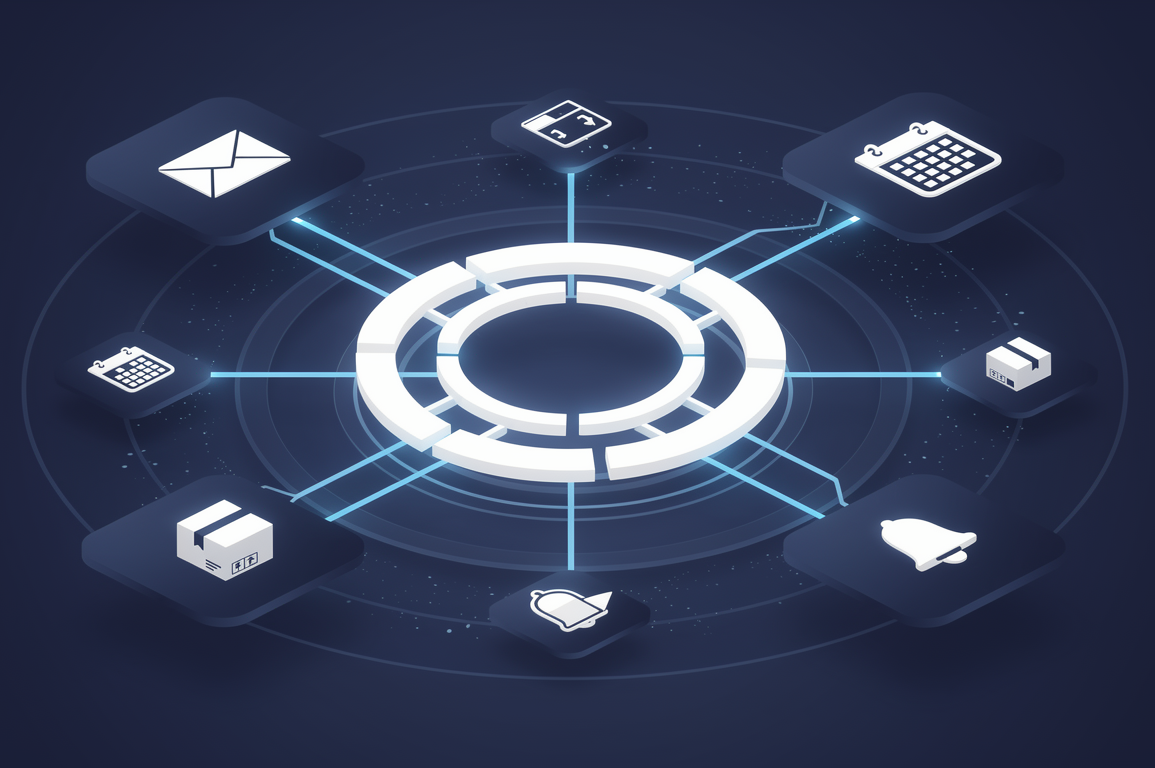
Unlike conventional AI chatbots that respond to user queries, Gemini Spark monitors email, calendar, and other data sources to execute tasks autonomously. In practical testing, the assistant successfully tracked shipping notifications, extracted delivery details, and provided proactive updates without user prompts. It also managed calendar conflicts and suggested meeting times based on availability patterns.
The implementation reveals Google’s approach to consumer AI automation: Spark operates as a persistent background service rather than a discrete application. Users configure permissions for data access, then receive notifications when the assistant completes tasks or requires input. This architecture addresses a fundamental limitation of current AI assistants, which require explicit user initiation for each interaction.
The business implications extend across multiple sectors. For enterprise software providers, particularly those offering productivity and workflow tools, Google’s entry into automated task management intensifies competitive pressure. Companies such as Notion, Asana, and Monday.com have invested heavily in AI features, but lack Google’s integration across email, calendar, and cloud storage services.
Consumer electronics manufacturers face similar challenges. Amazon’s Alexa and Apple’s Siri currently dominate voice-activated assistance, but neither offers the continuous, proactive automation that Gemini Spark demonstrates. If Google integrates Spark capabilities into Android devices—which command approximately 70% global smartphone market share—it could establish a significant advantage in ambient computing.
However, Google’s product strategy remains opaque. The company operates multiple AI assistant products: Google Assistant for voice interaction, Gemini for conversational AI, and now Spark for task automation. This fragmentation creates confusion for both consumers and enterprise customers attempting to evaluate Google’s AI offerings against competitors.
Privacy considerations also warrant attention. Gemini Spark requires extensive access to personal data—email contents, calendar entries, location history—to function effectively. Whilst Google states that data remains encrypted and users control permissions, the service’s value proposition depends entirely on granting broad access. This creates tension between functionality and data minimisation principles increasingly demanded by regulators and privacy-conscious users.
The technical architecture appears to leverage Google’s Gemini language models, though the company has not disclosed specific model versions or computational requirements. The assistant’s ability to parse unstructured email text, extract relevant information, and execute multi-step tasks suggests sophisticated natural language understanding and reasoning capabilities.
Market analysts should monitor several developments: whether Google consolidates Spark into existing products or launches it as a standalone service; pricing strategy, particularly for enterprise deployments; and integration depth with third-party applications beyond Google’s ecosystem. Microsoft’s Copilot and Anthropic’s Claude already compete in enterprise AI assistance, whilst startups including Adept and Lindy target similar automation use cases.
The deployment timeline remains uncertain. Google has not announced general availability dates or indicated whether Spark will remain an experimental project. The company’s history includes numerous AI experiments that never reach production release, from Google Duplex’s limited rollout to various Assistant features quietly discontinued.
Gemini Spark demonstrates that practical AI task automation has moved from concept to functional reality, with clear applications for both consumer and enterprise users. Whether Google can translate this technical capability into coherent product strategy will determine its impact on the broader AI assistant market.