


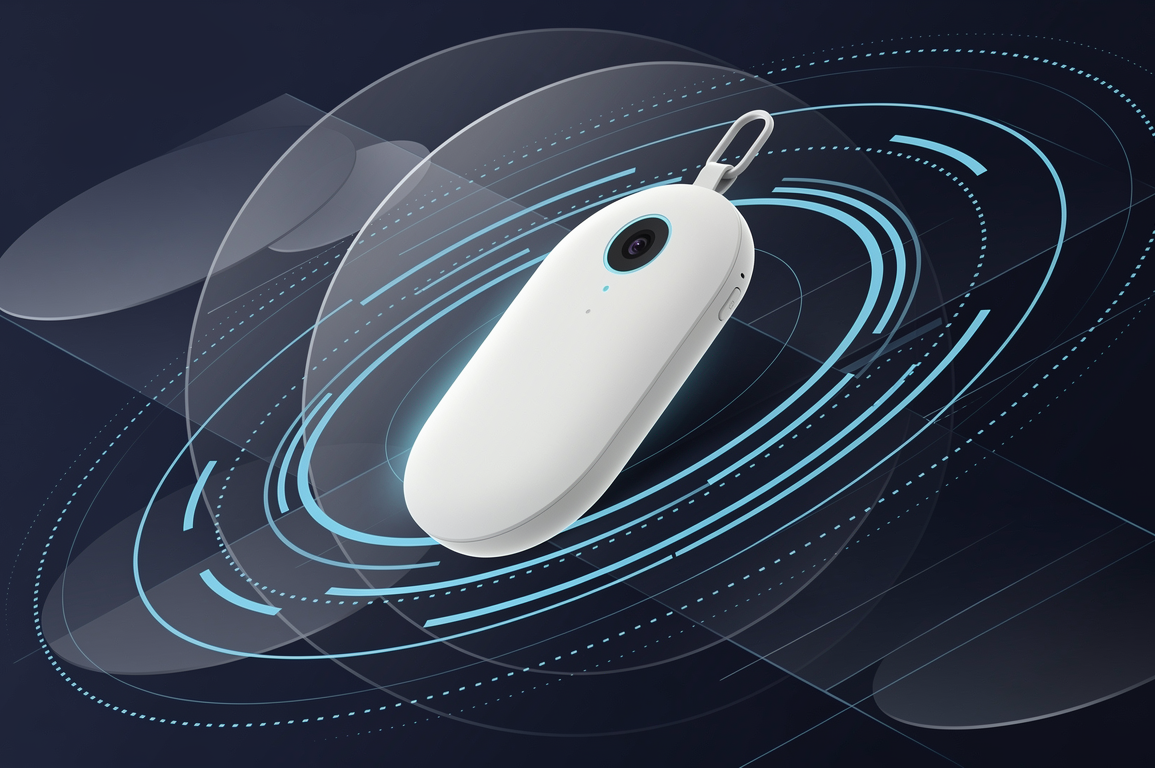

Meta is developing an AI-powered pendant device equipped with camera and voice capabilities, according to reports from TechCrunch AI, marking the company’s third distinct hardware form factor for consumer artificial intelligence deployment.
The wearable device would join Meta’s existing Ray-Ban smart glasses and Quest virtual reality headsets in a broadening hardware portfolio designed to reduce dependence on smartphone-mediated AI interactions. The pendant represents a strategic pivot towards ambient computing devices that operate independently of traditional screen-based interfaces.
Details remain limited, but the device is expected to feature voice interaction capabilities and visual sensing through an integrated camera, positioning it as a hands-free alternative to smartphone-based AI assistants. The form factor suggests Meta is targeting continuous availability scenarios where glasses or headsets prove impractical—potentially including professional environments, fitness activities, or situations requiring discretion.
Hardware Diversification Strategy
The pendant development follows Meta’s partnership with EssilorLuxottica on Ray-Ban Meta smart glasses, which the company reported had exceeded internal sales expectations in late 2024. That collaboration demonstrated consumer appetite for AI-enabled wearables when integrated into familiar product categories, providing a template for hardware expansion.
Unlike the Ray-Ban glasses, which leverage an established fashion brand, a pendant form factor would require Meta to build consumer acceptance from scratch. The device faces competition from Humane’s AI Pin, which launched in 2024 to mixed reviews, and anticipated entries from Apple and Google in the wearable AI category.
Meta’s approach differs from competitors by pursuing multiple hardware formats simultaneously rather than concentrating resources on a single device category. This portfolio strategy spreads development risk whilst gathering user behaviour data across varied contexts—information that could prove valuable for refining AI models and identifying which form factors gain traction.
Business Impact Analysis
The pendant positions Meta to capture AI interaction data beyond its social media platforms, addressing a strategic vulnerability as competitors develop proprietary hardware ecosystems. For Meta, hardware serves dual purposes: generating direct revenue whilst creating new channels for its Llama-based AI models.
Component suppliers and contract manufacturers stand to benefit from expanded production volumes, particularly those already serving Meta’s Reality Labs division. Conversely, smartphone manufacturers face continued pressure as AI capabilities migrate to specialised wearables that bypass traditional mobile ecosystems.
The move intensifies competition in the nascent wearable AI market, where no dominant form factor has yet emerged. Meta’s financial capacity to sustain losses during market development—Reality Labs reported operating losses exceeding $16 billion in 2024—provides competitive advantages smaller hardware startups cannot match.
Technical and Privacy Considerations
A camera-equipped pendant raises immediate privacy questions, particularly given Meta’s regulatory challenges in Europe and ongoing scrutiny over data handling practices. The company would need to address concerns about surreptitious recording more directly than with glasses, where camera placement is visually apparent to bystanders.
Battery life represents another technical constraint. Existing AI wearables struggle to provide all-day operation whilst running on-device processing for privacy-sensitive tasks. Meta’s approach to balancing local computation against cloud-based processing will significantly impact the device’s practical utility and privacy profile.
Market Outlook
Industry observers should monitor whether Meta positions the pendant as a standalone device or a companion to smartphones and other hardware. Pricing strategy will prove equally telling—premium positioning would signal confidence in differentiated capabilities, whilst aggressive pricing might indicate a land-grab approach to establish market share.
The pendant’s success or failure will provide crucial market signals about consumer willingness to adopt AI-first wearables beyond established categories like smartwatches and earbuds. Meta’s multi-format strategy ensures the company remains positioned to capitalise on whichever form factor ultimately resonates with mainstream consumers.