



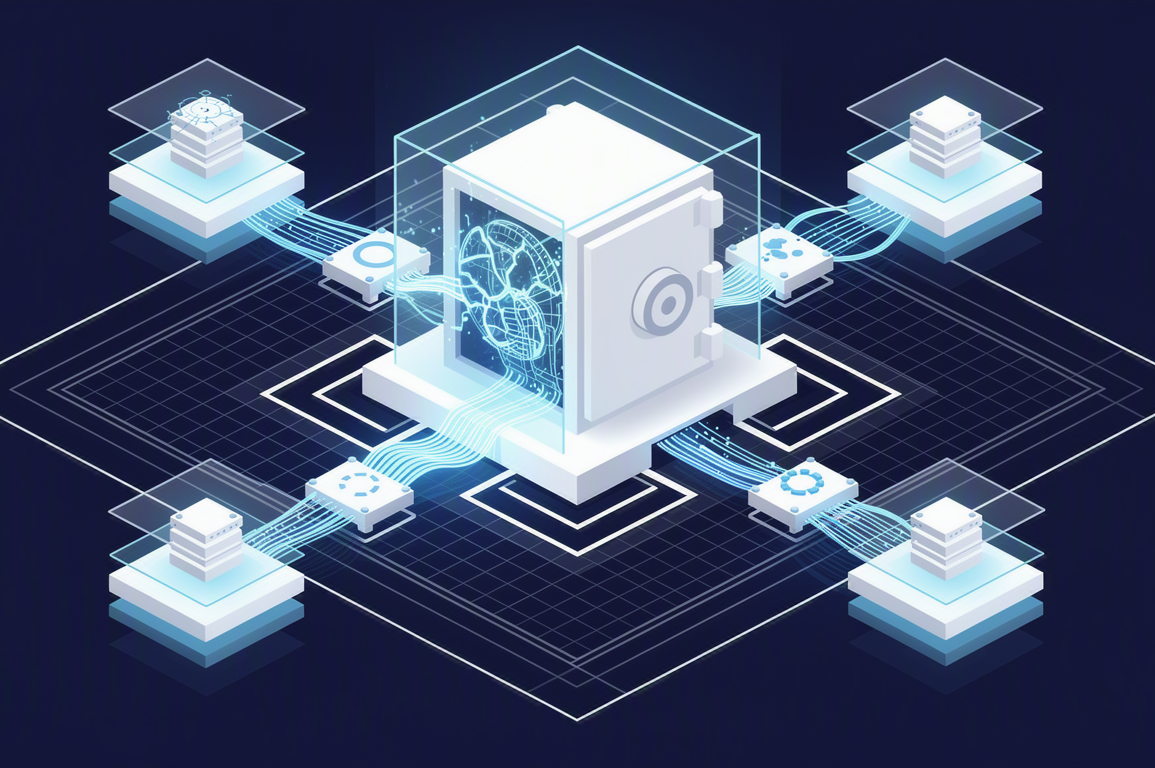

Palantir Technologies has launched a deployment engine for NVIDIA’s Nemotron open models within its Artificial Intelligence Platform, enabling governments and regulated enterprises to operate large language models within sovereign infrastructure boundaries, according to a Business Wire announcement.
The integration allows organisations with strict data residency requirements to deploy NVIDIA’s Nemotron family of models—including the 70-billion parameter Nemotron-4 340B—entirely within their own controlled environments, addressing a critical barrier to AI adoption in defence, intelligence, and regulated sectors.
Sovereign AI has emerged as a strategic priority for governments concerned about dependence on foreign AI infrastructure. The European Union, United Kingdom, and several Gulf states have announced initiatives to develop domestic AI capabilities, whilst regulatory frameworks including GDPR and emerging AI Acts impose strict controls on data processing locations.
Palantir’s deployment engine provides what the company describes as a turnkey solution for organisations that cannot send sensitive data to external cloud services. The system operates within Palantir’s existing platform architecture, which already serves classified government networks and air-gapped environments across defence and intelligence agencies.
NVIDIA’s Nemotron models, released under permissive Apache 2.0 licensing, represent a strategic shift towards open-weight architectures that enterprises can customise and deploy without ongoing licensing fees. The 340B model, despite its designation, utilises a distillation approach that delivers performance comparable to larger proprietary systems whilst requiring less computational infrastructure.
The business implications favour both companies’ positioning in government markets. Palantir, which derived approximately 55% of its $2.2 billion revenue from government clients in 2024, strengthens its AI platform offerings at a time when defence budgets are expanding AI allocations. NVIDIA gains distribution channels into sovereign environments that typically resist cloud-based AI services, extending its reach beyond hyperscaler data centres.
The partnership also challenges established players in the sovereign AI space. Microsoft’s Azure Government Cloud and Amazon Web Services’ GovCloud offerings provide sovereign-compliant infrastructure, but require ongoing connectivity and subscription relationships. Anthropic and OpenAI, with their API-first models, face structural disadvantages in fully air-gapped deployments.
For systems integrators and defence contractors, the development signals that large language model capabilities are becoming table stakes for government technology contracts. Companies without sovereign deployment capabilities may find themselves excluded from procurement processes where data residency is non-negotiable.
The technical architecture matters less than the procurement reality: governments are increasingly specifying that AI systems must operate entirely within national boundaries, processing data on domestically-controlled hardware. This requirement eliminates most commercial AI services from consideration, creating a distinct market segment.
Critical questions remain about performance trade-offs. Sovereign deployments typically operate on smaller-scale infrastructure than hyperscaler clouds, potentially limiting model size and response times. Organisations must balance capability requirements against sovereignty constraints, a calculation that varies significantly across use cases.
The timing aligns with broader industry movement towards open-weight models. Meta’s Llama family, Mistral’s offerings, and now NVIDIA’s Nemotron provide alternatives to proprietary systems, though questions persist about whether open models can match frontier capabilities in specialised domains.
Market observers should monitor several indicators: procurement announcements from defence ministries and intelligence agencies, Palantir’s government revenue growth in coming quarters, and whether competing vendors announce similar sovereign deployment capabilities. The extent to which European and Middle Eastern governments adopt these solutions will signal whether sovereign AI represents a sustained market segment or a transitional concern.
The partnership underscores that AI deployment models are fragmenting along regulatory and security boundaries, with sovereign requirements creating distinct technical architectures and commercial relationships separate from the dominant cloud-based paradigm.


