



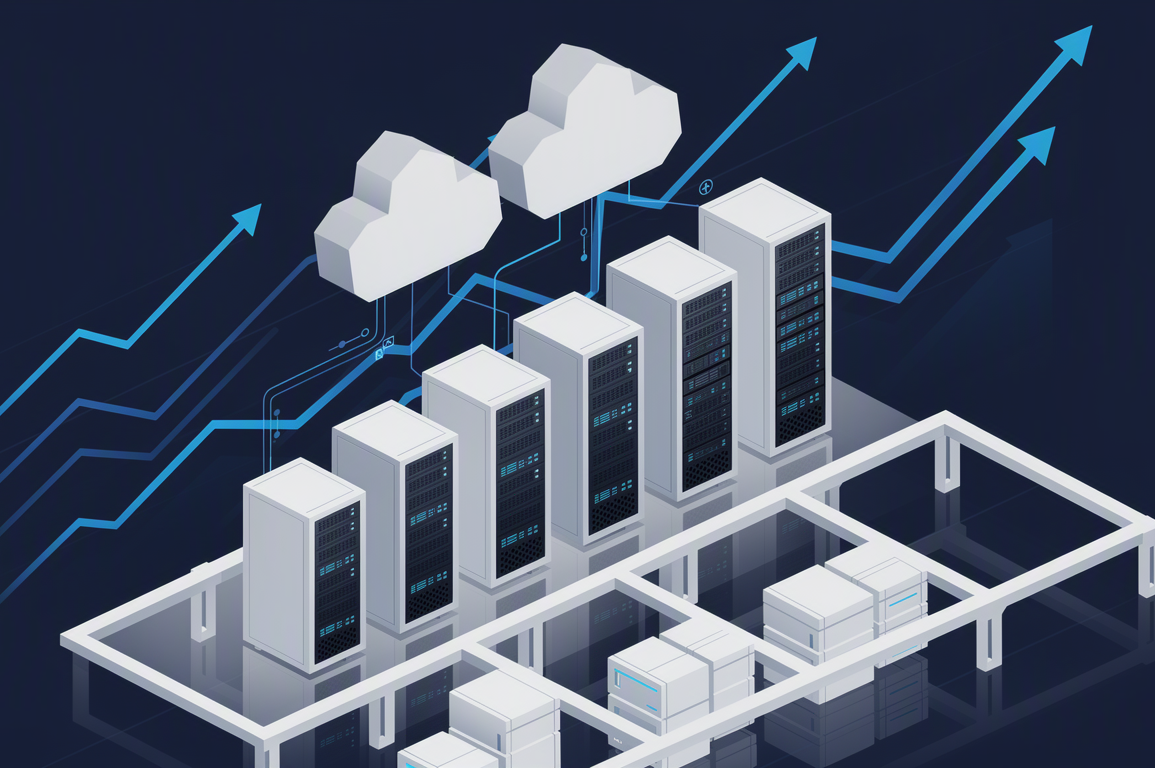

Google has reported record-breaking profits from its cloud computing division in Q2 2026, driven primarily by surging enterprise demand for AI infrastructure services, according to financial disclosures released this week. The results provide the first concrete evidence that hyperscale cloud providers can successfully monetise the massive capital investments required for artificial intelligence deployment.
The cloud division’s performance comes as Google and its competitors have collectively committed over $1 trillion to AI infrastructure buildout over the next five years, prompting investor concerns about return on investment timelines. Google’s ability to convert AI infrastructure spending into immediate revenue growth offers a template for how the industry might justify unprecedented capital expenditure.
According to reports from TechCrunch AI, Google Cloud’s operating margin improved substantially quarter-on-quarter, with AI-related services accounting for the majority of incremental revenue growth. The division is now selling GPU clusters, custom AI accelerators, and managed machine learning services to enterprises at premium pricing, effectively passing infrastructure costs directly to customers whilst maintaining healthy margins.
The business model represents a fundamental shift from previous technology cycles. Rather than waiting years for infrastructure investments to generate returns through consumer applications, cloud providers are immediately monetising AI capabilities by selling computational capacity to enterprises building their own AI systems. This approach distributes infrastructure risk across thousands of corporate customers whilst generating predictable recurring revenue.
Market Implications
The winners in this arrangement are clear: hyperscale cloud providers with existing data centre footprints and customer relationships can leverage sunk costs whilst charging premium rates for scarce AI computing resources. Google, Microsoft Azure, and Amazon Web Services are effectively operating as infrastructure oligopolies, with smaller cloud providers unable to match the capital requirements for competitive AI offerings.
Enterprise customers face a more complex calculation. Whilst cloud-based AI infrastructure eliminates upfront capital expenditure and provides immediate scalability, organisations are accepting long-term dependency on a handful of providers with significant pricing power. Several large financial institutions and technology companies have begun building private AI infrastructure to avoid this lock-in, though at substantially higher initial cost.
Traditional IT services firms and system integrators face margin pressure as cloud providers expand up the value chain, offering not just raw infrastructure but increasingly sophisticated managed AI services that compete directly with consulting offerings.
Infrastructure Economics
The financial validation comes at a critical moment for the AI industry. Ars Technica AI reported that combined capital expenditure from major technology companies on AI infrastructure exceeded $200 billion in the past 18 months, raising questions about whether demand would materialise quickly enough to justify the spending pace.
Google’s results suggest enterprise adoption is accelerating faster than anticipated. Companies across financial services, healthcare, and manufacturing are moving AI projects from pilot programmes to production deployment, requiring substantial computing resources. The shift from experimentation to operational AI systems creates sustained demand rather than one-time purchases.
However, the sustainability of current pricing remains uncertain. As additional data centre capacity comes online and competition intensifies, enterprises may gain negotiating leverage. The premium pricing that currently supports healthy margins could face pressure, particularly if open-source AI models reduce the computational requirements for many applications.
What to Watch
The key metric for coming quarters will be whether Google can maintain margin expansion as it scales AI infrastructure, or whether competitive dynamics force price reductions that compress profitability. Microsoft’s Azure results, expected next month, will indicate whether Google’s success represents industry-wide trends or company-specific execution advantages.
Additionally, enterprise customer concentration bears monitoring. If a small number of large customers account for disproportionate AI infrastructure spending, revenue could prove more volatile than recurring cloud business models typically deliver.
Google’s ability to convert massive AI infrastructure investments into immediate profits provides the clearest evidence yet that enterprise monetisation can work at scale, offering a potential roadmap for justifying the industry’s trillion-pound infrastructure bet whilst reshaping competitive dynamics in enterprise technology.