

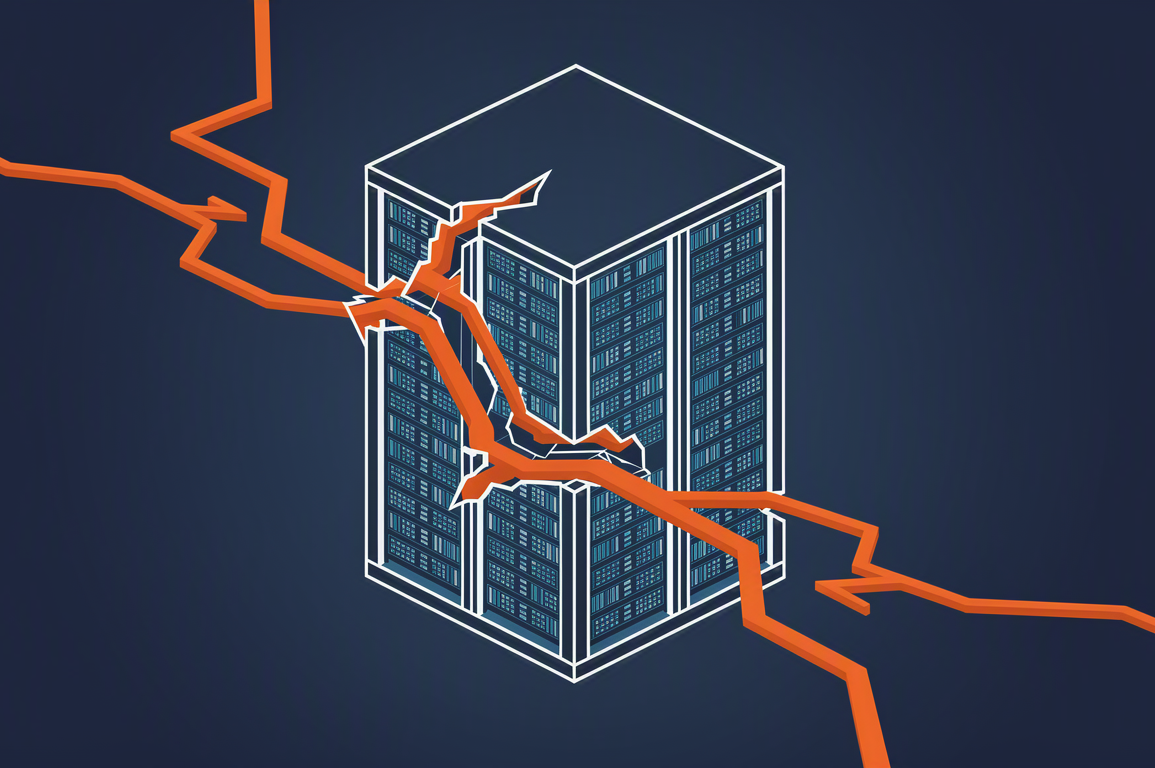

A single fallen power line in Northern Virginia last month knocked offline multiple AI data centres, exposing a critical infrastructure vulnerability that threatens the sector’s rapid expansion and raising urgent questions about grid resilience standards, according to TechCrunch AI.
The incident, which affected facilities operated by several hyperscale providers in Loudoun County—the world’s largest data centre market—revealed that many AI-focused installations lack the redundant power systems and backup infrastructure standard in traditional enterprise data centres. Unlike conventional facilities designed with N+1 redundancy, newer AI data centres prioritise speed to market over resilience, creating single points of failure.
“The economics of AI infrastructure have inverted traditional data centre planning,” said one infrastructure analyst quoted by TechCrunch AI. Operators racing to capture AI training and inference workloads are deploying facilities in 12-18 months rather than the typical 36-month timeline, often bypassing comprehensive grid integration studies and backup power installations that add months to construction schedules.
The Northern Virginia incident highlights a broader systemic risk. AI workloads consume 3-5 times more power per rack than traditional computing, with some GPU clusters drawing 100 kilowatts per rack compared to 5-10 kilowatts for conventional servers. This concentration of demand on aging grid infrastructure creates cascading failure risks when primary power sources fail.
Data centre power demand is projected to grow 160% annually through 2030, driven primarily by AI workloads, according to industry estimates cited in the report. Yet grid infrastructure investments lag significantly, with utility upgrade cycles spanning 5-7 years whilst AI facilities come online in under two years.
The business implications are substantial. Cloud providers face potential service level agreement violations and customer exodus if outages become frequent. Enterprise customers running mission-critical AI applications—from autonomous vehicle training to real-time fraud detection—cannot tolerate the downtime that conventional data centres architect against through geographic redundancy and failover systems.
Hyperscale operators stand to lose market share to competitors investing in resilience infrastructure, whilst utilities face regulatory pressure to accelerate grid modernisation. Conversely, providers of backup power systems, microgrid solutions, and grid management software are positioned to capture significant revenue as operators retrofit existing facilities and build resilience into new deployments.
The incident also exposes regulatory gaps. Current data centre standards, developed when facilities consumed a fraction of today’s power loads, lack specific provisions for high-density AI infrastructure. Several jurisdictions are now examining whether AI data centres should face stricter resilience requirements similar to those governing hospitals and emergency services.
TechCrunch AI reports that solutions under consideration include mandatory on-site battery storage capable of sustaining operations for 4-6 hours, requirements for dual utility feeds from separate substations, and integration with demand response programmes that can shed non-critical loads during grid stress events. Some operators are exploring on-site generation using natural gas or, increasingly, small modular nuclear reactors, though regulatory approval timelines for the latter extend years into the future.
The financial stakes are considerable. Retrofitting existing AI data centres with comprehensive backup systems could cost $50-100 million per facility, whilst building resilience into new construction adds 15-20% to capital expenditure. However, the cost of downtime for AI training runs—which can involve thousands of GPUs operating continuously for weeks—often exceeds millions of pounds per incident.
Industry observers will be monitoring whether regulators mandate resilience standards before additional outages occur, and whether insurance markets begin pricing grid vulnerability risk into data centre coverage. The Northern Virginia incident may prove a watershed moment that forces the AI infrastructure sector to balance speed with stability, or merely the first in a series of wake-up calls that precede meaningful reform.
As AI workloads become embedded in critical business operations and public services, the sector can no longer treat grid resilience as an optional enhancement. The question is whether change comes through proactive investment or reactive regulation following more severe failures.