


How Microsoft and Inworld AI Are Rewiring the Creative Logic of Game Development
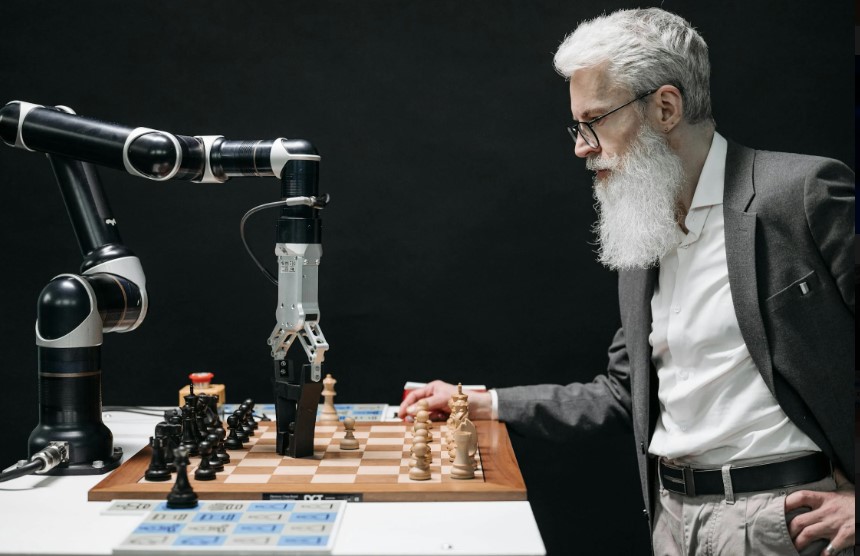
The Quiet Revolution Inside the Game Engine
For most of gaming history, intelligence lived behind the scenes.
AI controlled enemy behavior, optimized physics, and managed procedural environments—but it rarely touched the heart of the medium: storytelling.
That boundary is now dissolving.
Microsoft’s multi-year partnership with Inworld AI marks a pivotal shift in how games are conceived, written, and experienced. By embedding generative AI directly into Xbox game development, Microsoft is pushing artificial intelligence from a supporting role into the creative core of interactive entertainment.
This is not simply about smarter non-player characters. It is about games that can listen, adapt, and respond, narratively as well as mechanically.
From Scripted Worlds to Living Narratives
At the center of the collaboration is an AI design copilot that assists developers in generating dialogue trees, branching storylines, and complex quest logic. Paired with this is Inworld AI’s character engine, which allows NPCs to engage players dynamically rather than relying on prewritten responses.
In practical terms, this means fewer rigid scripts and more adaptive storytelling. Characters can respond to player choices with contextual awareness, altering tone, intent, and narrative direction in real time.
For an industry long constrained by the cost and complexity of narrative design, this represents a structural change. Storytelling is no longer limited by how many dialogue lines a studio can afford to write, it becomes computationally extensible.
Why This Matters More Than It Sounds
Game development is one of the most labor-intensive creative industries. Narrative designers often face bottlenecks: every branch must be written, tested, localized, and voiced. As games grow larger, stories paradoxically become narrower.
Generative AI offers a release valve.
By automating parts of narrative scaffolding, without automating creativity itself, tools like Inworld’s allow writers and designers to focus on world-building, emotional arcs, and thematic coherence, while machines handle variation and responsiveness.
As Inworld AI CEO Ilya Gelfenbeyn put it, AI has always been part of games. What has changed is where it operates. Large language models now make it possible for intelligence to live inside the story, not just the system.
Microsoft’s Strategic Bet: Creativity, Not Just Productivity
Microsoft’s role in the partnership is telling. The company brings not only Azure OpenAI Service and Microsoft Research, but a decade of experience designing developer-centric platforms that emphasize scale, accessibility, and governance.
This mirrors Microsoft’s broader AI trajectory. In enterprise software, Copilot transformed AI from a backend feature into a collaborative interface. In gaming, Microsoft is attempting something similar: positioning AI as a creative partner rather than a replacement.
Importantly, the tools are designed to be multiplatform, supporting studios of all sizes—from independent developers to major publishers, across the Xbox ecosystem and beyond.
This is not about automating games. It is about compressing the distance between imagination and execution.
Gaming as the Testbed for the Metaverse
The partnership also hints at something larger than games.
Generative AI is increasingly seen as foundational to the next generation of immersive digital worlds, often grouped under the loosely defined “metaverse.” In these environments, static narratives collapse under their own weight. Persistent worlds require characters that can evolve alongside players.
Analysts estimate that the gaming sector, driven by VR, AR, and 3D interactive environments, could approach US$615 billion by 2030. AI-driven characters and adaptive storytelling are not optional in that future; they are infrastructural.
If productivity software was AI’s first proving ground, gaming may be its most demanding one.
The Design Risks No One Can Ignore
Yet the promise comes with real challenges.
Generative systems can introduce narrative inconsistency, bias, or tonal drift if not carefully governed. Player trust depends on coherence as much as novelty. A character that feels intelligent one moment and nonsensical the next breaks immersion instantly.
Microsoft and Inworld AI emphasize “responsibility by design,” aligning with Microsoft’s Responsible AI Standard. But responsibility in games is uniquely complex. Storytelling is cultural. Dialogue carries values. Adaptive systems must be constrained without becoming sterile.
The tension between freedom and control will define whether generative AI enhances games, or undermines them.
A Shift in Who Gets to Create
One underappreciated consequence of this partnership is democratization.
Narrative-heavy games have historically favored large studios with the resources to support writers, voice actors, and localization teams. AI-assisted storytelling lowers that barrier. Smaller studios can experiment with depth and complexity that once required blockbuster budgets.
That does not flatten creativity, it redistributes it.
In the long run, this could lead to a more diverse gaming landscape, where innovation comes not just from scale, but from experimentation.
From Backend Optimization to Creative Infrastructure
For years, AI’s role in gaming was optimization: better pathfinding, smarter enemies, faster production cycles. What Microsoft and Inworld AI are proposing is something different.
They are treating generative AI as creative infrastructure, a layer that supports imagination rather than replacing it.
If successful, this model will likely spread beyond gaming into film, interactive education, and virtual collaboration environments. Games are simply where the feedback loop is fastest and the stakes are clearest.
The Long View: Games That Remember You
The most profound implication may not be technical at all.
Generative AI opens the door to games that remember, not just progress states, but conversations, relationships, and emotional context. Worlds that evolve with players rather than resetting for them.
That vision remains aspirational. But with Microsoft’s scale and Inworld AI’s specialization, it is no longer speculative.
Gaming is becoming less about scripted experiences and more about sustained dialogue between human and machine.
Conclusion: A Creative Threshold
Microsoft’s partnership with Inworld AI is not a single product launch. It is a declaration about where creativity is headed.
Generative AI is moving from the margins of game development into its narrative center. The challenge now is not whether the technology works—but whether the industry can wield it thoughtfully.
If it can, the next generation of games will not just be played.
They will be conversed with.