


Autonomous agents, emotional intelligence, and adaptive robots are redefining what ‘intelligent’ really means: The next AI breakthroughs aren’t louder, they’re quieter, deeper, and far more human
For years, artificial intelligence was judged by a narrow metric: could it match or beat humans at specific tasks? Chess, image recognition, language translation. Each victory made headlines, yet everyday life remained mostly unchanged.
That era is ending.
By 2026, artificial intelligence will no longer feel like a separate system we “use.” It will feel embedded, quietly present in how we work, communicate, plan our days, and even manage our emotions. The next wave of AI breakthroughs is not just about speed or accuracy. It is about presence.
What is emerging now is a form of intelligence that is more autonomous, more adaptive, and more human-facing than anything that came before it. This shift will challenge how we define agency, productivity, trust, and even companionship.
Here are the breakthroughs most likely to reshape that reality in 2026, and why they matter more than many expect.
Autonomous AI Agents Are Learning to Act, Not Just Respond
The most consequential change underway is the rise of autonomous AI agents.
What began as experimental tools, systems like AutoGPT or Devin that could chain tasks together, are rapidly evolving into agents capable of planning, executing, and revising complex work with minimal human input. These systems no longer wait passively for prompts. They interpret objectives, explore solution paths, and adapt when something goes wrong.
By 2026, such agents are likely to be embedded directly into corporate systems, startups, and even solo workflows. Project management, customer engagement, financial analysis, software debugging, tasks once fragmented across teams may increasingly be coordinated by AI acting as an operational layer.
The deeper shift, however, is philosophical. When machines can pursue goals independently, responsibility becomes blurred. Who is accountable when an autonomous system makes a costly mistake? The technology may be ready, but governance and workplace culture are still catching up.
Multimodal AI Will Collapse the Boundaries Between Media
Another breakthrough approaching fast is the normalization of multimodal AI.
Until recently, artificial intelligence systems were siloed: text models wrote, image models drew, video models animated. That fragmentation is dissolving. By 2026, interacting across text, images, audio, and video within a single system will feel natural.
A user might sketch an idea, describe it verbally, and receive a short film, marketing copy, and visual storyboard, without switching platforms. For educators, this means lesson plans that adapt instantly across formats. For businesses, it means faster ideation cycles. For creators, it means the barrier between imagination and execution nearly disappears.
This convergence will redefine creativity itself. The question will no longer be whether someone can technically produce content, but whether they can guide ideas with clarity and taste.
Human-Like Interaction Will Stop Feeling Novel
Perhaps the most unsettling, and transformative, breakthrough will be how normal human-like AI interaction becomes.
Advances in natural speech, emotional inference, and contextual memory are already underway. By 2026, AI systems will be able to recall prior conversations, recognize emotional cues from language or tone, and adjust their responses accordingly.
The result will not be perfect emotional intelligence, but something close enough to reshape expectations. Conversations will feel continuous rather than transactional. Interactions will feel personal rather than generic.
This raises subtle but important questions. If an AI remembers you, adapts to you, and responds empathetically, what obligations do designers have to ensure transparency? And what happens when people begin to emotionally rely on systems that cannot truly reciprocate?
Personal AI Assistants Will Become Deeply Customized
AI assistants are also becoming far more intimate.
By 2026, personalization will move well beyond calendars and reminders. Assistants will learn communication styles, behavioral patterns, wellness goals, and productivity rhythms. They may suggest breaks during stressful periods, recommend activities aligned with long-term interests, or flag unhealthy routines before users notice them themselves.
In effect, AI assistants will begin to resemble lifestyle partners, part organizer, part coach, part creative collaborator. Always learning. Always present.
The opportunity is enormous, particularly in health and wellbeing. So are the risks. Systems that know us this well require unprecedented safeguards around privacy, consent, and data ownership.
AI Will Finally Step Fully Into the Physical World
While much attention remains on software, one of the most visible breakthroughs of 2026 may arrive in physical form.
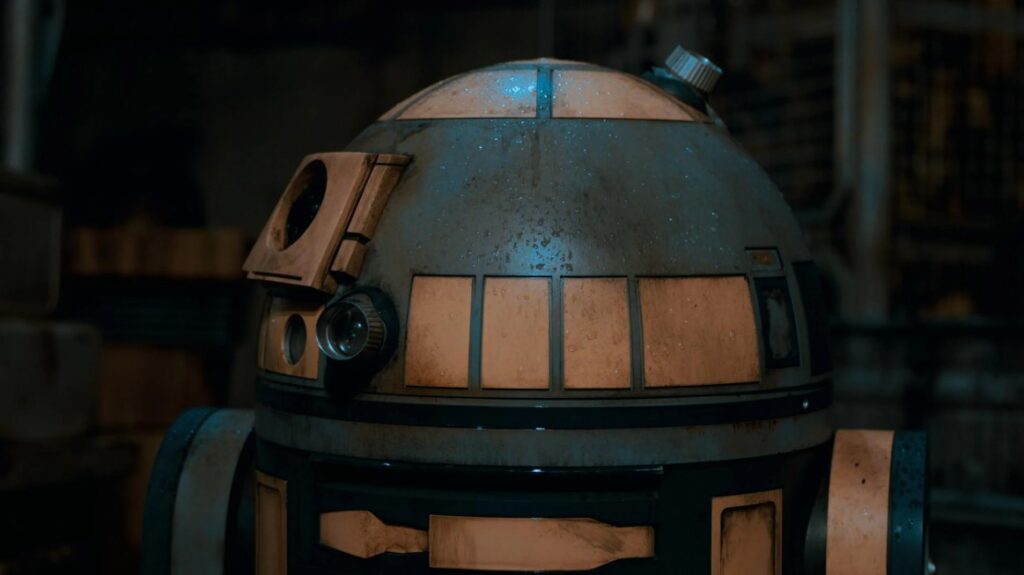
Robotics has long struggled with adaptability. Traditional robots excelled in controlled environments but failed when conditions changed. AI is beginning to change that equation. Machine learning systems can now interpret sensory data in real time, allowing robots to adjust behavior dynamically rather than follow rigid scripts.
By 2026, adaptive service robots may become common in hospitals, restaurants, warehouses, and homes, ]capable of navigating unpredictable environments and interacting naturally with people.
This is not about humanoid fantasies. It is about practical intelligence meeting the messiness of the real world.
The Real Breakthrough: AI Becomes Invisible
The most important breakthrough may be the least visible.
As AI systems mature, they stop announcing themselves. They disappear into infrastructure, workflows, and everyday decisions. When technology fades into the background, its influence grows.
By 2026, AI will no longer be a headline feature. It will be an assumption—woven into how value is created and how problems are solved.
That is when the stakes become highest.
A Choice Hidden Inside Progress
The breakthroughs coming in 2026 are not just technical milestones. They are social choices.
Autonomous agents can empower small teams, or concentrate power. Personalized assistants can improve wellbeing, or deepen surveillance. Human-like interaction can make technology accessible, or emotionally manipulative.
AI is becoming more capable, more personal, and more present. Whether that future feels empowering or unsettling will depend less on algorithms, and more on the values embedded in their design.
The next phase of artificial intelligence will not ask only what machines can do.
It will ask who we choose to become alongside them.