


Artificial intelligence was supposed to run on code and cloud: It is increasingly running on uranium, and Big Tech is quietly reshaping the global energy map to keep its models alive
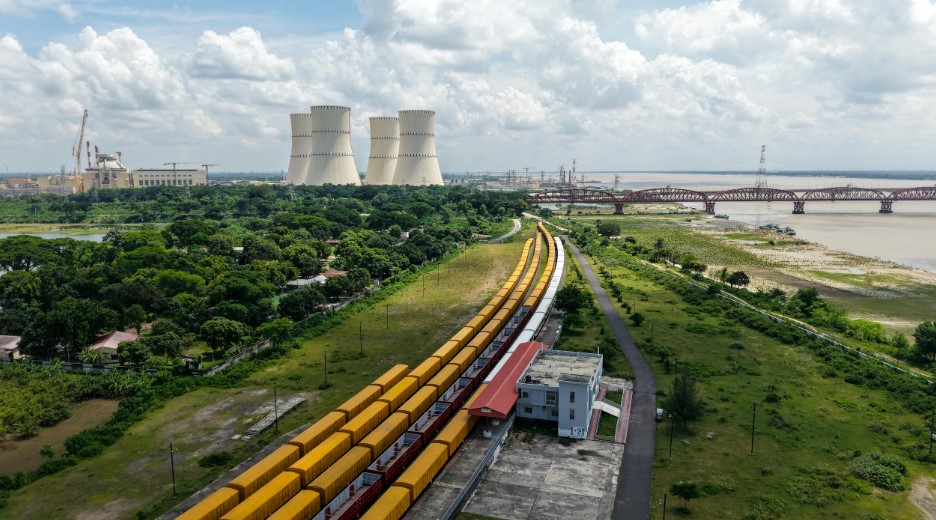
For years, artificial intelligence has been sold as an almost ethereal force, algorithms floating in the cloud, learning, predicting, and generating at near-magical speed. But the reality of modern AI is far more grounded. It is heavy, industrial, and voraciously energy-hungry.
As models grow larger and more capable, electricity has become AI’s most critical bottleneck. Training and running frontier-scale systems now requires power on the scale of small cities. This has forced technology giants to confront a problem they once outsourced to utilities and governments: how to secure reliable, round-the-clock energy at unprecedented scale.
Meta’s decision to secure up to 6.6 gigawatts of nuclear power for its new Prometheus AI supercluster, through agreements with Vistra, TerraPower, and Oklo, is not an isolated move. It is a signal that the AI boom has entered a new phase, one defined not just by chips and data, but by reactors, grids, and national energy policy.
AI’s Power Demand Is Exploding
The surge in AI energy demand is not theoretical. It is structural.
Large language models, multimodal systems, and emerging “reasoning” AI architectures require:
- Massive parallel computation
- Continuous inference at global scale
- Redundant, always-on infrastructure
Training a single frontier model can consume tens of gigawatt-hours of electricity, while ongoing deployment requires steady baseload power. Unlike traditional cloud workloads, AI systems cannot easily pause or throttle without degrading performance or availability.
Industry analysts estimate that AI-driven data centers could account for a double-digit percentage of global electricity demand within the next decade. In some regions, utilities are already warning that grid expansion is lagging behind projected AI growth.
This is the context in which Meta’s nuclear pivot must be understood.
Why Nuclear, and Why Now
Renewable energy has long been the preferred public narrative for Big Tech’s sustainability goals. Solar and wind, however, face a fundamental limitation: intermittency. AI data centers do not shut down when the sun sets or the wind drops.
Nuclear power offers three advantages that are uniquely suited to AI:
- Continuous baseload energy (24/7 availability)
- High energy density with a small land footprint
- Carbon-free generation aligned with climate targets
By partnering with companies like TerraPower and Oklo, both leaders in advanced and small modular reactor (SMR) technology, Meta is effectively bypassing traditional grid constraints and securing long-term energy certainty.
This is not about ideology. It is about operational survival.
Prometheus Supercluster: New Kind of Infrastructure
Meta’s Prometheus AI supercluster is emblematic of a new class of infrastructure. These facilities are not just data centers; they are industrial-scale AI factories, designed to train and deploy models that operate across social media, advertising, virtual reality, and enterprise services.
Powering such a system with up to 6.6 gigawatts places it in the same energy category as large metropolitan areas. That scale explains why conventional power purchase agreements are no longer sufficient.
By locking in nuclear capacity, Meta is effectively verticalizing part of its energy supply chain — a move that echoes earlier moments in industrial history, when railroads, steelmakers, and oil companies secured direct control over critical inputs.
Big Tech’s Quiet Return to Hard Infrastructure
For decades, Silicon Valley thrived on abstraction. Software ate the world, and physical constraints were someone else’s problem. AI has changed that equation.
Today’s leading technology companies are:
- Competing for scarce power capacity
- Negotiating directly with energy producers
- Influencing regional grid planning
- Shaping nuclear innovation timelines
What makes this shift remarkable is how quietly it is happening. While public discourse focuses on AI ethics, safety, and regulation, a parallel transformation is unfolding in energy markets — largely outside the spotlight.
Nuclear Power’s Reputation Gets a Second Look
Nuclear energy has long been politically fraught, associated with cost overruns, waste concerns, and public resistance. AI is changing that calculus.
Advanced reactors and SMRs promise:
- Lower upfront costs
- Improved safety profiles
- Faster deployment
- Better integration with industrial users
For policymakers, the AI energy crunch offers a pragmatic argument for nuclear revival: without it, digital competitiveness may stall.
In this sense, AI is doing what decades of climate advocacy struggled to achieve, making nuclear power economically and strategically attractive again.
Geopolitics, Energy Security, and AI Supremacy
Energy has always been geopolitical. AI makes it more so.
Countries that can supply abundant, clean, and reliable power will have a structural advantage in hosting AI infrastructure. Those that cannot may find themselves dependent on foreign compute capacity — a new form of digital dependency.
Meta’s nuclear strategy highlights a broader truth: AI leadership is inseparable from energy sovereignty.
As the U.S., China, and Europe compete for AI dominance, nuclear policy is quietly becoming a strategic lever alongside semiconductors and data governance.
Environmental Trade-Offs
Critics argue that nuclear power introduces new risks and long-term waste challenges. Supporters counter that AI’s alternative, expanded fossil fuel generation, ]would undermine climate goals at a critical moment.
The uncomfortable reality is that there is no zero-cost option.
AI’s energy appetite forces societies to confront trade-offs that were once abstract. Do we accept nuclear risk to avoid carbon emissions? Do we limit AI growth to protect grids? Or do we redesign digital ambition itself?
Meta’s choice suggests that, for now, Big Tech is unwilling to slow down.
Future of AI
The turn toward nuclear power marks the end of AI’s “lightweight” phase. The technology is no longer just a software phenomenon; it is an infrastructural one.
Future AI breakthroughs will depend not only on:
- Better algorithms
- Faster chips
- Larger datasets
but also on:
- Energy planning
- Public acceptance of new power sources
- Regulatory alignment between tech and utilities
In short, AI’s future will be decided as much in energy commissions and reactor sites as in research labs.
Intelligence Has Physical Cost
Meta’s nuclear energy deals are not an anomaly. They are a preview.
As AI systems grow more capable, their physical footprint grows with them. Electricity, once a background input, is becoming a central constraint, and a source of strategic advantage.
The AI revolution is often framed as a triumph of human ingenuity. But it is also a reminder of a more basic truth: intelligence, artificial or otherwise, always comes at a cost.
In the age of AI, that cost is increasingly measured in megawatts.
