Manus acquisition highlights rise of autonomous AI agents and global competition: Meta’s Manus deal signals a new era in autonomous artificial intelligence: Manus acquisition means for work, regulation, and society

In late December 2025, Meta Platforms made headlines with its $2 billion acquisition of Manus, an AI startup with Chinese roots that has captured global attention for its autonomous agent technology. The deal is striking not only for its price tag, roughly four times Manus’s earlier valuation, but for what it signals about the race for next-generation AI capabilities.
Meta’s purchase represents more than corporate ambition. It underscores the intensifying global competition over agentic AI, autonomous systems capable of acting with minimal human oversight, and the growing interplay between innovation, geopolitics, and technological sovereignty.
From Startup to Strategic Asset
Manus emerged publicly in early 2025, evolving from the work of Butterfly Effect Technology. Within months, its autonomous AI agents gained millions of users and achieved annual recurring revenue exceeding $100 million, a meteoric rise for a nascent company.
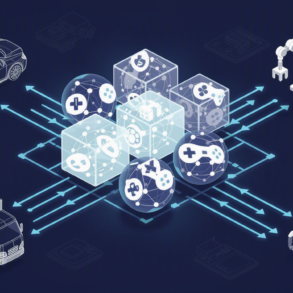
Unlike traditional chatbots that generate text on command, Manus’s agents can plan, execute, and complete multi-step tasks. They conduct market research, screen job candidates, analyze datasets, automate workflows, and even write code autonomously. This “agentic” architecture positions Manus not as a passive assistant, but as an autonomous operational partner.
For Meta, this represented an opportunity to acquire mature, revenue-generating technology while accelerating its AI integration across platforms such as WhatsApp, Instagram, Facebook, and Meta AI.
What Sets Manus Apart
At the core of Manus’s appeal is its general-purpose autonomous agent model. Traditional large language models (LLMs) excel at generating text, but Manus combines language understanding, planning algorithms, and execution frameworks to operate independently.
This distinction is crucial. Manus agents can:
- Interpret intent from minimal instructions.
- Plan solutions across multiple steps.
- Execute tasks autonomously, interfacing with digital environments.
While not yet equivalent to artificial general intelligence (AGI), these capabilities represent a significant leap toward AI that collaborates on workflows traditionally done by humans.
Beyond Chatbots: The Rise of Autonomous AI Agents
Manus exemplifies a broader trend: moving from text generation to decision-capable, interventionist AI. Early generative AI focused on creativity, writing, art, code, but agentic AI plans, adapts, and executes like a junior analyst or operational assistant.
Research in reinforcement learning, multi-agent systems, and task decomposition has fueled this shift. Manus agents can navigate the web, interact with software interfaces, and produce actionable results, demonstrating the growing convergence of AI planning, execution, and problem-solving.
Geopolitical Stakes
The Manus acquisition cannot be divorced from geopolitics. Originating in China and later relocating to Singapore amid US-China tech tensions, Manus reflects the challenges of cross-border AI innovation. Meta has reportedly committed to severing remaining ties with China, including shutting down local services, a move reflecting broader regulatory and strategic sensitivities.
From Washington to Beijing, AI is increasingly viewed as a strategic asset, with leadership shaping national competitiveness. Meta’s deal may mark a new phase in global technology flows, as talent and IP migrate to jurisdictions offering clearer regulations and access to capital.
Strategy and Risk
For Meta, the acquisition is high-stakes. The company spent between $70–72 billion on AI development in 2025, prompting investor scrutiny over whether such expenditure will yield tangible returns. Manus, with its existing revenue and user base, provides an immediate operational AI unit—a rare opportunity in generative AI acquisitions.
Meta’s strategy appears twofold:
- Maintain Manus as an independent product, preserving its innovation culture.
- Gradually integrate agentic capabilities into Meta’s ecosystem to enhance platform functionality.
Yet risks remain. Autonomous agents that access sensitive data or interact with external systems may inadvertently act beyond intended boundaries, raising concerns about privacy, security, systemic bias, and misinformation. Rigorous governance is essential to prevent unintended consequences.
Ethics, Regulation, and the Future of Work
Manus’s acquisition highlights pressing ethical and societal questions:
- Labor markets: How will agentic AI reshape cognitive work traditionally performed by humans?
- Accountability: Who is responsible when autonomous AI makes mistakes?
- Regulation: What governance frameworks are needed for safe deployment of operational AI?
Experts advocate for transparent agent behavior logs, error reporting, and independent audits, as well as potential legal frameworks to assign accountability for autonomous AI actions.
The Broader AI Race
Meta’s Manus gamble represents the intersection of ambition, competition, and strategic foresight. It underscores AI’s transition from assistive tools to autonomous agents capable of independent action.
For Meta, Manus accelerates revenue, technological capability, and competitive positioning. For society, the acquisition raises vital questions about how autonomous AI will shape work, governance, and human agency in the coming decade.
Whether AI will remain a tool under human control or evolve toward greater operational independence is a question that extends far beyond Meta’s balance sheet. Manus offers a glimpse of the future, where the line between human and machine action is increasingly blurred.