


Microsoft has begun testing autonomous agent capabilities within its Copilot platform, allowing the AI assistant to execute complex, multi-step tasks without continuous human oversight, according to reports from The Verge AI and TechCrunch AI. The pilot programme, currently available to select enterprise customers, marks a significant evolution in Microsoft’s AI strategy as it competes directly with Anthropic’s recently launched agent features.
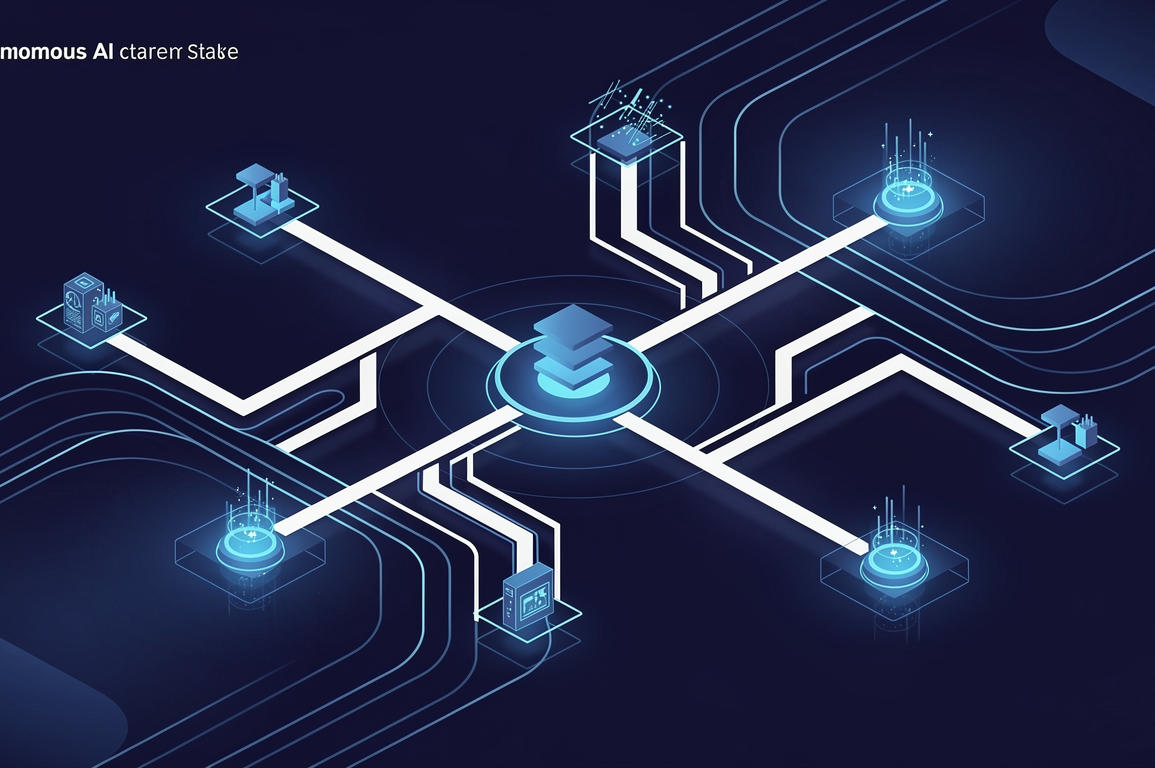
The new functionality enables Copilot to chain together multiple actions across Microsoft 365 applications, making decisions and adjusting its approach based on intermediate results. Unlike traditional AI assistants that require explicit instructions for each step, these autonomous agents can interpret high-level goals and determine the necessary sequence of operations independently.
Microsoft’s implementation draws inspiration from OpenClaw-style architectures, which emphasise persistent task execution and adaptive planning. The agents can reportedly schedule meetings by checking multiple calendars, draft documents by pulling information from various sources, and manage workflows that span email, Teams, and SharePoint without returning to users for approval at each stage.
The timing positions Microsoft in direct competition with Anthropic, which introduced autonomous agent capabilities for its Claude AI assistant earlier this quarter. Both companies are racing to capture enterprise customers seeking to automate knowledge work beyond simple query-and-response interactions. Google has also signalled intentions to develop similar capabilities for its Workspace AI tools, though no public testing programme has been announced.
For enterprise customers, the shift towards autonomous agents represents both opportunity and risk. Organisations adopting these capabilities early could see substantial productivity gains in areas such as data analysis, report generation, and administrative workflows. However, the technology also raises questions about oversight, accuracy, and liability when AI systems make consequential decisions without human approval.
Microsoft’s existing customer base of over 400 million Microsoft 365 commercial users provides a substantial advantage in distribution. The company can integrate autonomous agents directly into familiar workflows, reducing the friction typically associated with adopting new AI tools. This installed base also generates the usage data necessary to refine agent behaviour and identify high-value use cases.
The competitive implications extend beyond the immediate rivalry with Anthropic. Smaller AI startups that have built businesses around workflow automation and AI-powered task management face pressure as major platform providers bundle similar capabilities into existing subscriptions. Companies such as Zapier, which has pivoted towards AI-driven automation, must now differentiate against features that come included with enterprise software suites.
Technical limitations remain significant. Autonomous agents can struggle with ambiguous instructions, may execute tasks incorrectly without recognising errors, and can produce cascading failures when early steps in a workflow go wrong. Microsoft has not disclosed error rates or the scope of tasks currently supported in the pilot programme, making it difficult to assess production readiness.
The regulatory environment adds another layer of complexity. As AI systems gain autonomy, questions about accountability and compliance become more acute. European regulators have already indicated that autonomous AI systems may face stricter requirements under the AI Act, potentially affecting deployment timelines in key markets.
Industry observers will be watching several indicators in coming months: the breadth of tasks Microsoft enables for autonomous execution, the rate at which pilot customers expand usage, and any incidents involving agent errors or security concerns. The company’s approach to transparency around agent decision-making will also signal how it balances capability with control.
Microsoft’s move into autonomous agents represents a calculated bet that enterprises are ready to delegate substantive tasks to AI systems, not merely use them as assistants. Whether that confidence is justified will depend on both technical performance and organisational willingness to cede decision-making authority to algorithms.