


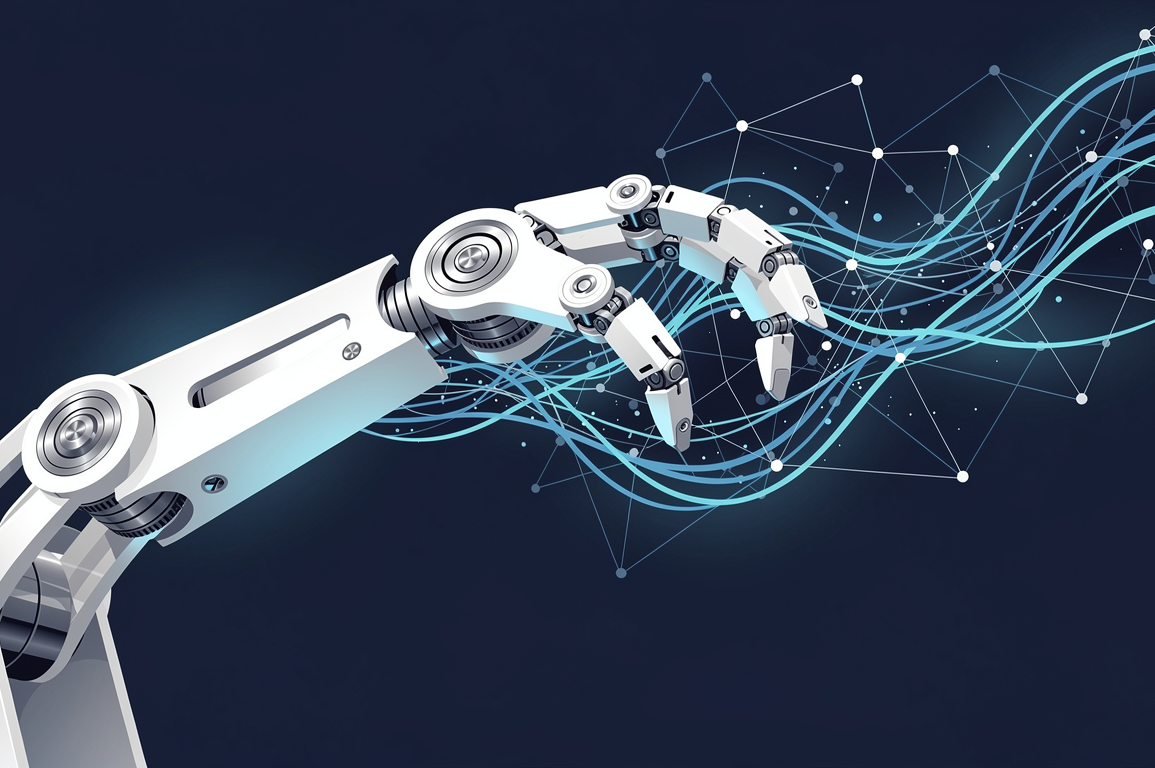

Genesis AI, the robotics startup backed by Khosla Ventures, has demonstrated its first foundational model capable of controlling physical robotic systems, according to reports from TechCrunch. The company showcased GENE-26.5 operating robotic hands in what represents a notable milestone for the emerging physical AI sector following its $105 million seed round earlier this year.
The demonstration marks a shift from pure software models to integrated systems that bridge digital intelligence with mechanical hardware. Unlike language or image models that operate entirely in digital space, Genesis AI’s approach combines perception, reasoning, and physical manipulation in a single architecture—a technical challenge that has constrained robotics development for decades.
The startup’s full-stack approach encompasses both the AI model and the robotic hardware it controls, rather than developing software alone. This vertical integration strategy mirrors early moves by companies like Tesla in autonomous vehicles, where tight coupling between software and hardware proved essential for real-world performance.
Genesis AI secured $105 million in seed funding, one of the largest early-stage rounds in robotics history. Khosla Ventures led the investment, signalling renewed confidence in physical AI after years of cautious capital deployment following high-profile failures in the consumer robotics sector. The funding reflects a broader pattern of capital flowing towards foundation models that extend beyond text and images into physical domains.
The business implications extend across manufacturing, logistics, and service industries where labour shortages and automation demands continue to intensify. Companies investing heavily in warehouse automation—including Amazon, DHL, and Ocado—represent potential customers or acquirers. Traditional industrial robotics firms such as ABB, KUKA, and Fanuc face pressure to integrate AI capabilities or risk obsolescence as software-first competitors enter the market.
For semiconductor manufacturers, the development validates investments in edge AI chips designed for robotics applications. Nvidia, Qualcomm, and emerging specialists like Hailo stand to benefit from increased demand for inference hardware that can process foundation models in real-time physical environments.
The demonstration also poses challenges for pure-play AI companies that have focused exclusively on digital applications. As foundation model capabilities expand into physical domains, the competitive landscape shifts towards firms with robotics expertise and manufacturing capabilities—resources that software-centric organisations typically lack.
Technical details about GENE-26.5 remain limited, but the model reportedly handles vision, language understanding, and motor control within a unified architecture. This differs from modular approaches that chain separate models together, which typically introduce latency and coordination problems unsuitable for real-time physical tasks.
The robotics sector has witnessed a resurgence of interest following advances in transformer architectures and multimodal learning. Figure AI raised $675 million earlier this year, whilst 1X Technologies and Physical Intelligence have attracted significant capital. However, Genesis AI’s demonstration represents one of the first public showings of a working system rather than laboratory prototypes or simulated environments.
Industry observers will now watch for several key developments: whether Genesis AI can demonstrate the model handling diverse tasks beyond controlled demonstrations, details about training data sources and methods, and the timeline for commercial deployment. The company’s ability to scale manufacturing whilst maintaining model performance will prove critical, as will regulatory responses to autonomous physical systems in workplace environments.
The Genesis AI demonstration suggests physical AI may be approaching commercial viability faster than many analysts predicted, with implications for labour markets, manufacturing strategies, and the competitive dynamics of the AI sector itself.