
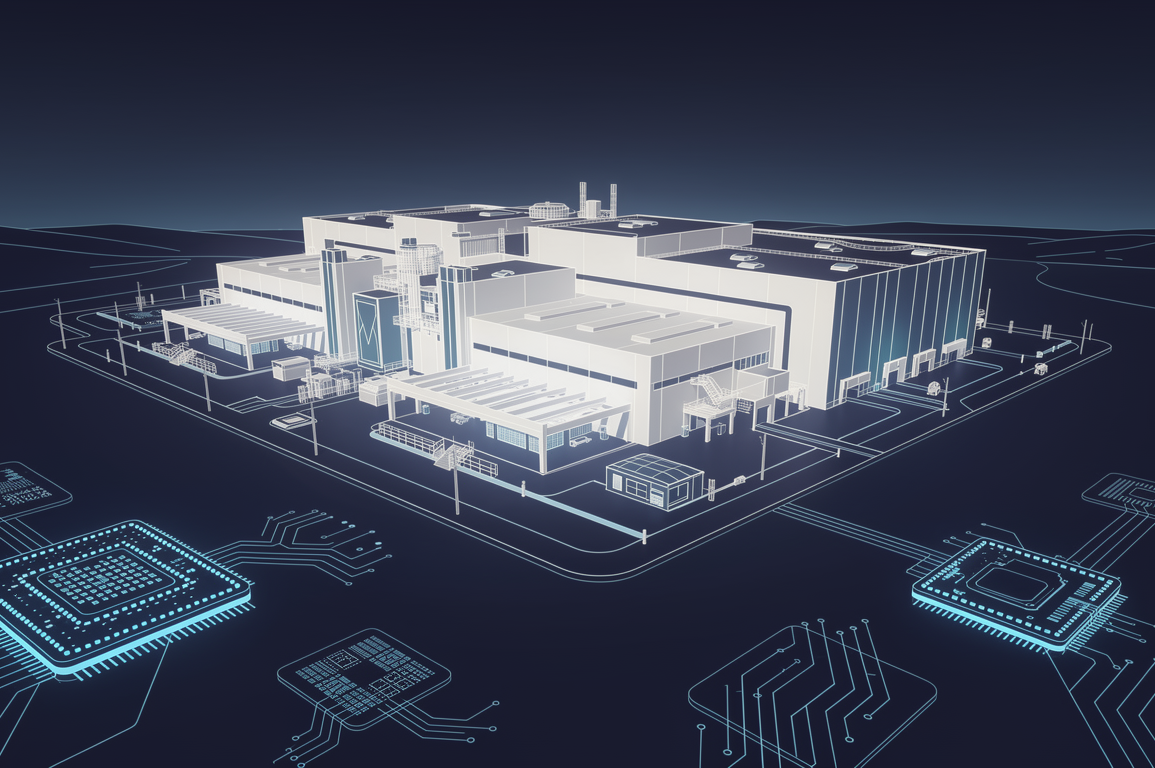

SpaceX is exploring a $119 billion investment in a semiconductor manufacturing facility dubbed “Terafab” in Texas, according to reports from TechCrunch AI, marking one of the largest proposed private investments in chip production infrastructure globally.
The facility would represent a significant expansion of Elon Musk’s industrial footprint in Texas, where SpaceX already operates its Starbase launch facility and Tesla maintains its headquarters. The investment scale exceeds Taiwan Semiconductor Manufacturing Company’s planned $40 billion Arizona facility and rivals Intel’s multi-year domestic manufacturing expansion programme.
The proposed Terafab facility signals SpaceX’s intention to secure dedicated semiconductor supply chains for its satellite internet constellation Starlink and potential artificial intelligence workloads. Current AI training infrastructure relies heavily on NVIDIA’s H100 and forthcoming B200 chips, with hyperscalers facing persistent supply constraints and lead times extending beyond six months.
SpaceX’s move mirrors vertical integration strategies pursued by other technology firms. Amazon developed its Graviton processors for AWS, whilst Google designed Tensor Processing Units for internal workloads. However, the $119 billion figure represents an order of magnitude larger commitment than previous custom silicon projects, suggesting ambitions extending beyond internal consumption.
The business case for such capital deployment remains unclear. Modern semiconductor fabrication facilities typically cost between $10 billion and $20 billion for leading-edge nodes. A $119 billion investment implies either multiple fabrication plants, integration of the entire supply chain from raw materials to packaging, or development of novel manufacturing processes requiring extensive research infrastructure.
Industry analysts note the timeline challenges inherent in semiconductor manufacturing. TSMC’s Arizona facility, announced in 2020, faces repeated delays and cost overruns. Intel’s domestic expansion programme has struggled with yield issues on advanced nodes. Building competitive chip manufacturing capability typically requires 5-7 years minimum, during which process technology advances two to three generations.
Market implications
The announcement creates immediate strategic pressure on established semiconductor manufacturers. NVIDIA currently commands 80-90% market share in AI training chips, with gross margins exceeding 70%. A credible competitor with captive demand from SpaceX’s satellite network and potential xAI integration could erode pricing power in the hyperscale segment.
Intel faces renewed competition in its manufacturing services ambitions. The company’s IFS (Intel Foundry Services) division seeks external customers to achieve economies of scale. A SpaceX facility with comparable or superior process technology would compete directly for advanced packaging and chiplet integration work.
Texas stands to gain substantial economic impact. The state already hosts Samsung’s Austin fabrication facility and Texas Instruments’ Richardson operations. A $119 billion investment would create thousands of high-wage engineering positions and extensive supply chain development, though semiconductor manufacturing remains highly automated with lower employment multipliers than traditional manufacturing.
Equipment manufacturers including ASML, Applied Materials, and Lam Research would benefit from substantial capital equipment orders. ASML’s extreme ultraviolet lithography systems cost approximately $200 million each, with advanced facilities requiring dozens of units.
Technical and financial hurdles
The project faces formidable technical barriers. Semiconductor manufacturing requires extensive specialised expertise concentrated in Taiwan, South Korea, and specific US regions. Recruiting sufficient talent represents a primary constraint, particularly given competing expansion programmes from Intel, TSMC, and Samsung on US soil.
Financing $119 billion presents challenges even for Musk’s enterprise portfolio. SpaceX’s most recent valuation approached $180 billion, making the chip facility investment equivalent to two-thirds of company value. Debt markets for semiconductor projects of this scale remain untested, whilst equity dilution at this magnitude would substantially alter ownership structures.
Water and power infrastructure requirements add complexity. Advanced semiconductor fabrication consumes millions of gallons of ultrapure water daily and requires stable, substantial electrical supply. Texas grid reliability concerns following recent weather-related failures may necessitate dedicated power infrastructure.
The coming months will reveal whether SpaceX proceeds beyond exploratory discussions to site selection and permitting. Key indicators include Texas state incentive negotiations, equipment supplier engagement, and talent acquisition in semiconductor engineering disciplines. The project’s viability depends substantially on whether the $119 billion figure represents genuine capital commitment or aspirational positioning in ongoing supplier negotiations with established chip manufacturers.