



AMD has unveiled Helios, a comprehensive rack-scale AI infrastructure system that represents the chipmaker’s most aggressive move yet against NVIDIA’s dominance in enterprise artificial intelligence hardware. The system, set to ship in the fourth quarter of 2026, integrates AMD’s accelerators, processors, and networking components into a complete data centre solution.
The announcement, made on 23 July, positions AMD as a full-stack infrastructure provider rather than merely a component supplier—a strategic shift that directly mirrors NVIDIA’s approach with its DGX and HGX platforms. According to TechCrunch AI, Helios combines AMD’s Instinct MI300 series accelerators with EPYC processors and custom networking fabric in a pre-configured rack architecture.
The timing proves significant. Enterprise buyers have grown increasingly concerned about vendor lock-in as NVIDIA’s GPU allocation remains constrained and its market capitalisation has soared past $3 trillion. AMD’s integrated offering provides procurement teams with a turnkey alternative that promises simplified deployment and unified support—addressing two persistent pain points in AI infrastructure purchasing.
Helios differs from AMD’s previous strategy of selling individual components to system integrators and cloud providers. The rack-scale approach bundles compute, memory, networking, and cooling into a single SKU with AMD-validated configurations. This reduces integration risk for enterprises whilst allowing AMD to capture more value per deployment than component sales alone.
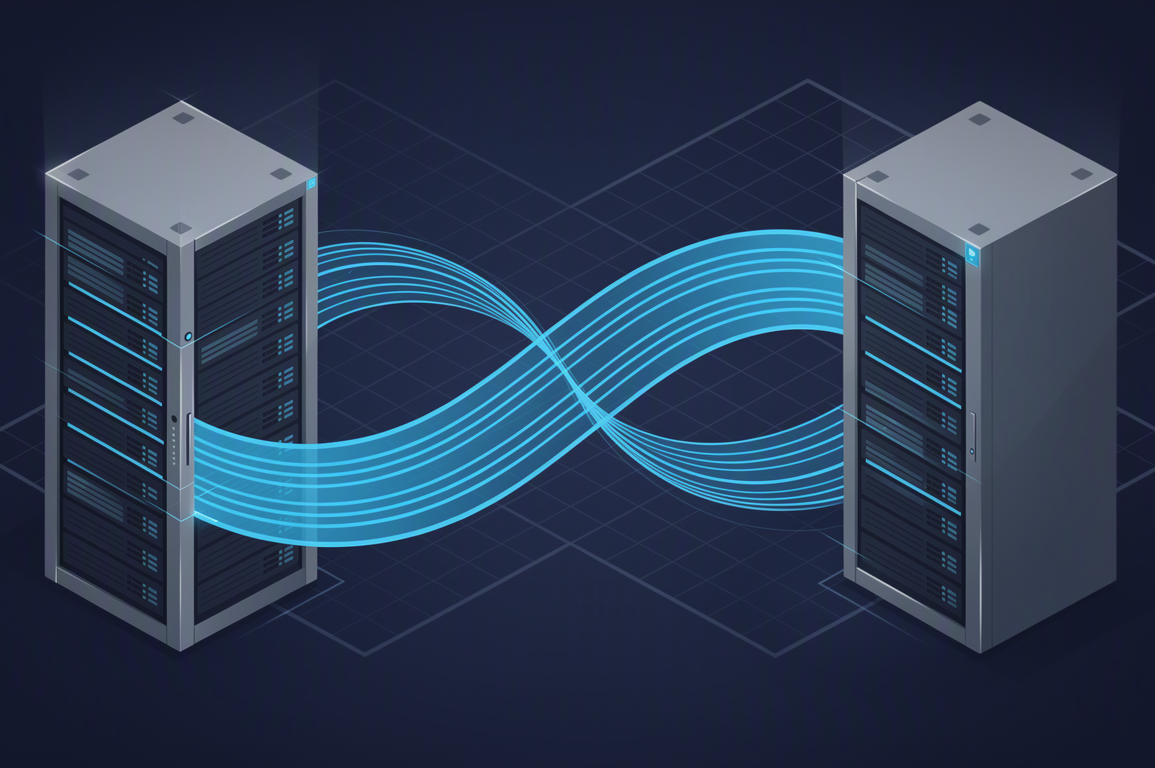
The system’s architecture centres on high-bandwidth interconnects between accelerators, a critical factor for large language model training and inference workloads. TechCrunch AI reports that AMD has developed proprietary fabric technology to compete with NVIDIA’s NVLink and InfiniBand ecosystem, though specific bandwidth figures were not disclosed at launch.
Market Implications
The primary beneficiaries of Helios are enterprises seeking alternatives to NVIDIA’s ecosystem, particularly those facing allocation constraints or concerned about single-vendor dependency. Cloud providers including Microsoft Azure and Oracle Cloud Infrastructure, both existing AMD partners, gain negotiating leverage and architectural optionality.
NVIDIA faces its first credible rack-scale competitor with comparable software maturity. Whilst AMD’s ROCm software platform has historically lagged CUDA in developer adoption, the company has invested heavily in framework compatibility and model optimisation over the past 18 months.
System integrators such as Dell, HPE, and Supermicro occupy an ambiguous position. Helios potentially disintermediates their traditional role in AI infrastructure, though AMD will likely maintain component sales channels alongside the integrated offering. The competitive pressure may accelerate their own rack-scale product development.
Smaller AI chip startups face increased difficulty. AMD’s move demonstrates that competitive AI infrastructure requires not just novel silicon but complete systems integration, substantial software investment, and manufacturing scale—barriers that few challengers can surmount.
Technical and Commercial Considerations
Helios arrives as AI workloads increasingly demand rack-scale thinking. Training runs for frontier models now span thousands of accelerators, making inter-chip communication bandwidth as critical as individual processor performance. The shift favours vendors who control the entire stack from silicon to topology.
Pricing details remain undisclosed, though AMD’s historical strategy has involved undercutting NVIDIA on total cost of ownership whilst matching performance on specific workloads. The company will need to balance aggressive pricing against margin preservation as it scales production.
Software compatibility will determine Helios’s trajectory. AMD has achieved near-parity with NVIDIA on popular frameworks including PyTorch and TensorFlow, but gaps persist in specialised libraries and developer tooling. Enterprise adoption hinges on seamless model portability and performance consistency.
What to Watch
Customer announcements in the coming months will signal market reception. Early deployments at tier-one cloud providers or prominent AI labs would validate AMD’s technical claims and accelerate enterprise consideration. Conversely, delayed shipments or performance shortfalls would reinforce NVIDIA’s position.
NVIDIA’s response merits close attention. The company may accelerate its own product roadmap, adjust pricing, or tighten software ecosystem integration to maintain switching costs. Its Blackwell architecture, expected later this year, will set the competitive benchmark Helios must meet.
AMD’s Helios represents the most substantial challenge to NVIDIA’s AI infrastructure hegemony to date, transforming the competitive landscape from component-level competition to complete system rivalry. Whether it succeeds depends less on technical specifications than on execution, software maturity, and AMD’s ability to scale production whilst maintaining quality—factors that will become apparent only as systems reach customer data centres in the months ahead.