



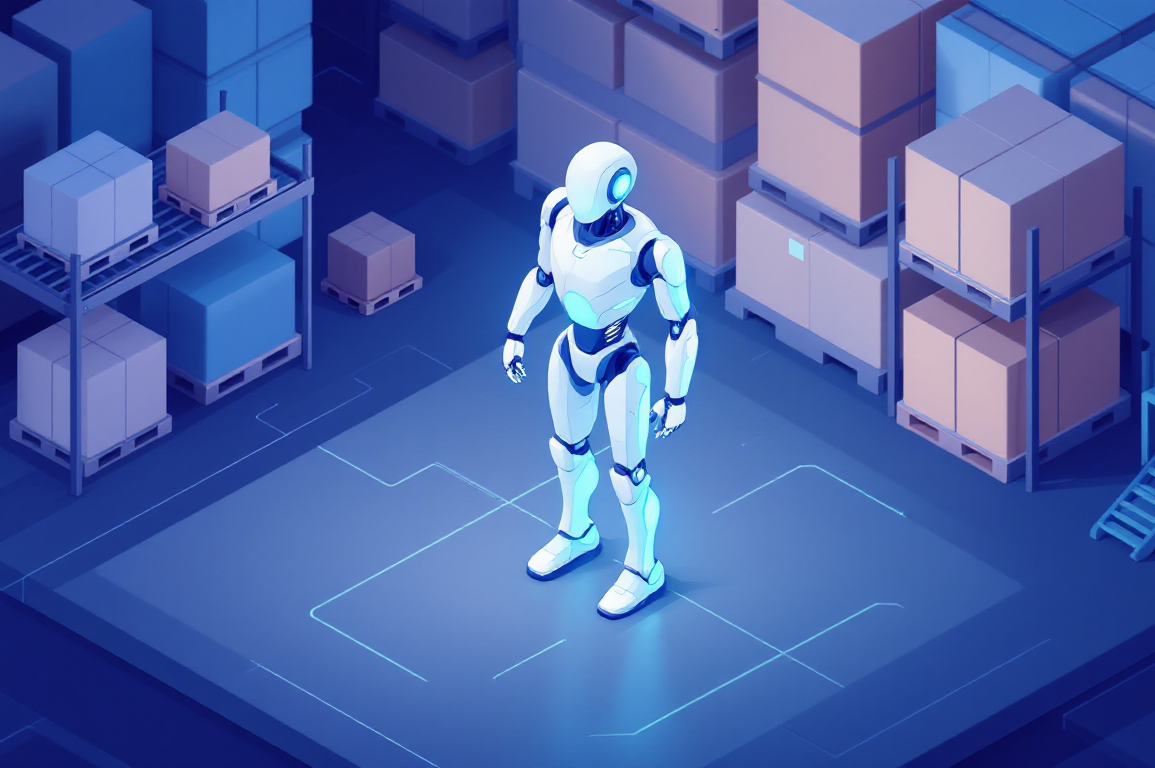

Agility Robotics began trading on the Nasdaq exchange this week, becoming the first pure-play humanoid robotics company to go public and marking a significant milestone in the commercialisation of physical artificial intelligence systems.
The Oregon-based manufacturer of Digit, a bipedal humanoid robot designed for warehouse logistics, joins the public markets at a time when investor interest in embodied AI has intensified following advances in foundation models and computer vision. The company has already deployed its robots in operational facilities for Amazon and logistics provider GXO, positioning it as the most commercially advanced humanoid robotics firm to date.
Agility’s market debut follows more than $350 million in venture funding raised since its 2015 founding, with backers including Amazon’s Industrial Innovation Fund, Playground Global, and DCVC. The company operates a 70,000-square-foot manufacturing facility in Salem, Oregon, which it claims can produce up to 10,000 humanoid robots annually when running at full capacity.
The timing reflects broader momentum in the humanoid robotics sector. Tesla has showcased its Optimus robot, whilst Chinese manufacturers including Unitree and Fourier Intelligence have begun shipping lower-cost alternatives. Figure AI recently demonstrated robots performing assembly tasks at BMW facilities, and Boston Dynamics retired its hydraulic Atlas robot in favour of an electric humanoid variant earlier this year.
Digit stands approximately 1.75 metres tall and can lift payloads up to 16 kilograms. The robot’s design prioritises warehouse environments, with a form factor that allows it to navigate human-designed spaces and handle totes commonly used in logistics operations. Agility has emphasised a “robot-as-a-service” business model rather than outright sales, though specific pricing and contract terms have not been publicly disclosed.
Market Implications and Competitive Landscape
The listing provides public market investors their first opportunity to gain direct exposure to humanoid robotics, a sector that has largely remained within venture capital portfolios. Traditional industrial robotics manufacturers including ABB, Fanuc, and Yaskawa trade publicly but focus primarily on fixed-arm systems rather than mobile humanoid platforms.
Warehouse operators and logistics providers stand to benefit from increased competition and capital flowing into the sector, potentially accelerating development timelines and reducing deployment costs. However, labour organisations have expressed concern about the technology’s impact on warehouse employment, particularly for roles involving repetitive material handling tasks.
The company faces significant execution challenges. Manufacturing humanoid robots at scale remains unproven, and the technology must demonstrate reliable performance across diverse warehouse environments. Maintenance costs, software updates, and integration with existing warehouse management systems will determine whether the economics favour adoption over human labour or conventional automation.
What Comes Next
Investors will scrutinise Agility’s quarterly disclosures for deployment numbers, revenue per robot, and customer retention metrics. The company’s ability to scale manufacturing whilst maintaining quality will prove critical, as will its success in expanding beyond early adopter customers.
Competition will intensify as well-funded rivals including Figure AI and Tesla’s robotics division advance their own commercialisation efforts. The regulatory environment for autonomous mobile robots in warehouses remains relatively permissive compared to autonomous vehicles, but safety incidents could prompt increased scrutiny.
Agility’s public listing establishes a valuation benchmark for the humanoid robotics sector and may accelerate IPO timelines for competitors. Whether the company can translate technological capability into sustainable unit economics will determine if this marks the beginning of a new industrial category or remains a niche application of embodied AI.