Communication delays between Mars and Earth have long constrained planetary rovers: NASA deploys onboard AI to plan safe, efficient drives across the rugged surface of Jezero Crater
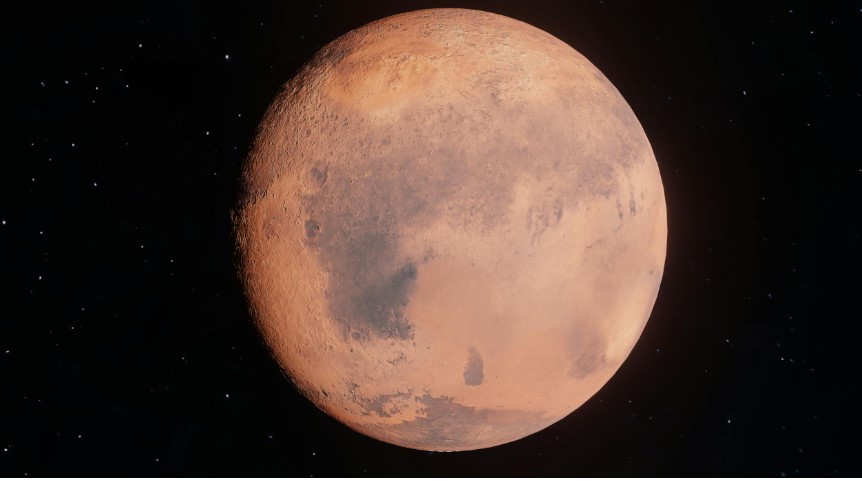
In the predawn of a new decade of space exploration, humanity has reached a watershed moment: an artificial intelligence system has autonomously planned and executed rover drives on another planet for the first time. On Mars, a world some 140 million miles (225 million kilometers) from Earth, NASA’s Perseverance rover recently completed two drives entirely using onboard AI planning rather than human route designers back on our home planet.
This achievement, executed on Dec. 8 and Dec. 10, 2025, was confirmed by NASA’s Jet Propulsion Laboratory (JPL) in late January 2026 and represents a sea change in planetary surface operations. Instead of humans manually analyzing terrain and plotting waypoints via commands sent across the vast space between Earth and Mars, a vision-capable generative AI model computed safe paths autonomously, dramatically reducing dependence on slow loops of Earth-based guidance.
The Communication Gap
Interplanetary distance imposes a formidable challenge: radio signals take up to 20 minutes one way to travel between Earth and Mars, meaning real-time joystick-style control of a rover is effectively impossible. For decades, navigators on Earth have been painstakingly plotting safe routes for Martian rovers by studying imagery and terrain data, then sending those instructions as waypoints, predetermined locations the rover must reach before receiving its next set of commands.
On past missions, these waypoints were typically spaced no more than 100 meters apart to reduce risk. Human teams painstakingly ensured safety over every hill, rock field, and sand ripple, a slow, meticulous process that limited how far and fast rovers could explore.
But with AI in the driver’s seat, that paradigm is shifting.
First Step Toward Autonomous Driving on Mars
During this landmark demonstration, scientists and engineers at JPL, working in collaboration with external AI partners, deployed vision-language models to analyze high-resolution orbital images from NASA’s HiRISE camera aboard the Mars Reconnaissance Orbiter, along with digital elevation models of terrain slopes. The AI system detected critical surface features, including bedrock, hazardous boulder fields, rocky outcrops, and sand ripples, that could pose a threat to rover travel. From this analysis, it generated a continuous route with waypoints tailored to the conditions of Jezero Crater’s terrain.
To ensure these AI-generated instructions were compatible with the rover’s existing flight software and would not put the mission at risk, engineers employed JPL’s “digital twin” — a virtual replica of Perseverance, and verified over 500,000 telemetry variables before approval.
And then, Perseverance drove:
- 689 feet (210 meters) on December 8, 2025
- 807 feet (246 meters) on December 10, 2025
Both drives were fully enabled by the AI-generated route planning.
Autonomous Navigation: Evolving from AutoNav to AI Planning
Perseverance has been a pioneer in autonomous driving for years. Its self-driving software, AutoNav, previously allowed it to traverse roughly half-kilometer boulder fields more efficiently than its predecessors and to set driving records on Mars. Unlike command-by-command navigation from Earth, AutoNav let the rover analyze local hazards on its own and choose safer routes to nearby objectives.
Yet even AutoNav depended on human oversight to define the general path and larger waypoint framework. The latest test took this further by allowing generative AI systems to take on the planning role traditionally handled by human teams, signaling a new model of robotic autonomy.
In effect, where AutoNav helped Perseverance respond to obstacles once a path was defined, the new AI system helps the rover decide the path in the first place, synthesizing large datasets into actionable route plans that drive decision-making in a way humans once exclusively controlled.
Algorithms Meet Red Planet
The AI models used in these tests are more than simple terrain classifiers. They combine vision and language capabilities, interpreting complex visual data the way autonomous cars do on Earth, and translate that understanding into actionable rover instructions.
This required training on the same datasets humans use when planning routes, but with enhanced pattern recognition and predictive modeling that allowed the AI to not only see danger zones but also infer which routes would optimize safety and science return.
Imagine a human geologist scanning images of rocky ground for unstable surfaces. Then imagine a system with millions of times more pattern recognition capacity, one that can analyze massive datasets and factor in terrain slope, rover stability, and long-term mission planning, all in a fraction of the time. This is where AI begins to augment, and in some cases exceed, human planning capacity.
In essence, the AI isn’t “driving” the rover like a joystick operator. Instead, it plans the roadmap, a critical difference that opens the door to more autonomous operations far from Earth.
Human Dimension: Engineers, Autonomy, and Trust
Behind this technological milestone are the human engineers and scientists who have been refining autonomy for decades. Vandi Verma, a roboticist at JPL and a core member of the Perseverance engineering team, highlighted that generative AI can streamline the key pillars of navigation: perception, localization, and planning.
NASA Administrator Jared Isaacman underscored the importance of responsible application of these technologies in real operations. By advancing autonomy, the mission can operate more efficiently, respond to unpredictable terrain, and increase the scientific return, critical as missions venture farther into space.
This cautious but forward-leaning approach, blending human oversight with AI assistance, may serve as a template for future interplanetary missions, where communication delays become even more extreme.
Autonomous AI Matters for Future of Space Exploration
As distance from Earth grows, toward Jupiter’s icy moons or eventually human settlements on Mars, autonomy becomes not just beneficial but essential.
Real-time Earth control will be impossible for crewed missions or robotic explorers on distant worlds. AI systems capable of onboard decision-making will be needed to handle navigation, anomaly detection, and even emergency response.
Moreover, automating route planning frees up mission teams to focus on science and discovery, turning rover drives into opportunities for data collection and prioritization of scientific objectives rather than logistical chores.
NASA’s success with AI planning on Mars thus represents a crucial step toward fully autonomous planetary operations, a future where machines and humans collaborate seamlessly across the solar system.
New Era of Planetary Robotics
NASA’s Perseverance rover completing the first AI-planned drive on Mars is not simply a technical milestone, it is a philosophical shift in how we explore the cosmos. It signals a future where artificial intelligence is not just a tool but a partner in exploration, enabling missions to transcend human limitations of distance, time, and communication.
In a world where the next decade will likely see the first human footsteps on Mars, systems like these may one day guide astronauts safely across alien terrain, prioritize scientific discovery in real time, and help us unlock the secrets of distant worlds.
As Perseverance continues its journey along the rim of Jezero Crater, what began as a testament to human ingenuity now heralds a new chapter, one in which algorithms and astronauts walk side by side into the unknown.