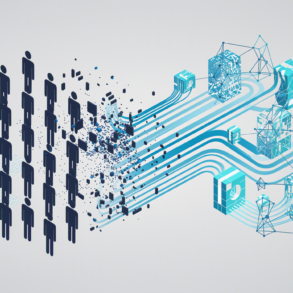




A growing cohort of developers is deploying applications built almost entirely by AI code generators without understanding the underlying logic, creating a mounting security crisis that experts warn could expose millions of users to data breaches and system failures.
The practice, dubbed “vibe-coding” by its practitioners, involves using large language models to generate entire applications based on natural language prompts, with developers acting as orchestrators rather than engineers. According to reporting by The Verge AI, this trend has accelerated as AI coding assistants have become more capable, enabling individuals with minimal programming knowledge to launch seemingly functional applications.
The fundamental problem lies in the disconnect between surface-level functionality and underlying security architecture. When developers cannot read or comprehend the code they’re deploying, they cannot identify vulnerabilities such as SQL injection points, authentication bypasses, or insecure data handling practices that AI models frequently generate.
Security researchers have documented numerous cases where vibe-coded applications expose sensitive user data through elementary mistakes—hardcoded API keys, unvalidated user inputs, and missing encryption—that any trained developer would catch during code review. The AI models themselves, trained on vast repositories of internet code, often reproduce deprecated security patterns or combine secure and insecure code in ways that create novel vulnerabilities.
The business implications extend across multiple stakeholders. For end users, vibe-coded applications present heightened risks of data theft, privacy violations, and service disruptions. For enterprises adopting these hastily constructed tools, the liability exposure is substantial—particularly in regulated industries where data protection carries legal and financial consequences.
Software development firms face a more complex calculus. Whilst vibe-coding dramatically reduces time-to-market and development costs, it also creates technical debt that may prove catastrophic. Applications built without architectural understanding become unmaintainable black boxes, requiring complete rewrites when problems emerge rather than targeted fixes.
The insurance sector has begun responding to these risks. Cyber insurance providers are reportedly tightening underwriting criteria for companies using AI-generated code, with some requiring independent security audits before coverage approval—a process that can add weeks and significant cost to deployment timelines.
Platform providers like GitHub, which offers the Copilot AI coding assistant, have implemented some guardrails, but these focus primarily on preventing the generation of obviously malicious code rather than ensuring secure architectural patterns. The responsibility for security ultimately rests with developers who may lack the expertise to exercise proper judgement.
The phenomenon reflects a broader tension in software development: the democratisation of coding through AI tools versus the specialised knowledge required for secure, maintainable systems. Whilst lowering barriers to entry can drive innovation, it also enables the proliferation of fundamentally flawed applications.
Industry observers note that vibe-coding represents an extreme manifestation of a longstanding problem—developers copying code from forums like Stack Overflow without understanding it. AI tools have simply accelerated and scaled this practice to entire applications.
Looking ahead, regulatory scrutiny appears inevitable. The European Union’s proposed AI Act includes provisions for high-risk AI systems, and vibe-coded applications handling sensitive data could fall within its scope. In the United States, the Federal Trade Commission has signalled increased attention to AI-related consumer harms, which could encompass security failures in AI-generated software.
The security community is advocating for mandatory code audits and certification requirements for AI-generated applications, particularly those handling financial or health data. Several firms have begun offering specialised services to audit AI-generated codebases, representing an emerging market segment.
The vibe-coding phenomenon underscores a critical lesson: AI tools can accelerate development, but they cannot replace the judgement and expertise required to build secure, reliable systems. As these applications proliferate, the cost of that misunderstanding will increasingly be measured in breaches, failures, and user harm.