
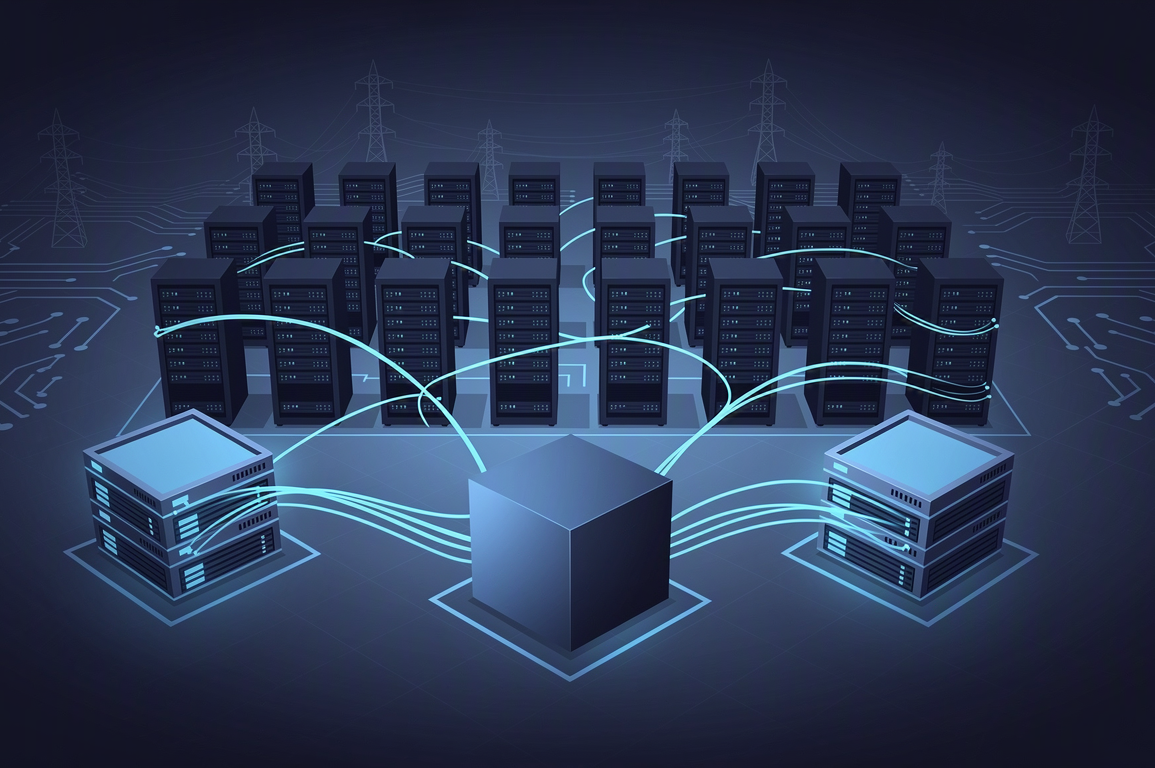

SpaceX has signed a compute partnership with Reflection AI worth $150 million per month, according to multiple reports, granting the open-source AI laboratory dedicated access to GPU infrastructure at the company’s Colossus 2 data centre facility.
The agreement, disclosed on 22 June, represents one of the largest known compute procurement deals in the AI sector and signals an emerging pattern of vertical integration as laboratories seek guaranteed access to scarce training infrastructure. Reflection AI, which focuses on open-source model development, will utilise the capacity for large-scale training runs beginning in the third quarter of 2026.
SpaceX’s Colossus 2 facility, located in Texas, houses an estimated 100,000 Nvidia H100 GPUs configured for AI training workloads. The company entered the AI infrastructure market in early 2025, leveraging its expertise in power management and cooling systems developed for aerospace applications. The monthly contract value suggests Reflection AI has secured access to a substantial portion of the facility’s capacity, though neither party disclosed specific allocation details.
The deal structure differs markedly from traditional cloud compute arrangements. Rather than paying for usage on demand, Reflection AI commits to fixed monthly payments regardless of utilisation—a model that provides SpaceX with predictable revenue whilst giving the AI lab priority access during critical training windows. Industry sources suggest the arrangement includes minimum term commitments extending beyond 18 months.
This infrastructure consolidation arrives as AI laboratories face mounting pressure to secure reliable compute access. Hyperscale cloud providers including Amazon Web Services, Microsoft Azure, and Google Cloud have reported capacity constraints for high-end GPUs throughout 2025 and early 2026. Several well-funded AI companies have responded by pursuing dedicated infrastructure agreements or building proprietary data centres.
The business implications extend across multiple sectors. For SpaceX, the partnership diversifies revenue streams beyond satellite and launch services whilst monetising capital investments in data centre infrastructure. The company’s entry into AI compute hosting creates a new competitor to established cloud providers, particularly for customers requiring dedicated capacity rather than shared resources.
For Reflection AI, the arrangement provides training capacity security but introduces significant fixed costs. The $150 million monthly commitment—$1.8 billion annually—positions compute expenditure as the laboratory’s primary operational expense. This financial structure favours organisations with substantial backing or clear paths to model monetisation, potentially disadvantaging smaller research teams reliant on flexible cloud pricing.
Established cloud providers face questions about their capacity allocation strategies. If major AI laboratories increasingly pursue dedicated infrastructure deals, hyperscalers may see reduced demand from their highest-value customers whilst retaining responsibility for serving smaller organisations with less predictable usage patterns.
The open-source focus of Reflection AI adds another dimension. Unlike proprietary model developers such as OpenAI or Anthropic, Reflection AI releases its models publicly, raising questions about how the laboratory will generate sufficient revenue to sustain $150 million monthly infrastructure costs. Potential business models include enterprise support contracts, hosted API services for released models, or venture funding predicated on ecosystem influence rather than direct monetisation.
Market observers will monitor whether this deal catalyses similar arrangements between AI laboratories and alternative infrastructure providers. Data centre operators with available capacity and power allocation may view AI training as an attractive anchor tenant opportunity. Conversely, if compute demand moderates as model architectures become more efficient, laboratories locked into fixed-capacity agreements could face unfavourable economics.
The partnership also highlights the strategic importance of power infrastructure. Colossus 2’s location in Texas provides access to the state’s independent power grid and relatively favourable electricity pricing—factors that may prove decisive as training runs for frontier models consume increasing energy.
This deal establishes a benchmark for AI infrastructure procurement at scale, demonstrating that well-capitalised laboratories are willing to commit to nine-figure monthly expenses for compute security. The sustainability of such arrangements will depend on whether AI model capabilities—and their commercial applications—advance quickly enough to justify the expenditure.