

Mistral AI has launched cloud-based remote coding agents powered by its new Medium 3.5 model, marking a strategic shift from local execution to distributed compute infrastructure that positions the French firm in direct competition with OpenAI and Anthropic’s agent offerings.
The company announced the release of what it calls “Vibe Remote Agents” alongside Medium 3.5, a model optimised for agentic workflows that can execute coding tasks across distributed cloud environments rather than on local machines. The move represents Mistral’s first major push into agent-based services, moving beyond its previous focus on model licensing and API access.
According to Mistral AI, Medium 3.5 delivers improved performance on coding benchmarks whilst maintaining the cost efficiency the company has emphasised in previous releases. The model is designed specifically for multi-step reasoning tasks that require agents to plan, execute, and verify code across remote systems—capabilities essential for enterprise software development workflows.
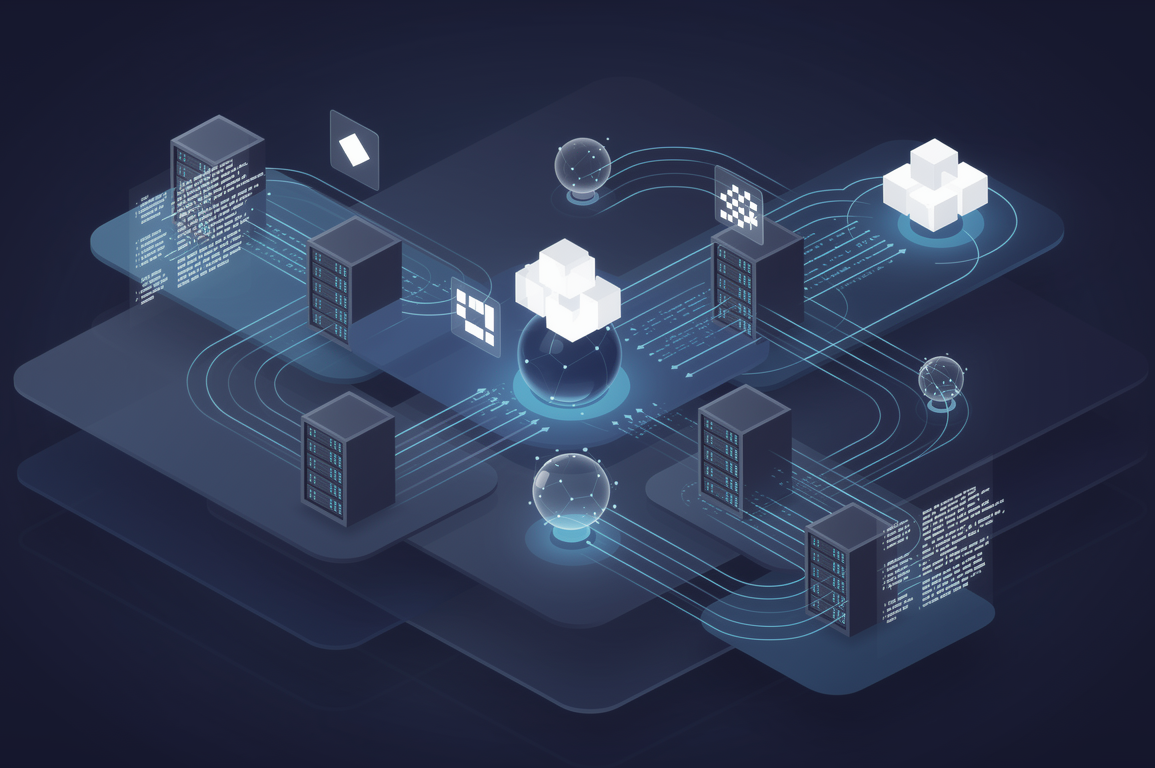
The remote agent architecture allows developers to deploy coding assistants that operate on cloud infrastructure rather than requiring local compute resources. This approach mirrors recent moves by Anthropic with its Claude agents and OpenAI’s work on distributed AI systems, suggesting the industry is converging on cloud-based agent deployment as the preferred architecture for enterprise applications.
Mistral’s timing is notable. The launch comes as enterprises increasingly seek AI coding tools that can integrate with existing cloud infrastructure and development pipelines. By offering remote agents rather than local-only solutions, Mistral addresses concerns about compute costs, scalability, and security that have limited adoption of earlier coding assistants.
The business implications are significant for multiple stakeholders. Enterprise development teams gain access to coding agents that can scale with project demands without requiring local GPU resources. Cloud providers—particularly those already hosting Mistral models—stand to benefit from increased compute consumption as agent workloads typically require sustained processing power. Conversely, vendors focused on local AI coding tools face pressure to justify their approach as cloud-based alternatives mature.
For Mistral itself, the launch represents a critical evolution from model provider to platform operator. The company now competes not just on model quality but on agent reliability, latency, and integration capabilities—operational challenges that differ substantially from research and model development. This shift requires different expertise and infrastructure investment, raising questions about Mistral’s ability to compete with better-capitalised rivals.
The competitive landscape grows more crowded. OpenAI has signalled intentions to expand agent capabilities, whilst Anthropic has invested heavily in Claude’s agentic features. Google’s Gemini and Amazon’s Bedrock also offer agent frameworks, creating a market where differentiation increasingly depends on execution quality and ecosystem integration rather than raw model performance.
Pricing details remain undisclosed, though Mistral has historically positioned itself as a cost-effective alternative to US competitors. Whether this strategy extends to agent services—which incur higher operational costs than simple API calls—will determine the offering’s enterprise appeal.
The technical architecture also raises questions about data sovereignty and security. Remote agents by definition process code on Mistral’s infrastructure, potentially creating compliance challenges for enterprises in regulated industries. How Mistral addresses these concerns will prove crucial for adoption in financial services, healthcare, and government sectors where data locality requirements remain stringent.
Looking ahead, the key indicators will be enterprise adoption rates and integration partnerships. If major cloud platforms integrate Vibe Remote Agents into their development environments, Mistral gains distribution advantages that could offset competitors’ technical leads. Conversely, if adoption remains limited to early adopters, the company may struggle to justify the operational costs of running agent infrastructure at scale.
Mistral’s move into cloud-based coding agents signals the maturation of agentic AI from research concept to commercial product, with competition now centred on operational excellence rather than model capabilities alone.