
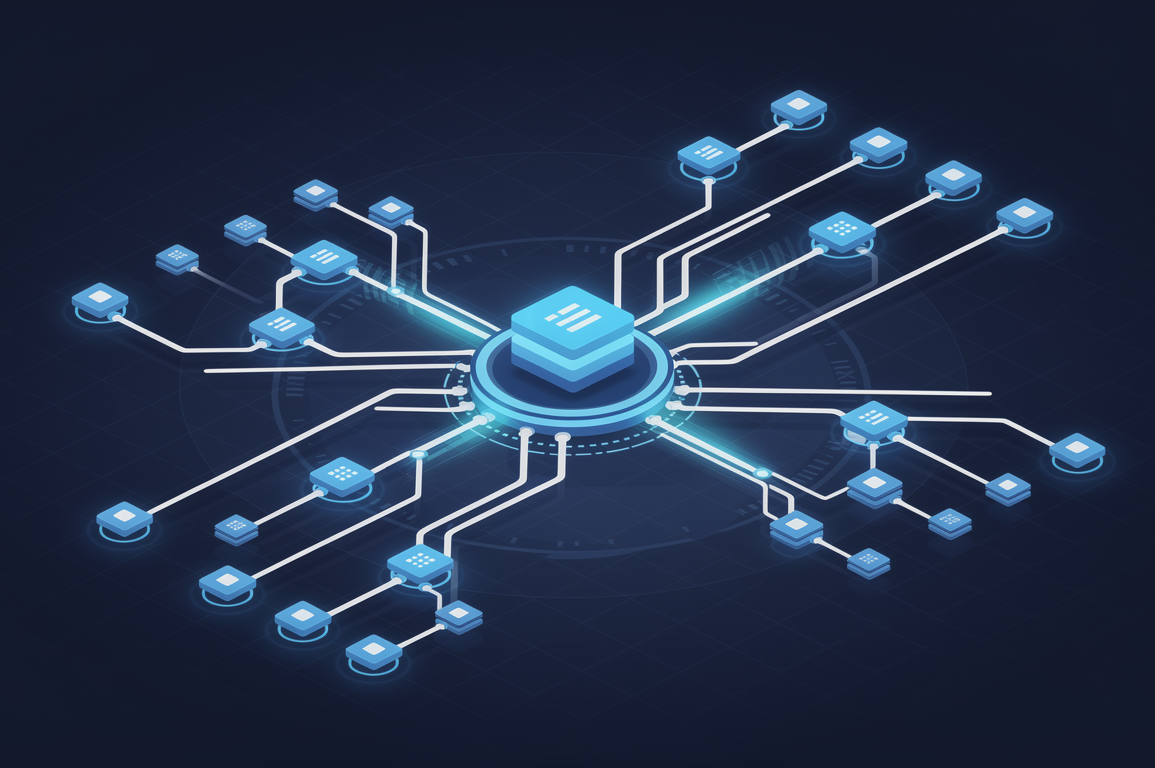

OpenRouter has closed a $113 million Series B funding round at a $1.3 billion valuation, more than doubling its worth in twelve months as enterprises increasingly adopt model-agnostic infrastructure for AI deployments. The routing platform, which allows developers to switch between multiple large language models through a single API, reported fivefold usage growth over the past year, according to TechCrunch AI.
The funding round signals growing enterprise appetite for infrastructure that reduces vendor lock-in as the AI landscape fragments across competing model providers. OpenRouter’s platform enables developers to route requests across models from OpenAI, Anthropic, Google, Meta, and others without rewriting code—a capability that has gained traction as organisations seek flexibility amid rapid model evolution and pricing volatility.
The valuation increase from approximately $600 million in 2024 reflects broader market recognition that model abstraction layers may capture significant value in the AI stack. Whilst foundation model providers compete on capability and cost, routing platforms position themselves as neutral infrastructure that benefits from competition rather than being threatened by it.
Enterprise adoption drives growth
The fivefold usage surge suggests enterprises are moving beyond experimental AI deployments toward production systems requiring vendor optionality. OpenRouter’s growth trajectory mirrors patterns seen in cloud infrastructure, where multi-cloud strategies became standard practice to avoid dependency on single providers.
For enterprises, model-agnostic routing addresses several operational concerns: the ability to failover when primary models experience outages, optimise costs by routing to cheaper models for simpler tasks, and hedge against individual providers discontinuing services or raising prices. These considerations have become more pressing as AI spending scales from thousands to millions of pounds annually for large organisations.
Market implications
The funding success creates both opportunities and challenges across the AI ecosystem. Routing platforms like OpenRouter stand to benefit as enterprises standardise on abstraction layers, potentially capturing margin between model providers and end users. Cloud providers including Amazon Web Services, Microsoft Azure, and Google Cloud already offer similar multi-model access through their platforms, positioning them as both partners and competitors.
Foundation model providers face a more complex calculus. Whilst routing platforms expand their addressable market by lowering switching costs for customers, they simultaneously commoditise model access and reduce customer stickiness. Anthropic, OpenAI, and Google must balance the distribution benefits against the risk of becoming interchangeable components in a standardised stack.
For developers, the growth of routing infrastructure accelerates the shift toward treating models as utilities rather than differentiated services. This commoditisation may benefit application builders by reducing integration complexity, but it also intensifies competition at the application layer as technical moats around model access erode.
Competitive landscape
OpenRouter operates in an increasingly crowded field. Established players including Cloudflare Workers AI and newer entrants such as Martian offer similar model routing capabilities. The sector’s attractiveness stems from its position between high-growth model providers and rapidly expanding enterprise AI budgets, but sustainable differentiation remains unclear.
The platform’s ability to maintain its valuation trajectory will depend on whether it can establish network effects or proprietary capabilities beyond basic routing. Potential differentiators include intelligent model selection based on task requirements, cost optimisation algorithms, or compliance features for regulated industries.
What to watch
The critical test for OpenRouter and similar platforms will be whether they can build defensible businesses or whether routing becomes a feature absorbed by larger cloud providers. Enterprise procurement patterns over the next twelve months will indicate whether organisations prefer standalone routing services or integrated offerings from existing cloud vendors.
Additionally, foundation model providers’ strategic responses bear monitoring. If leading providers restrict API access or introduce pricing structures that penalise routing platforms, the sector’s economics could shift rapidly. Conversely, if model providers embrace routing as distribution infrastructure, the category may consolidate around a few dominant platforms.
OpenRouter’s doubling valuation in twelve months demonstrates that investors see model-agnostic infrastructure as a structural component of the AI stack, not merely a transitional solution. Whether that conviction translates to sustainable business advantage will determine if routing platforms capture lasting value or become commoditised middleware.