



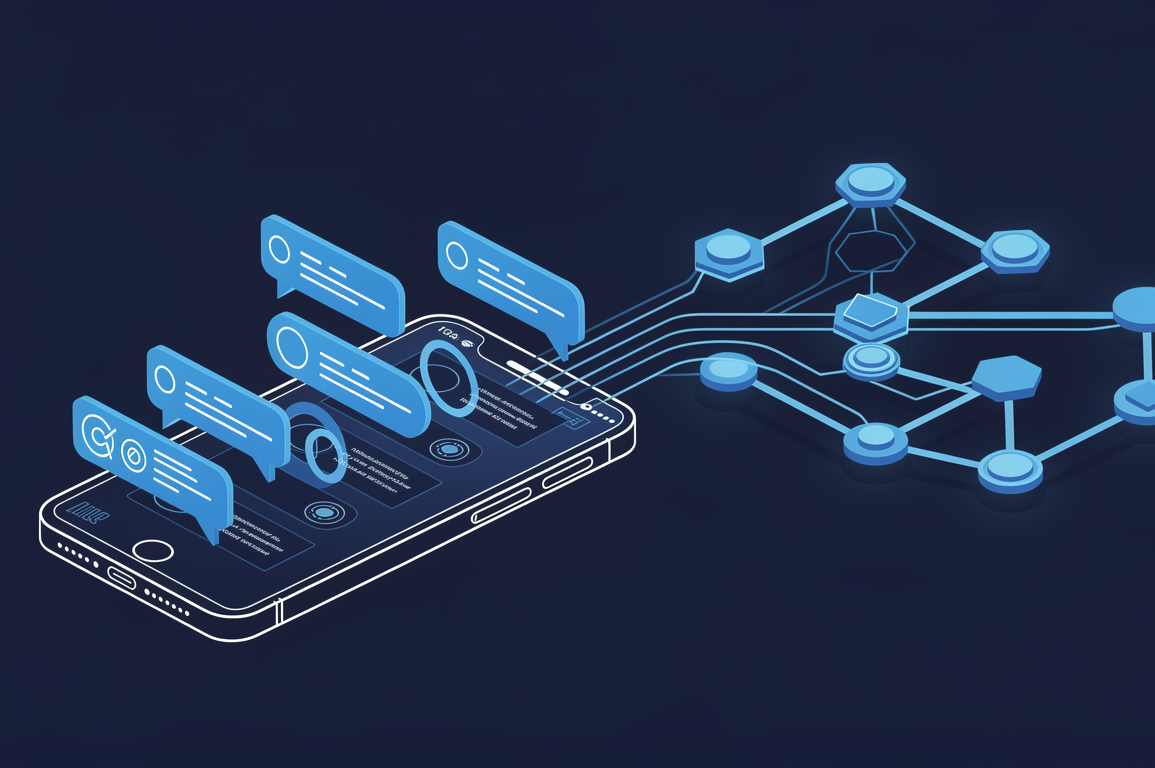

Apple has approved Poke as the first AI agent on its Messages for Business platform, according to TechCrunch AI, marking a significant policy shift that opens the enterprise messaging channel to autonomous AI systems capable of conducting multi-step customer interactions.
The approval represents Apple’s first formal endorsement of agentic AI—systems that can independently execute tasks and make decisions—on a consumer-facing platform. Messages for Business, launched in 2017, has until now restricted automated interactions to simpler chatbot functionality, requiring human oversight for complex customer service scenarios.
Poke’s AI agent can autonomously handle customer enquiries, process transactions, and resolve service issues within the Messages interface on iOS devices. The system operates without requiring customers to download additional applications, positioning it as a direct competitor to standalone customer service platforms from Zendesk, Intercom, and emerging AI-native alternatives like Sierra.
The approval arrives as enterprises increasingly prioritise AI deployment through existing communication channels rather than proprietary applications. Messages for Business reaches more than 1 billion active iOS devices globally, providing immediate distribution scale that standalone AI applications struggle to achieve.
Apple’s decision to permit agentic AI on the platform suggests the company has developed sufficient confidence in safety guardrails and quality controls to manage autonomous AI interactions at scale. The approval process reportedly included extensive testing of Poke’s ability to handle edge cases, maintain conversation context, and escalate appropriately to human agents when necessary.
Market Implications
The approval creates immediate opportunities for enterprise software vendors and customer experience platforms seeking iOS distribution without application development costs. Companies operating customer service operations can now deploy AI agents directly into the messaging interface where consumers already communicate, reducing friction in service delivery.
Traditional customer service software providers face intensified pressure to develop comparable agentic capabilities or risk losing market share to AI-native competitors. The shift also challenges standalone AI chatbot vendors whose value proposition centred on providing conversational interfaces that Messages for Business agents can now deliver natively.
For Apple, the move positions Messages for Business as a critical enterprise channel whilst maintaining the company’s control over AI quality and user experience on iOS. However, the approval raises questions about competitive dynamics if Apple later introduces its own AI agent capabilities, potentially disadvantaging third-party providers.
Technical and Strategic Context
The distinction between traditional chatbots and AI agents centres on autonomy and capability scope. Whilst chatbots typically respond to specific queries with predetermined answers, AI agents can interpret intent, execute multi-step workflows, access external systems, and adapt responses based on context—capabilities that require more sophisticated safety mechanisms.
Apple’s approval criteria remain undisclosed, but industry observers expect the company to establish formal guidelines for AI agent behaviour, data handling, and escalation protocols. These standards could influence broader enterprise AI governance practices, given Apple’s market position and reputation for stringent platform requirements.
The timing coincides with increasing regulatory scrutiny of AI systems in customer-facing roles, particularly regarding transparency, data privacy, and consumer protection. Apple’s vetting process may provide a template for balancing AI capability with user safety in consumer applications.
What to Monitor
The pace of additional AI agent approvals will indicate whether Apple intends Messages for Business to become a primary distribution channel for enterprise AI or whether Poke represents a limited trial. Enterprise software vendors are likely evaluating Messages for Business integration strategies, with approval timelines and technical requirements determining adoption velocity.
Competitive responses from Google’s Business Messages and Meta’s WhatsApp Business platforms will shape the enterprise messaging landscape, particularly regarding their own policies on agentic AI. Customer satisfaction metrics and service resolution rates from Poke deployments will provide early evidence of whether autonomous AI agents can meet enterprise service standards in production environments.
Apple’s first approval of an AI agent for Messages for Business validates enterprise messaging as essential infrastructure for AI deployment, whilst establishing the company as a gatekeeper for agentic AI quality standards on consumer devices.