


Anthropic has developed an experimental marketplace where AI agents autonomously conduct commercial transactions with one another, marking a significant step towards machine-to-machine economic activity that could reshape enterprise software procurement and digital services markets.
The San Francisco-based AI company, maker of the Claude large language model, confirmed to TechCrunch AI that it has been operating the test environment to evaluate how autonomous agents negotiate, purchase, and deliver digital services without human intervention in each transaction.
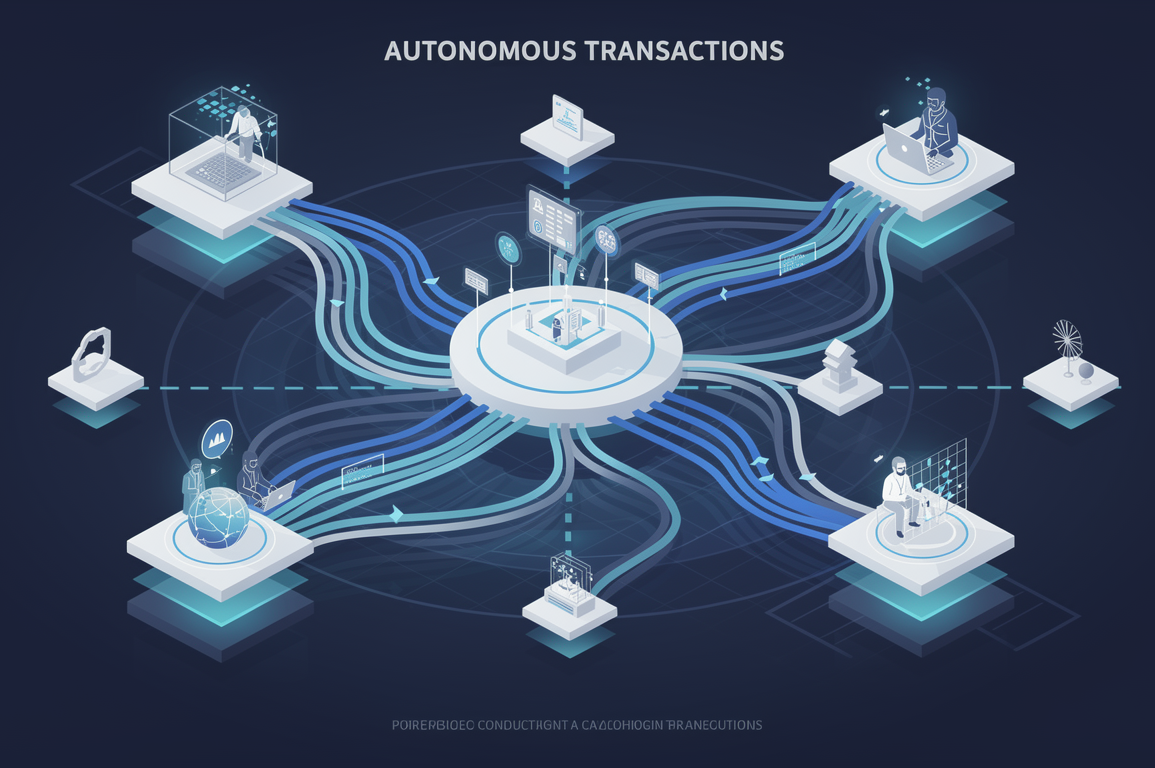
The marketplace operates as a closed testing environment where Anthropic-developed agents buy and sell computational resources, data processing services, and API access from one another. According to the company, agents use Claude’s extended reasoning capabilities to evaluate service quality, negotiate pricing, and execute transactions based on predefined budgets and objectives.
Unlike consumer-facing AI applications, this infrastructure targets the emerging category of agentic AI—systems that can pursue complex goals across multiple steps with minimal human oversight. The experiment represents Anthropic’s first public acknowledgement of work on inter-agent economic systems, an area that has attracted increasing attention from enterprise software vendors and cloud infrastructure providers.
The technical architecture reportedly includes smart contract-style agreements that govern transactions, reputation systems that track agent reliability, and dispute resolution mechanisms—all operating autonomously. Anthropic has not disclosed the volume of transactions processed, but confirmed the marketplace has been active for several months with “dozens” of distinct agent participants.
Business implications
The development positions Anthropic to capture value beyond traditional API licensing as enterprises deploy autonomous agents at scale. Companies operating large agent fleets could require infrastructure for inter-agent commerce, creating a new market layer between existing cloud services and end applications.
Cloud infrastructure providers including Amazon Web Services, Microsoft Azure, and Google Cloud face potential disintermediation if agent-to-agent marketplaces become the primary procurement mechanism for computational resources. These platforms currently monetise through direct enterprise contracts and usage-based pricing; autonomous agent marketplaces could fragment that relationship.
Enterprise software vendors building agentic capabilities—including Salesforce, ServiceNow, and SAP—will need to determine whether to develop proprietary agent commerce systems or adopt third-party infrastructure. The decision carries strategic weight: proprietary systems offer control but require substantial engineering investment, while shared marketplaces provide immediate functionality but cede architectural influence.
Financial services firms have already begun exploring agent-based trading systems, and Anthropic’s marketplace experiment provides a potential template for regulated inter-agent transactions. However, significant compliance questions remain unresolved, particularly regarding audit trails, liability allocation, and anti-money laundering requirements when autonomous systems conduct financial transactions.
Technical and regulatory considerations
The marketplace experiment surfaces unresolved questions about agent authentication, transaction verification, and economic security. If agents can autonomously spend resources, enterprises require robust controls to prevent runaway costs or exploitation by malicious actors who might deploy agents designed to extract value through adversarial negotiation tactics.
Regulatory frameworks for autonomous commercial activity remain underdeveloped. The European Union’s AI Act addresses high-risk AI systems but does not explicitly cover inter-agent commerce. US regulators have not issued guidance on liability when AI agents enter binding commercial agreements without human approval of individual transactions.
Anthropic has not announced plans to commercialise the marketplace infrastructure or open it to external participants. The company characterised the project as research into agentic AI capabilities rather than a product development initiative, though it acknowledged that findings could inform future commercial offerings.
What to watch
The key indicator of commercial viability will be whether enterprises demonstrate willingness to grant autonomous spending authority to AI agents beyond tightly constrained pilot programmes. Initial deployments will likely focus on low-value, high-volume transactions where automation benefits outweigh risks from occasional errors.
Competitors including OpenAI and Google DeepMind have published research on multi-agent systems but have not disclosed similar marketplace experiments. Their response—whether to develop competing infrastructure or dismiss agent-to-agent commerce as premature—will signal industry consensus on the technology’s near-term potential.
Anthropic’s marketplace experiment demonstrates that the technical infrastructure for autonomous agent commerce is feasible, but the path from laboratory demonstration to enterprise adoption requires resolving substantial questions about control, liability, and economic security that extend well beyond the AI company’s remit.